

Turkey, the nation situated between Eastern Europe and Western Asia, has emerged as a renowned global destination. From bustling markets in Istanbul to the tranquil beaches of Antalya, the country is a rich tapestry of culture, history, and stunning natural landscapes.
Analyzing How Many Tourists Visit Turkey Each Year
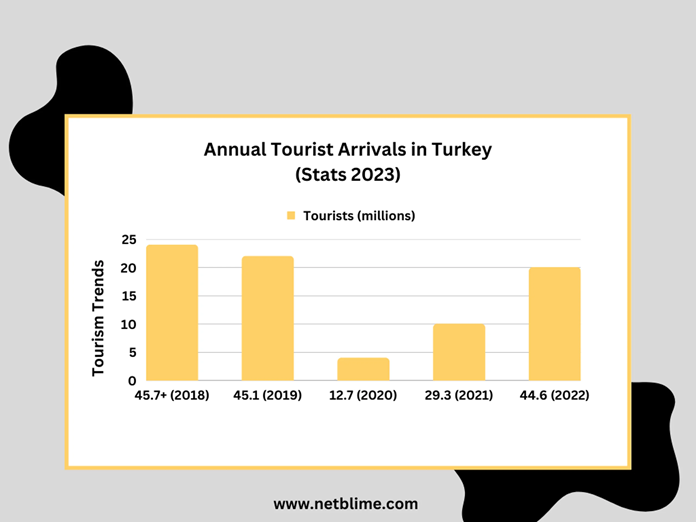
When it comes to how many tourists visit Turkey each year, here are the most relevant statistics:
- 2018: Turkey saw a record number of tourists, with over 45.7 million visitors.
- 2019: There was a slight decrease due to political unrest and safety concerns, with 45.1 million tourists.
- 2020: The COVID-19 pandemic significantly affected Turkey’s tourism, with only 12.7 million visitors.
- 2021: A remarkable recovery with approximately 29.3 million tourists.
- 2022: Despite global travel disruptions, Turkey welcomed nearly 44.6 million international tourists.
- 2023 (Mid-Year): Tourist arrivals are on track to surpass pre-pandemic levels, demonstrating the resilience of Turkey’s tourism industry.
Istanbul remains the most popular destination in Turkey, attracting a significant portion of international visitors each year. The majority of tourists visiting Turkey come from Russia, Germany, and the United Kingdom.
Historical Overview of Turkey’s Tourism Industry
As early as the 1960s, Turkey began attracting a steady influx of international visitors. The tourism industry expanded rapidly, and by the 1990s, Turkey had established itself as a popular global destination.
Throughout the 2000s, the number of international tourist arrivals grew exponentially. Istanbul, Antalya, and Cappadocia evolved as the primary tourist hubs. Unfortunately, the 2010s witnessed some fluctuations in tourism numbers due to political unrest and safety concerns.
But the industry proved resilient and, by 2018, was on an upward trajectory again. Despite yet another setback caused by the COVID-19 pandemic in 2020, the industry is showing signs of strong recovery as of 2023.
Factors Driving Tourism in Turkey
Several factors contribute to the steady increase in the number of tourists visiting Turkey each year:
- Rich History and Cultural Heritage: Turkey boasts a plethora of historical sites, from ancient ruins to Byzantine and Ottoman architecture, attracting history buffs.
- Geographical Diversity: Its unique position straddling two continents offers a blend of Eastern and Western cultures and diverse landscapes, from Mediterranean beaches to snow-capped mountains.
- Cuisine: Known for its kebabs, baklava, and Turkish tea, Turkey’s culinary tradition entices foodies from around the world.
- Infrastructure Improvement: Expansion of airports, improved accommodation facilities, and e-visa introduction have made travel to Turkey easier and more comfortable.
- Affordability: Turkey is considered an affordable destination, appealing to budget travelers.
Challenges and Future Outlook for Turkey’s Tourism
Despite the increasing number of visitors, Turkey’s tourism industry also faces significant challenges:
- Political Instability: Political instability and regional conflicts have sometimes created perceptions of insecurity, discouraging potential visitors.
- Sustainability: Ensuring sustainable tourism that preserves natural and cultural heritage across diverse landscapes requires meticulous planning and management.
- Climate Change: Rising temperatures and changing weather patterns may impact popular tourist spots, necessitating investment in sustainable tourism practices.
Looking forward, the prospects for Turkey’s tourism industry are promising. The Turkish government has been actively promoting tourism, with strategies like digital marketing campaigns targeting potential tourists and initiatives to diversify tourist offerings and improve visitor experiences.
Key Travel Trends in 2023
As we step into the new year, the travel industry is poised for several exciting developments and trends in 2023. Here are some key insights and predictions from industry experts:
Sustainability Takes Center Stage
Sustainability remains a top priority in the travel industry. Travelers are increasingly conscious of their environmental impact, and this trend is expected to intensify in 2023.
Hoteliers and tour operators are taking steps to reduce their carbon footprint and support eco-friendly initiatives. Hotels are becoming more transparent about their sustainability efforts and encouraging guests to engage with local cultures and businesses.
Expert Opinion: Bill Bensley, Hotel Designer and Architect
“Put your money where your mouth is: support those who are doing their bit to be more ecological, to combat illegal wildlife trade, to empower at-risk communities.”
Meaningful Travel and Ultra-Localized Itineraries
Travelers are seeking more meaningful and immersive experiences. The desire to travel like a local has gained momentum, with conscious consumers looking to give back to local businesses and minimize their environmental impact.
Sustainable Tourism Integrated into Business Models
Hotels are increasingly integrating sustainable tourism into their business models. This includes partnering with local organizations to provide guests with authentic and enriching experiences while contributing to the preservation of the places they visit.
These initiatives aim to create a deeper connection between travelers and their destinations and leave a positive impact on local communities.
Technology Continues to Enhance Travel
Technology will play a pivotal role in shaping the travel experience in 2023. Mobile apps and digital platforms will provide travelers with seamless and convenient solutions for booking accommodations, planning itineraries, and accessing information about their destinations. Travel technology will continue to evolve, making travel more accessible and efficient.
Additional Travel Trends for 2023
In addition to the previously mentioned travel trends, there are several other noteworthy developments shaping the travel landscape in 2023:
Quality Over Quantity, Younger Luxury Travelers,Art and Cultural Festivals,Transformational Experiences,Evolving Travel Technology,Price-Driven Travel, Low-Cost Destinations in the Face of Economic Challenges, Tourism Levies.
Despite the challenges, the future outlook for Turkey’s tourism industry remains positive. If current trends continue and challenges are effectively addressed, Turkey’s position as a top global tourist destination seems likely to strengthen in the years to come.