

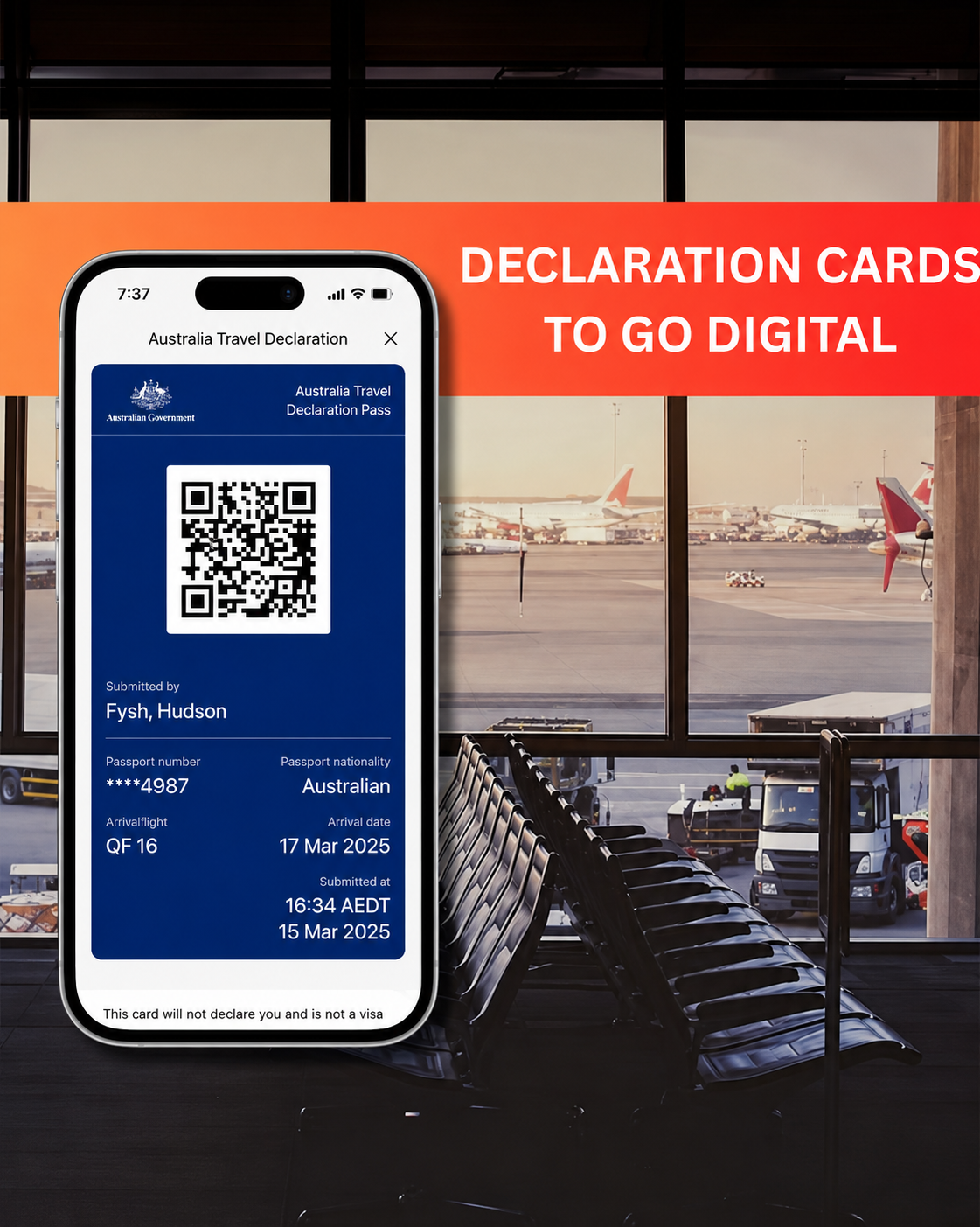
Australia is officially phasing out its iconic orange paper Incoming Passenger Card in favor of a digital Australia Travel Declaration (ATD). The new system will allow travelers to pre-fill their customs and biosecurity information online up to 72 hours before arrival. Following a successful pilot program involving over 450,000 Qantas passengers, the web-based ATD is currently rolling out across all Australian international airports and seaports. Full, nationwide replacement of the paper system is targeted to be complete by 2027. This transition is backed by a A$56.1 million border modernization program, designed to streamline entry, reduce manual paperwork, and manage biosecurity risks more efficiently. New QR-enabled system aims to streamline border processing, improve biosecurity and enhance the traveller experience.
Australia is set to modernise its international arrivals process with the nationwide rollout of the Australia Travel Declaration (ATD), a new digital passenger entry system that will gradually replace the familiar paper Incoming Passenger Card by the end of 2027.
The move marks a significant step in the country’s efforts to simplify border procedures, reduce paperwork and create a faster, more seamless arrival experience for international travellers.
For decades, passengers arriving in Australia have been required to complete the distinctive orange paper arrival card during their flight, providing personal details, travel information, accommodation details and declarations relating to food, medicines and other regulated items. Under the new system, travellers will instead complete the declaration online before departure, eliminating the need for paper forms on eligible journeys.
Initially available through a web-based platform, the Australia Travel Declaration is expected to expand with app-based features in the future, allowing travellers to submit their information digitally up to 72 hours before arrival.
The Australian Government has committed AUD 56.1 million over the next four years to support the transition, with the investment aimed at modernising airports, improving border processing and strengthening Australia’s biosecurity capabilities.
Officials say the digital platform will also enable authorities to respond more rapidly to global health emergencies and evolving biosecurity risks by allowing declaration requirements to be updated in real time.
The initiative follows a successful pilot programme launched in October 2024 in partnership with Qantas, the Australian Border Force and the Department of Agriculture, Fisheries and Forestry (DAFF). Since the trial began, more than 450,000 passengers travelling on eligible Qantas international services into Sydney, Melbourne and Brisbane have completed the digital declaration instead of the traditional paper card.
Following the encouraging results, the pilot is now being expanded to Perth and Adelaide, with all remaining Qantas international services expected to adopt the system before the end of 2026.
The government plans to introduce the web-based Australia Travel Declaration across all international airports and seaports before the end of 2027, with the rollout taking place in stages. During the transition period, some travellers will continue to receive paper arrival cards until their airport joins the new digital system.
Although the format is changing, travellers will still be required to provide the same essential information, including passport details, travel itinerary, accommodation address and declarations regarding food, plant material, animal products, medicines and other restricted items.
The introduction of the Australia Travel Declaration reflects a broader global trend towards digital border management, with many countries adopting contactless technologies to improve efficiency while strengthening security and public health preparedness.
For international visitors, the transition promises a smoother arrival process, reduced paperwork and less time spent completing forms onboard, making entry into Australia quicker and more convenient.