

Foreign arrivals increase 5% while domestic tourism remains well above pre-pandemic levels; overnight stays reach 3.04 million
Estonia recorded 1.66 million tourists at accommodation establishments during the first half of 2026, an increase of 4% compared with the same period last year, according to Statistics Estonia.
The latest figures indicate that the Baltic destination has moved slightly beyond its pre-pandemic tourism performance. The number of accommodated tourists during January–June was 1% higher than in the first half of 2019, while the number of overnight stays rose 5% year on year to 3.04 million.
Foreign visitors accounted for more than 874,900 arrivals, up 5% from the first half of 2025, while domestic tourism increased 3% to nearly 789,400 visitors.
The recovery, however, remains uneven when measured against 2019. Domestic tourism has performed considerably better than international demand, with the number of accommodated Estonian residents 16% above the 2019 level. Foreign visitor numbers, by contrast, remained 10% below their pre-pandemic level.
Domestic market provides long-term resilience
While foreign arrivals were the faster-growing segment in the first half of 2026, the strength of domestic tourism continues to provide an important foundation for Estonia’s accommodation sector.
Domestic overnight stays were 18% higher than in the first half of 2019, compared with a 9% shortfall in foreign overnight stays.
The latest figures therefore point to a tourism market that has broadly recovered in volume, but where the composition of demand has changed since the pandemic.
Foreign tourists spent more than 1.72 million nights in Estonia during the first six months of 2026, an increase of 7% year on year. Domestic tourists accounted for more than 1.32 million nights, up 3%.
Finland remains the leading source market
Finland continued to be Estonia’s largest foreign source market, although arrivals declined marginally by 1% to 298,432.
Latvia ranked second, generating 135,167 visitors, an increase of 6%, followed by Germany with 51,211 arrivals, up 1%.
The strongest growth among Estonia’s major European source markets came from the United Kingdom, where arrivals increased 19% to 39,016. Lithuania also recorded solid growth, with visitor numbers rising 7% to 38,307.
The United States was another growing market, with arrivals increasing to 28,515, while Poland recorded particularly strong growth to 25,971 visitors.
European Union markets collectively accounted for the vast majority of foreign visitors, reinforcing Estonia’s position as a predominantly European short-haul and regional destination.
Tallinn remains the tourism hub
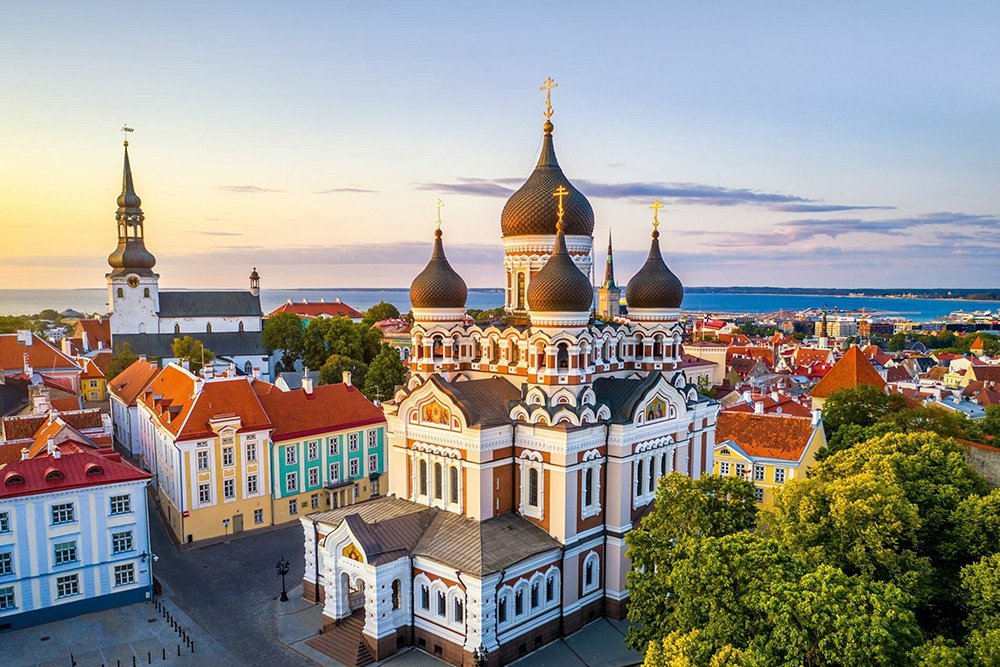
Tallinn continued to dominate Estonia’s tourism landscape, accounting for 51% of all accommodated tourists during the first half of the year.
Harju County, which includes the capital, accommodated 54% of all visitors, while Pärnu accounted for 11% and Tartu for 8%.
The distribution highlights Tallinn’s continuing role as Estonia’s principal gateway and tourism centre, while the growth recorded in other regions points to opportunities for further geographic diversification.
Valga County recorded the strongest increase, with the number of accommodated tourists rising 13% during the six-month period.
Leisure remains the main reason for travel
Leisure tourism continued to account for the majority of trips to Estonia.
Holiday travel represented 78% of foreign tourist trips and 70% of domestic trips during the first half of 2026. Business travel accounted for 18% of foreign trips and 21% of domestic travel.
The figures underline Estonia’s continuing appeal as a leisure destination, while also demonstrating the importance of business travel to domestic tourism demand.
For international visitors, Tallinn’s historic centre, Estonia’s cultural attractions, nature-based experiences and the country’s compact geography remain important elements of its tourism proposition.
Tourism moves beyond pre-pandemic levels
Estonia’s first-half performance represents a further step in the recovery of its tourism sector.
Although international visitor numbers have yet to return fully to 2019 levels, the overall number of accommodated tourists has now edged above the comparable pre-pandemic period. At the same time, the continued strength of domestic travel has helped support accommodation businesses and tourism activity across the country.
The challenge for Estonia will be to sustain international growth while maintaining the strong domestic market that has helped underpin the sector’s recovery.
With foreign arrivals increasing faster than domestic visitors in the first half of 2026, Estonia enters the summer season with a positive tourism outlook and growing demand across several European and long-haul source markets.
Source verification: The figures in this article have been checked against Statistics Estonia’s official release published on 13 August 2026. Statistics Estonia reported 1.66 million accommodated tourists, 874,900+ foreign visitors, nearly 789,400 domestic visitors and 3.04 million overnight stays for January–June 2026. The agency also notes that the data are subject to revision as source information is updated.