

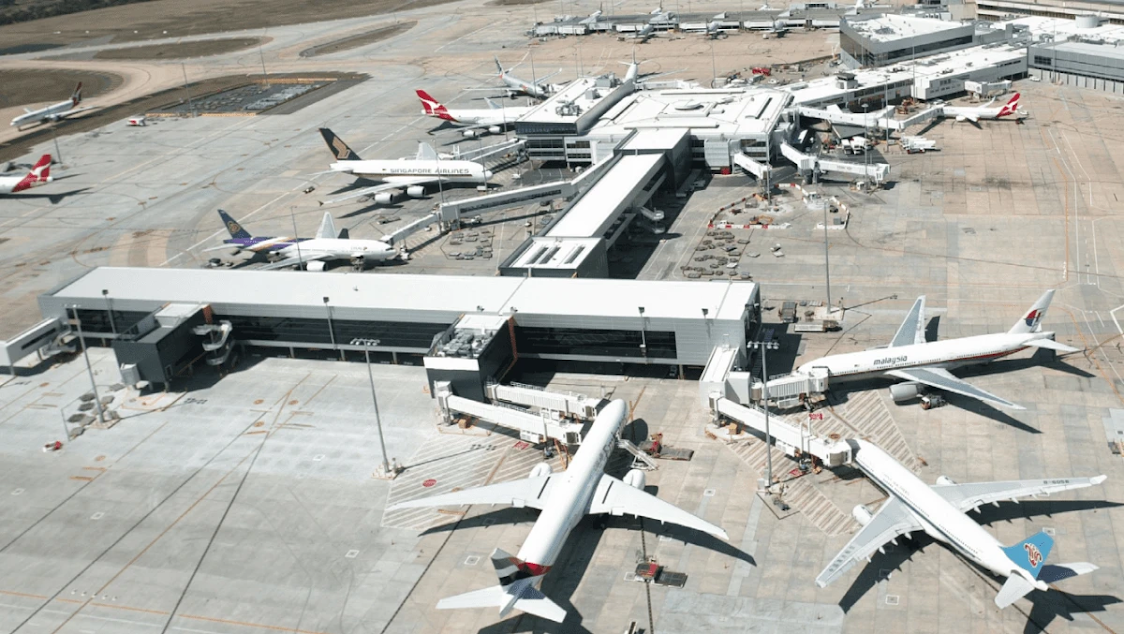
Melbourne Airport has achieved a historic milestone, recording more than one million international passengers in a single month for the first time in March 2026, underscoring robust travel demand despite ongoing global aviation disruptions linked to Middle East airspace closures.
A total of 1,002,589 international passengers passed through the airport during the month, surpassing the previous March record of 937,696 set in 2025. The performance contributed to a strong overall monthly throughput of 3,129,811 passengers across both international and domestic operations.
Strong demand drives record performance
Domestic traffic accounted for 2,127,222 passengers in March 2026, reflecting a 5.9% year-on-year increase, supported in part by comparisons against weather-related disruptions in Queensland during March 2025. International traffic grew at an even stronger pace of 6.9%, driving overall passenger growth of 6.3% compared to the same period last year.
The airport attributed the surge in activity to a combination of sustained leisure demand, major events, and improved airline capacity on key routes. Significant passenger flows were linked to high-profile events such as the Melbourne Formula 1 Grand Prix and the Labour Day long weekend, both of which traditionally stimulate inbound and domestic travel demand.
Airline capacity shifts offset regional disruption
The record international figures were achieved despite notable disruptions across global air corridors, particularly those affecting Middle East routes. Airspace closures led to cancellations and schedule adjustments by major carriers including Emirates, Qatar Airways, and Etihad Airways, temporarily impacting connectivity through key European transfer hubs.
However, the reduction in Middle East capacity was offset by increased frequencies and seat supply from other regions. Airlines operating via Southeast Asia, China, and North America stepped in to absorb demand, with strong load factors reported across alternative connecting routes.
During the month, AirAsia launched new daily services between Melbourne and Bali, further strengthening short-haul leisure connectivity within the region. Singapore Airlines also upgraded one of its five daily services to an Airbus A380, reinforcing premium capacity on the Melbourne–Singapore corridor.
In addition, British Airways confirmed plans to introduce daily services between Melbourne and London Heathrow from January 2027, signalling longer-term expansion of direct Europe–Australia connectivity.
Airport leadership highlights resilience and long-term investment
Commenting on the performance, Melbourne Airport Chief Executive Officer Lorie Argus noted that March presented significant operational challenges for travellers due to geopolitical instability affecting major international routes. Despite this, she said demand remained resilient, particularly for travel via alternative hubs in Southeast Asia, China, and North America.
She highlighted that while Middle East services are gradually stabilising, airlines have demonstrated flexibility by reallocating capacity to Melbourne in response to sustained passenger demand. Load factors across key routes remained strong, reflecting continued appetite for both leisure and visiting friends and relatives (VFR) travel.
Argus also emphasised that broader economic pressures, including rising living costs and fuel price volatility, are expected to influence travel dynamics in the short to medium term. However, she reiterated that demand for travel—both domestic and international—remains structurally strong.
Major infrastructure expansion underway
To support future growth, Melbourne Airport is advancing a multi-billion-dollar infrastructure programme, including the development of a third runway and a AUD 4.5 billion expansion of its international terminal. These projects are designed to increase capacity, improve operational efficiency, and provide greater scheduling flexibility for airlines.
The first phase of the international terminal expansion is scheduled to open later in 2026 and will include a new state-of-the-art baggage handling system, upgraded passenger processing facilities, and redesigned pick-up and drop-off zones for Terminals 1, 2, and 3. The works will also enable future expansion into the current forecourt and departures ramp areas.
Annual performance reflects sustained recovery
For the financial year ending March 2026, Melbourne Airport handled 9,532,585 international passengers, representing a 4.9% year-on-year increase. Domestic traffic rose to 18,926,491 passengers, up 3.3% over the same period.
Total passenger numbers reached 28,459,076 for the financial year, marking a 3.8% increase compared to the previous year and reinforcing the airport’s steady recovery trajectory across both domestic and international segments.