
From Alpine lakes and emerald rivers to mountain trails and spectacular underground landscapes, Slovenia packs an extraordinary range of outdoor experiences into a remarkably small country.
Some destinations are designed to be seen. Slovenia is a country to be experienced in motion.
Hike through the Julian Alps, cycle beside an Alpine lake, paddle across clear mountain waters, follow the rapids of the Soča River or descend into one of Europe’s most remarkable karst cave systems. In Slovenia, the landscape is not simply the backdrop to a holiday — it is the reason to travel.
Covering just over 20,000 square kilometres, Slovenia combines Alpine, Mediterranean, Karst and Pannonian landscapes. Around 60 per cent of its territory is forested, while more than a third is included in the European Natura 2000 network of protected areas. The country’s official tourism organisation describes it as a green playground for year-round outdoor adventure.
For travellers seeking an active European escape without spending hours on the road between destinations, that geographical diversity is one of Slovenia’s greatest advantages.
Ljubljana: A capital best explored on foot
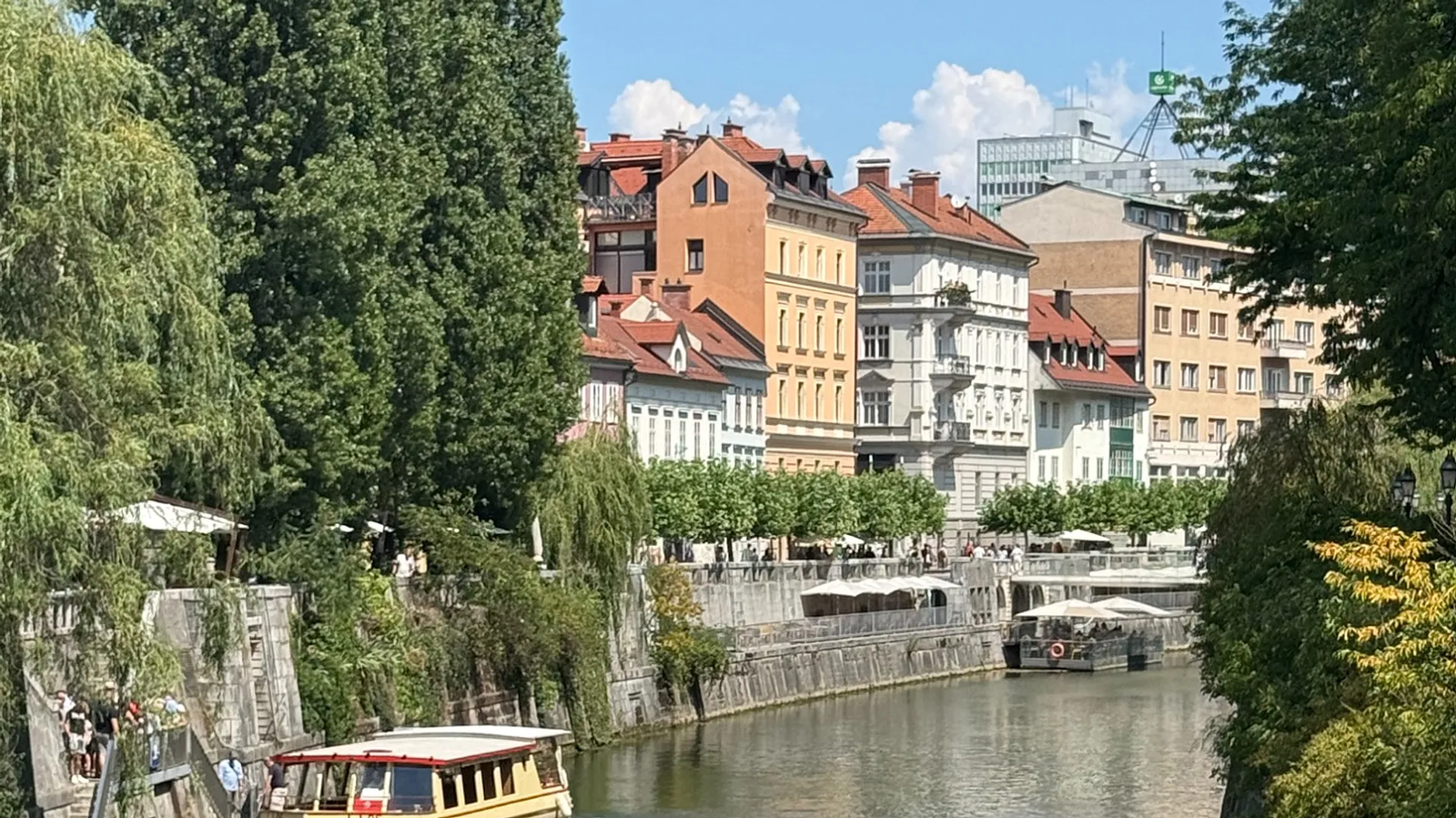
The journey begins in Ljubljana, Slovenia’s compact capital, where the Ljubljanica River winds through a historic centre of bridges, cafés, markets and colourful buildings.
Walking is the natural way to explore the city. The route can take visitors from the Central Market along the riverfront and towards the distinctive Dragon Bridge, before continuing uphill to Ljubljana Castle.
The city also provides an easy transition between urban sightseeing and outdoor adventure. Within a relatively short journey, the architecture and cafés of the capital give way to forests, mountains and lakes.
Bled: The iconic Alpine escape
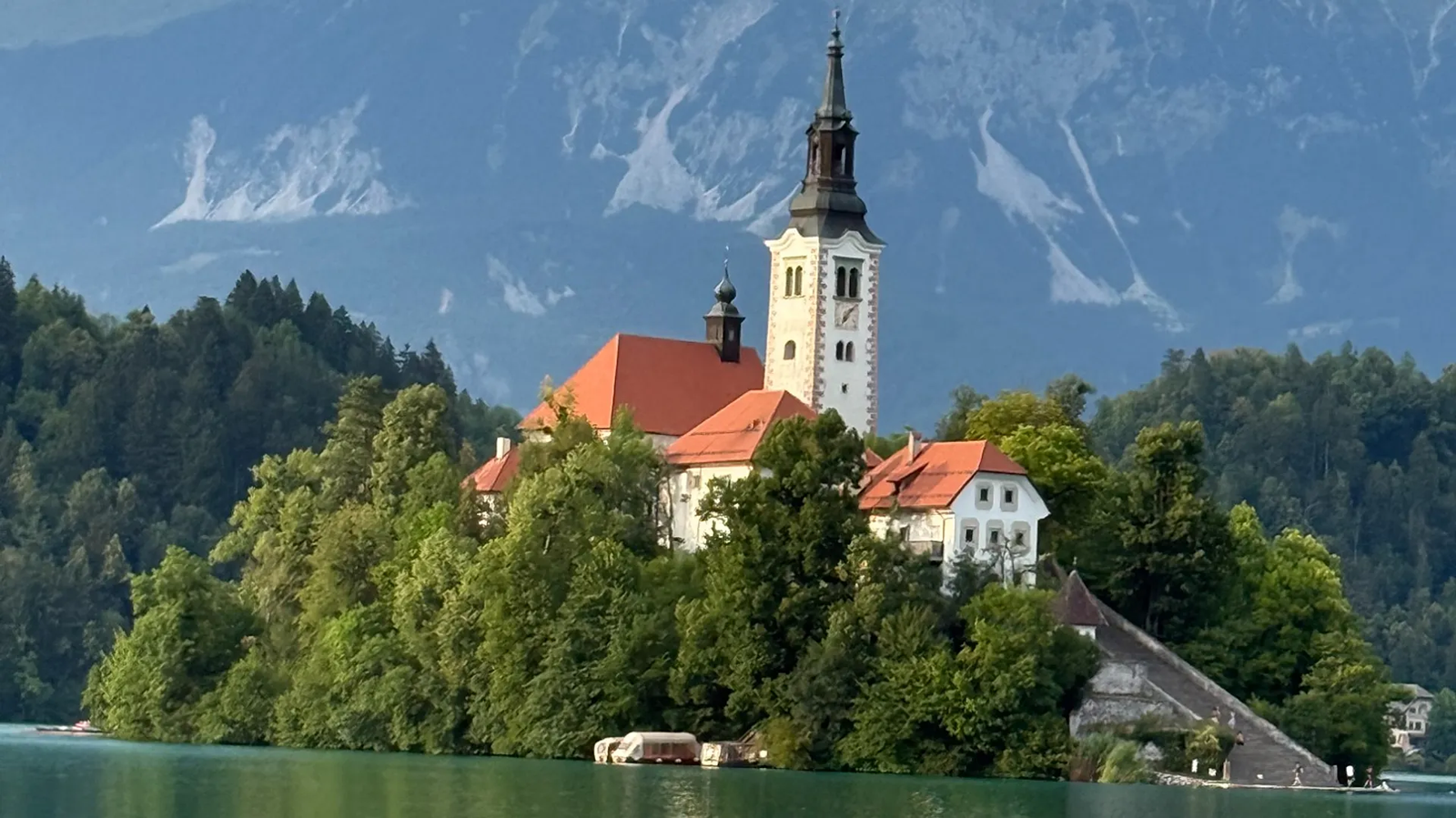
Few images of Slovenia are more recognisable than Lake Bled.
Set against the Julian Alps, the lake combines forested slopes, a small island topped by a church and Bled Castle, dramatically positioned above the water. But its appeal extends well beyond photography.
A roughly six-kilometre route circles the lake, making cycling an accessible way to explore the shoreline. In warmer months, swimming and other water-based activities add another dimension to the experience.
Bled is also an effective gateway towards the quieter landscapes around Lake Bohinj.
Bohinj: Where the landscape takes centre stage
Located within Triglav National Park, Lake Bohinj is Slovenia’s largest natural lake and offers a markedly wilder atmosphere than its better-known neighbour.
The lake is suited to kayaking, paddleboarding and swimming, while walking and cycling routes extend into the surrounding Julian Alps.
For hikers and climbers, the wider area offers a far more demanding playground, with trails ranging from relatively gentle lakeside walks to routes climbing into the mountains.
Above it all stands Mount Triglav, at 2,864 metres Slovenia’s highest peak and one of the country’s defining natural symbols.
The official tourism organisation lists more than 10,000 kilometres of marked hiking trails across Slovenia, underlining just how central walking is to the country’s outdoor proposition.
On the road through Slovenia
One of the pleasures of exploring Slovenia is that travelling between destinations can become part of the adventure.
Roads wind through forests, mountain valleys and small settlements, while the relatively compact scale of the country makes it possible to combine several very different landscapes within a single trip.
A camper van can be particularly appealing for travellers who want flexibility, allowing stops at viewpoints, trailheads and villages along the way.
From Bohinj, the route continues towards Bovec and the dramatic Soča Valley.
Bovec and the emerald Soča River
Western Slovenia is where the country’s active credentials become impossible to miss.
Bovec sits at the heart of the Julian Alps and serves as a base for a wide range of outdoor pursuits. The Soča River, renowned for its striking turquoise and emerald hues, cuts through the valley between mountains, forests and rocky gorges.
Rafting, kayaking and canyoning are among the region’s headline adventures. The official tourism authority specifically highlights the Soča as one of Slovenia’s principal destinations for adrenaline-fuelled water activities.
Those seeking a slower pace can explore the region on foot or by bicycle, with waterfalls, Alpine lakes and mountain viewpoints providing plenty of alternatives to river sports.
The Vršič Pass adds another memorable element to the journey. At 1,611 metres, it is Slovenia’s highest road pass and connects the Soča Valley with Kranjska Gora across the Julian Alps.
Škocjan Caves: Slovenia beneath the surface
Slovenia’s adventure story does not end at the mountains.
In the country’s south-west, the Škocjan Caves reveal an entirely different landscape beneath the Karst Plateau. The Reka River has carved a vast underground canyon through limestone, creating enormous chambers, waterfalls and passages.
The significance of the site is recognised internationally: UNESCO inscribed the Škocjan Caves on the World Heritage List in 1986. UNESCO describes the site as containing one of the world’s largest known underground river canyons.
The cave system extends for several kilometres underground and reaches depths of more than 200 metres. Visitors follow a guided route through the immense subterranean landscape, where the scale of the chambers and the sound of the underground river create an experience very different from conventional sightseeing.
For travellers visiting in summer, the underground climate is another reminder to prepare properly: temperatures inside the caves remain considerably cooler than outside, making warm clothing and suitable footwear advisable.
Škocjan or Postojna?
Slovenia’s famous underground attractions offer contrasting experiences.
Postojna Caves are highly developed for visitors, with part of the journey undertaken by underground train before continuing on foot. Škocjan is more focused on the dramatic scale of its underground river canyon and immense natural chambers.
The choice therefore depends on the experience travellers are seeking: spectacular cave formations and an established visitor experience at Postojna, or the monumental scale and raw atmosphere of Škocjan.
A small country with a big outdoor offering
What makes Slovenia particularly compelling for active travellers is not one individual attraction but the concentration of experiences.
Within a relatively compact area, a single itinerary can move from a walkable European capital to an Alpine lake, from mountain trails to white-water adventures and finally into a UNESCO-listed underground landscape.
The country’s official tourism strategy reinforces that year-round approach, promoting hiking, cycling, water sports, climbing, adrenaline activities and cave exploration across all four seasons.
For travellers who would rather spend a holiday walking, cycling, paddling, climbing and exploring than simply sitting beside a pool, Slovenia offers something increasingly valuable: variety without vast distances.
In Slovenia, the journey is not simply the way to reach the destination. The journey is the destination.