
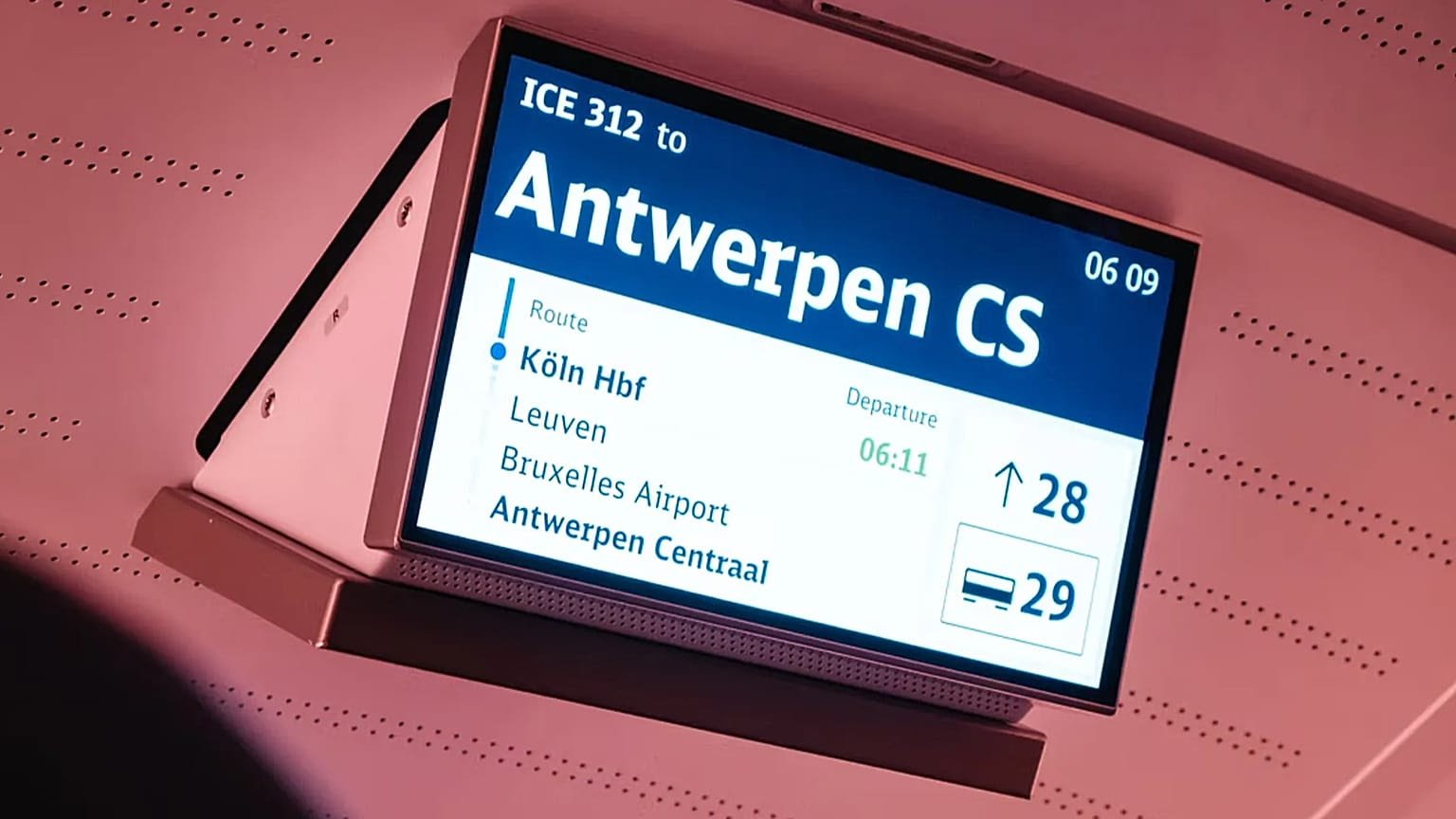
Brussels Airport has re-established its direct connection to Europe’s international high-speed rail network after more than a decade, with Deutsche Bahn launching a new ICE service linking Cologne with Brussels Airport and Antwerp.
The first Deutsche Bahn high-speed train arrived at Brussels Airport at 8:29 a.m. on September 7, marking the airport’s first direct connection to the international high-speed rail network since 2015. The inaugural service departed Cologne at 6:11 a.m., calling at Aachen, Liège and Leuven before reaching Brussels Airport. Around five minutes later, it continued to its final destination, Antwerpen-Centraal.
The new service is the result of a partnership between Deutsche Bahn and Brussels Airlines announced in February, bringing Brussels Airport into Deutsche Bahn’s high-speed network while creating a rail-and-air option for travellers from western Germany.
Rail and Air on One Booking
Under the partnership, passengers travelling between western Germany and destinations served by Brussels Airlines can book their train and flight as a single journey. The rail service carries a Brussels Airlines flight number as part of the codeshare arrangement, allowing passengers to connect with the airline’s wider network at Brussels Airport.
The journey between Cologne and Brussels Airport takes around two hours, giving passengers from the region direct rail access to an airport serving more than 180 destinations worldwide.
The intermodal arrangement is designed to make rail-air connections more seamless. Passengers have a single booking for the journey, a guaranteed connection in the event of delays and the ability to earn Miles & More rewards. The product is available through Brussels Airlines, travel agencies and other sales channels.
More than 1,000 tickets had already been sold since the partnership was announced in February, according to Brussels Airlines. Among the most popular destinations for passengers using the combined rail-and-air product are New York, Accra and Alicante.
Two Daily Services in Each Direction
The ICE service operates between Cologne and Antwerpen-Centraal, with Brussels Airport positioned as an important intermediate stop.
For air travellers, the location of the airport’s railway station directly beneath the terminal makes the transition between rail and air particularly straightforward. The new connection also provides a direct rail option for passengers travelling from the airport towards Belgium and western Germany.
The service forms part of a broader effort to bring rail and air travel closer together, particularly on journeys where high-speed rail can replace a short-haul flight or provide the first or final leg of a longer international journey.
Brussels Airport’s Intermodal Ambition
Brussels Airport Chief Executive Officer Arnaud Feist described the return of high-speed rail as an important development in the airport’s evolution as an intermodal hub.
The airport is seeking to give passengers more options for reaching and leaving the terminal, including cross-border rail connections. The new ICE service also expands the catchment area of Brussels Airport by making it directly accessible from western Germany by high-speed train.
For Deutsche Bahn, the connection brings together two significant transport hubs: Cologne, a major centre for cross-border long-distance rail, and Brussels Airport, an international gateway for onward air travel.
Michael Peterson, Deutsche Bahn’s Board Member for Long-Distance Passenger Transport, said the service responds to growing demand for international rail travel while expanding the possibilities for combined rail-and-air journeys.
A Return After 11 Years
The arrival of the ICE marks the end of a gap of more than 10 years in Brussels Airport’s direct international high-speed rail connectivity.
The timing is significant as airlines, airports and railway operators increasingly look towards integrated transport networks rather than treating air and rail as competing modes. For passengers, the new Cologne–Brussels Airport connection offers a practical way to combine high-speed rail with a longer international flight under one booking.
For Brussels Airport, meanwhile, the service strengthens its position not only as an aviation gateway but also as a European transport hub where international rail and air networks meet.