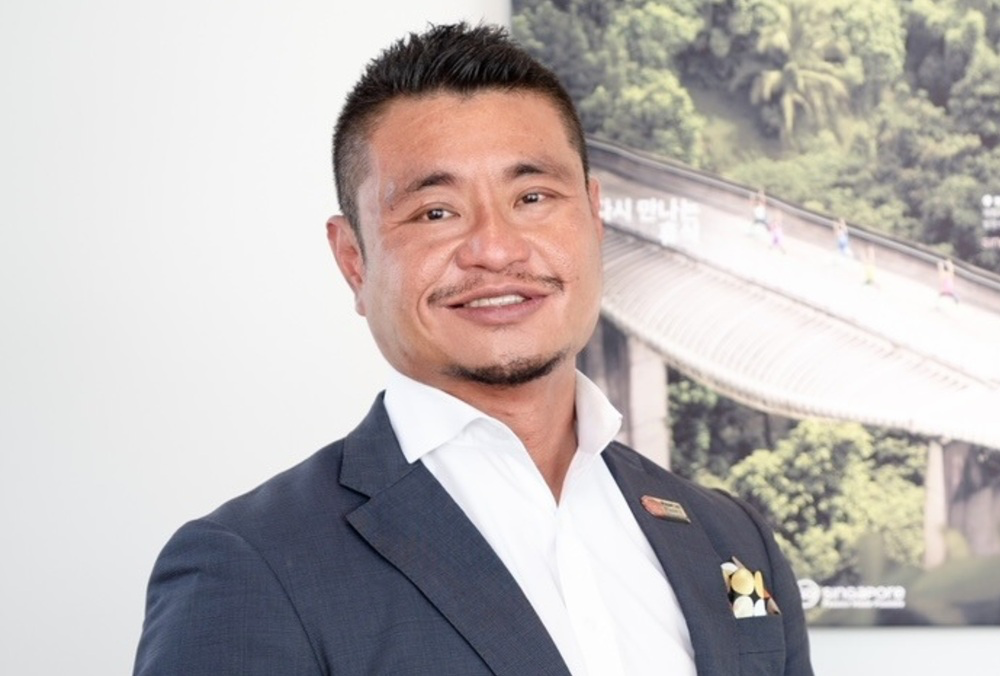
Markus Tan, Regional Director, India, Middle East, South Asia & Africa, Singapore Tourism Board (STB)
Singapore is entering a new phase of destination development, with a growing emphasis on fresh experiences, immersive attractions, neighbourhood discovery and cultural relevance as it seeks to strengthen its longstanding connection with Indian travellers.
For a destination already familiar to generations of Indian visitors, the challenge is no longer simply attracting first-time travellers. It is giving them compelling reasons to return.
Markus Tan, Regional Director, India, Middle East, South Asia & Africa, Singapore Tourism Board (STB), says this thinking is central to Singapore’s tourism strategy. “What really drives us is the question of how we keep Singapore feeling fresh, relevant, and worth coming back to,” he says, pointing to continued investment in experiences, industry partnerships and a year-round events calendar.
The approach aligns with STB’s broader Tourism 2040 roadmap, which seeks to respond to changing traveller preferences, rising global competition and demographic shifts while pursuing sustainable, quality-led tourism growth. STB has set a target of S$47 billion to S$50 billion in tourism receipts by 2040.
India Remains a Key Market
India continues to occupy an important position in Singapore’s international tourism strategy. In 2025, Singapore welcomed 1.2 million Indian visitors, placing India among the destination’s five largest source markets. Overall, Singapore recorded 16.9 million international visitor arrivals during the year, while tourism receipts reached a record S$32.8 billion.
The relationship is supported by strong cultural familiarity as well as Singapore’s accessibility, established hospitality infrastructure and appeal across different traveller segments.
For Indian visitors, the destination offers a combination of international sophistication and recognisable cultural touchpoints. Singapore’s Indian heritage is particularly visible in areas such as Little India, while vegetarian and Jain dining options, Indian cuisine and Hindi-speaking services add to the sense of familiarity.
But STB’s India strategy is increasingly focused on moving beyond familiarity towards discovery.
A Destination Designed for Repeat Visits
Singapore’s latest tourism proposition is being shaped around the idea that even returning visitors should find something new.
The pipeline of attractions illustrates that approach. The opening of the Singapore Oceanarium has transformed the former S.E.A. Aquarium into a substantially expanded marine attraction, while Mandai Wildlife Reserve has added experiences including Rainforest Wild Adventure and Exploria.
At the same time, new entertainment and immersive concepts are expanding Singapore’s offer beyond conventional sightseeing.
Jurassic World: The Experience, located at Gardens by the Bay, was recognised at the 2026 Singapore Tourism Awards with the Outstanding Attraction Experience award. STB described the attraction as combining animatronics, puppetry, lighting, sound and projection within a botanical setting.
The Singapore Oceanarium is also being used as a platform for new experiences and collaborations. In June 2026, STB announced a partnership with POP MART and Resorts World Sentosa for a CRYBABY-themed activation at the oceanarium.
The result is a destination proposition increasingly built around wildlife, entertainment, technology, culture and immersive storytelling rather than a fixed list of traditional attractions.
Connecting with a Younger Indian Traveller
For STB, reaching younger Indian travellers requires a different approach to destination marketing.
Tan points to music, social media, creators and popular culture as increasingly important sources of travel inspiration for Millennials and Gen Z travellers. Initiatives involving Indian artists and digital content are designed to introduce audiences to a side of Singapore that extends beyond its established postcard imagery.
That includes highlighting neighbourhoods, lesser-known experiences and contemporary cultural spaces, alongside the city’s better-known attractions.
The strategy is also extending into India’s entertainment ecosystem. STB is deepening its engagement with Bollywood while looking towards the wider audiences of Kollywood and Tollywood and the growing reach of OTT platforms.
The objective is broader than conventional destination advertising: to keep Singapore present in the cultural conversation so that travel inspiration can develop organically through music, entertainment and digital content.
From Familiar to New
The relationship between Singapore and India gained additional visibility in 2025, when the two countries marked 60 years of diplomatic relations.
For STB, the anniversary provided an opportunity to build campaigns around the historical and cultural connections between the two countries while presenting contemporary Singapore to Indian audiences.
That balance—familiarity combined with discovery—is increasingly central to the destination’s India strategy.
Singapore can offer Indian travellers the reassurance of a well-established international destination, while its rapidly changing attraction landscape provides a reason to revisit.
Safety and Reliability Remain Part of the Proposition
At a time when international travellers are increasingly weighing reliability and ease alongside the excitement of a destination, Singapore’s reputation for safety and efficient infrastructure remains an important part of its appeal.
Tan describes safety, reliability and seamless connectivity as genuine differentiators for travellers reassessing their destination choices.
That proposition is supported by Singapore’s broader tourism infrastructure, including Changi Airport, an extensive public transport network and a mature hotel and attractions ecosystem.
For STB, however, reliability is increasingly being paired with novelty. The pitch is not simply that Singapore is easy and dependable; it is that travellers can have that reassurance while discovering something new.
Keeping the Trade Ahead of the Curve
Travel advisors remain an important part of Singapore’s India strategy, particularly as the destination becomes more diverse and itinerary planning becomes more experience-led.
STB is strengthening its engagement with the Indian travel trade through training, familiarisation opportunities and direct communication channels designed to keep advisors updated on new attractions, campaigns and destination developments.
The strategy is particularly relevant as Singapore adds more products across different traveller segments. A family looking for wildlife and entertainment, a couple seeking gastronomy and design, a multigenerational group looking for accessible experiences, or a younger traveller interested in music and culture can all approach the destination differently.
That flexibility gives Indian travel advisors more opportunities to build personalised itineraries rather than relying on a standard Singapore programme.
The Next Chapter
Singapore’s evolution is ultimately less about replacing its established identity than expanding it.
The city-state remains a global hub, a multicultural destination and one of Asia’s most accessible urban breaks. But the tourism proposition is becoming more dynamic, with new attractions, immersive entertainment, cultural experiences and neighbourhood discovery being layered onto that foundation.
For India, one of Singapore’s most important source markets, that creates a proposition built around both familiarity and renewal.
As STB pursues its Tourism 2040 ambitions, the objective is clear: keep Singapore relevant not only to the traveller who has never visited, but also to the Indian visitor who has already been there—and needs a new reason to come back.