With a medieval old town, beaches, mountain-backed scenery and a fast-growing international hotel scene, Budva is emerging as one of the Adriatic’s most closely watched destinations.
Montenegro’s Adriatic coast is entering a new chapter, and Budva is at the centre of it.
The resort city brings together many of the ingredients that have long defined the Mediterranean holiday: clear Adriatic waters, beaches, historic architecture, restaurants, nightlife and a dramatic mountain backdrop. But unlike more established European resort destinations, Budva is still in the process of defining its place on the international tourism map.
That transformation is becoming increasingly visible. International hotel groups are expanding their presence, visitor numbers are rising and the Budva Riviera is attracting a broader mix of European travellers.
The challenge is how to accommodate that growth without losing the character that made the destination attractive in the first place.
Where the Adriatic meets the mountains
Few stretches of the Mediterranean demonstrate the relationship between sea and mountains quite as dramatically as Montenegro’s coast.
Around Budva, the Adriatic lies directly below rugged terrain, creating a landscape in which beaches, historic settlements and mountain scenery are compressed into a relatively small area.
The Budva Riviera itself extends for around 38 kilometres and includes a succession of beaches and coastal resorts, among them Jaz, Mogren, Bečići, Pržno and Sveti Stefan.
For visitors, that concentration makes Budva an easy base from which to combine traditional beach holidays with cultural sightseeing, coastal excursions and exploration of Montenegro’s wider landscape.
A medieval heart beneath the resort atmosphere
Budva’s modern identity may be associated with summer holidays and nightlife, but its history stretches far deeper.
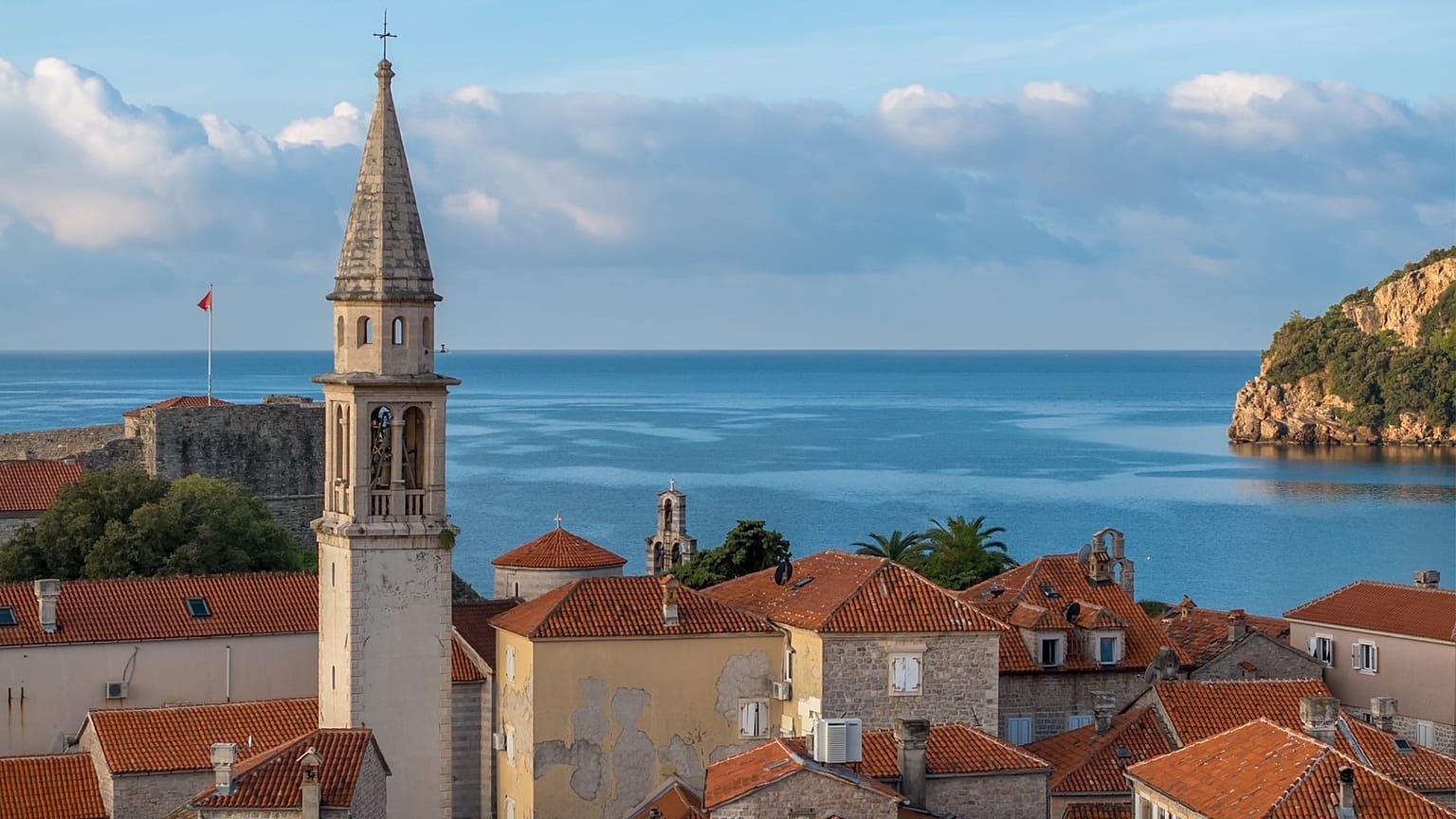
At the centre of the city stands Stari Grad, the Old Town, enclosed by medieval defensive walls and filled with narrow streets, squares, churches and historic buildings.
Montenegro’s official tourism authority describes the Old Town as one of the country’s defining historic attractions, with layers of Illyrian, Greek, Roman, Venetian and other influences visible in its architecture and archaeological heritage.
That historic core provides a striking contrast to the resort atmosphere outside the walls. A day in Budva can move effortlessly from the beach to centuries-old stone streets before ending at a restaurant or terrace overlooking the Adriatic.
It is this combination of heritage and contemporary holiday culture that gives the city much of its character.
The rise of international hospitality
Budva’s growing profile is also attracting international hotel operators.
Spanish hospitality group Iberostar currently operates four properties in Montenegro, including two in Budva, according to the latest reporting. One of its Budva properties, Iberostar Waves Slavija, sits around 1.5 kilometres from the Old Town and combines resort facilities with views towards the city, mountains and Adriatic.
The expanding international hotel presence reflects a wider shift in Montenegro’s tourism market. The country remains considerably smaller than many of Europe’s established Mediterranean destinations, but its combination of coastline, heritage and mountainous scenery is increasingly attracting international investment.
For travellers, that means a broader choice of accommodation — from established international brands to smaller independent properties — as Budva develops into a more sophisticated tourism centre.
Sveti Stefan: Montenegro’s postcard image
A short journey from Budva brings visitors to one of Montenegro’s most recognisable coastal landmarks: Sveti Stefan.
The historic settlement occupies a small island connected to the mainland by a narrow causeway. Its stone houses and red-tiled roofs rise directly from the Adriatic, creating an image that has become synonymous with Montenegro’s coastline.
The area also includes beaches and viewpoints overlooking the island and surrounding coast. Montenegro’s official tourism information lists Sveti Stefan among the country’s prominent Adriatic beaches and highlights its distinctive position on the Budva Riviera.
For many visitors, the viewpoint overlooking Sveti Stefan is as much a part of the journey as the destination itself.
The price of popularity
Budva’s growing appeal comes with a visible downside, particularly during the peak summer season.
Road traffic can become a serious issue along the Montenegrin coast, with the main coastal routes struggling under the volume of cars, coaches and visitors during July and August. The journey between destinations that appear close on a map can take considerably longer at the height of the season.
Border crossings can present another challenge for travellers arriving by road, particularly from neighbouring Croatia.
These pressures underline a central question for Montenegro’s tourism industry: how can the country continue attracting visitors while improving the infrastructure needed to handle them?
The issue is particularly important for a destination whose appeal is closely linked to its relatively compact scale and the ease of combining coast, heritage and mountains in a single trip.
A destination moving into the mainstream
Montenegro’s appeal lies partly in the fact that its landscapes still feel dramatically different from those of many established Mediterranean resorts.
The sea is never far from the mountains. Historic towns sit close to modern resorts. Beaches and bays alternate with rugged terrain, while the country’s relatively small size makes multi-stop itineraries practical.
Budva captures that contrast more intensely than almost anywhere else.
It can be lively and crowded in the height of summer, with music, nightlife and packed waterfront terraces. Yet within minutes, visitors can step behind the walls of the Old Town or travel along the coast towards quieter landscapes.
That dual identity may ultimately prove to be Budva’s strongest tourism asset.
Montenegro’s Adriatic moment
Budva is no longer simply a traditional seaside resort. It is becoming a window into Montenegro’s broader transformation as an international tourism destination.
The arrival of major hotel groups, the growing visibility of its Riviera and the continuing interest in landmarks such as Sveti Stefan point towards a country increasingly competing for attention within the European holiday market.
But the next phase will require more than attracting visitors. Infrastructure, traffic management and the protection of the coastline will become increasingly important as Montenegro attempts to balance tourism growth with the qualities that made the destination attractive in the first place.
For now, Budva offers an unusually concentrated Adriatic experience: medieval walls, beaches, nightlife, historic landmarks and mountains within a remarkably compact stretch of coastline.
That combination is helping Montenegro move from an emerging destination to one of Europe’s increasingly talked-about Riviera escapes.