
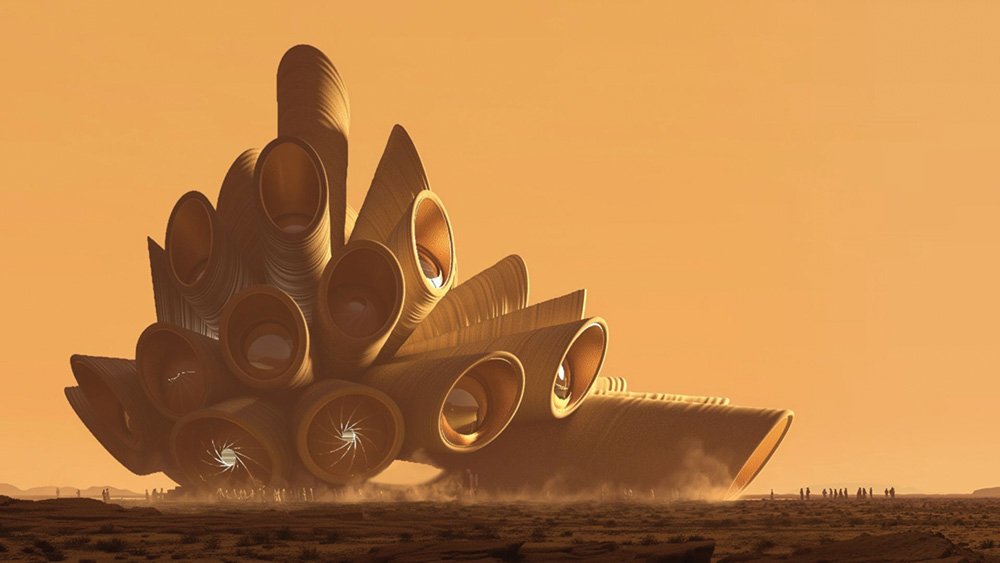
Saudi Arabia’s historic oasis destination of AlUla has revealed the design of AlUla Manara, an ambitious astronomy and astrotourism destination that will combine scientific research, immersive visitor experiences and conservation-led development within one of the world’s largest certified Dark Sky Parks.Designed by internationally renowned Heatherwick Studio, the project has received approval from the Board of Directors of the Royal Commission for AlUla (RCU) and represents another major milestone in the destination’s transformation into a global centre for culture, heritage, nature and experiential tourism.Aligned with Saudi Vision 2030, AlUla Manara is expected to strengthen Saudi Arabia’s position in astronomy, scientific research and sustainable tourism while offering visitors an entirely new way to explore the region’s extraordinary natural and cultural landscape.
A new chapter in astrotourism
Located within the world’s third-largest Dark Sky Park, AlUla Manara has been conceived as a destination where astronomy, education, scientific discovery and tourism converge.The project draws inspiration from AlUla’s long-standing relationship with the night sky, where stars once guided traders, travellers and local communities across the Arabian Peninsula. That heritage will now be interpreted through a contemporary visitor experience that combines advanced scientific facilities with engaging educational attractions.The development reflects the growing global popularity of astrotourism, offering travellers opportunities to experience some of the clearest and darkest night skies on Earth while learning about astronomy and space sciences.
Immersive visitor experiences meet scientific research
At the heart of AlUla Manara will be a purpose-built visitor centre designed to make astronomy accessible to travellers of all ages.The facility will feature:Immersive interactive exhibitionsAstronomy galleriesA state-of-the-art planetariumScientific research facilitiesA restaurant overlooking the surrounding landscapeA rooftop observation deck for stargazingUnlike traditional observatories, visitors will also be able to witness aspects of live scientific research, creating a unique experience where tourism and science intersect.Situated between the Gharameel Nature Reserve and the Harrat Uwayrid Reserve, the destination offers exceptional conditions for astronomical observation thanks to its remarkably low levels of light pollution.
Architecture inspired by the cosmos
The architectural vision by Heatherwick Studio takes its inspiration from the spiralling forms found throughout nature and the universe.The design incorporates interlocking telescope-inspired structures whose flowing geometry echoes galaxies, planetary rings, stars, shells and fossils. Clad in textured stone that mirrors AlUla’s iconic sandstone formations, the buildings are intended to blend naturally into the surrounding desert landscape while maintaining a visual dialogue between Earth and the cosmos.According to Stuart Wood, the project seeks to transform the traditional observatory experience by making cutting-edge astronomy more engaging and accessible to the public.He noted that the design creates an immersive environment where visitors can experience the wonder of the universe while remaining closely connected to ongoing scientific discovery.
Sustainability at the heart of the design
Environmental conservation has been integrated into every aspect of the project.The building’s tubular architectural forms incorporate advanced shading systems that regulate sunlight during the day while preserving dark-sky conditions at night. Operable windows respond to changing weather conditions, improving energy efficiency and maintaining uninterrupted views of the surrounding desert environment.According to the Royal Commission for AlUla, the project has been carefully designed to operate in harmony with its natural setting while safeguarding one of the destination’s most valuable environmental assets—its pristine night skies.
Protecting one of the world’s darkest skies
AlUla’s skies rank among the top five per cent globally for natural darkness and astronomical visibility, making the destination one of the world’s premier locations for stargazing.Several protected areas, including the Gharameel Nature Reserve, Sharaan National Park and Wadi Nakhlah Nature Reserve, have received official certification from DarkSky International.To preserve these conditions, the Royal Commission for AlUla has introduced a comprehensive Astrotourism Policy that includes lighting controls, visitor management guidelines and zoning regulations designed to minimise light pollution while protecting wildlife and natural ecosystems.
Expanding AlUla’s tourism portfolio
AlUla Manara forms part of a broader strategy to diversify the destination’s tourism offering beyond archaeology and heritage.Alongside globally recognised attractions such as the UNESCO World Heritage Site Hegra and the iconic mirrored concert venue Maraya, the new astronomy destination is expected to position AlUla as an international centre for scientific exploration, experiential travel and nature-based tourism.Phillip Jones, Chief Tourism Officer at the Royal Commission for AlUla, said the project reflects the region’s historic relationship with the stars while creating a new visitor experience centred on discovery, learning and inspiration.He added that Manara has the potential to become an internationally recognised landmark for astronomy and scientific tourism, much as Maraya has become a global icon for architecture and culture.
Supporting Saudi Vision 2030
The project also supports Saudi Arabia’s wider ambitions to become a regional leader in science, innovation and sustainable tourism under Saudi Vision 2030.According to Naif AlMalik, the development demonstrates how conservation and tourism can work together to protect natural heritage while creating opportunities for education, research and innovation.Through advanced observation technologies, scientific research facilities, interactive exhibitions and immersive visitor experiences, AlUla Manara is expected to become a global platform for astronomy, public engagement and international collaboration while inspiring future generations of scientists, researchers and explorers.