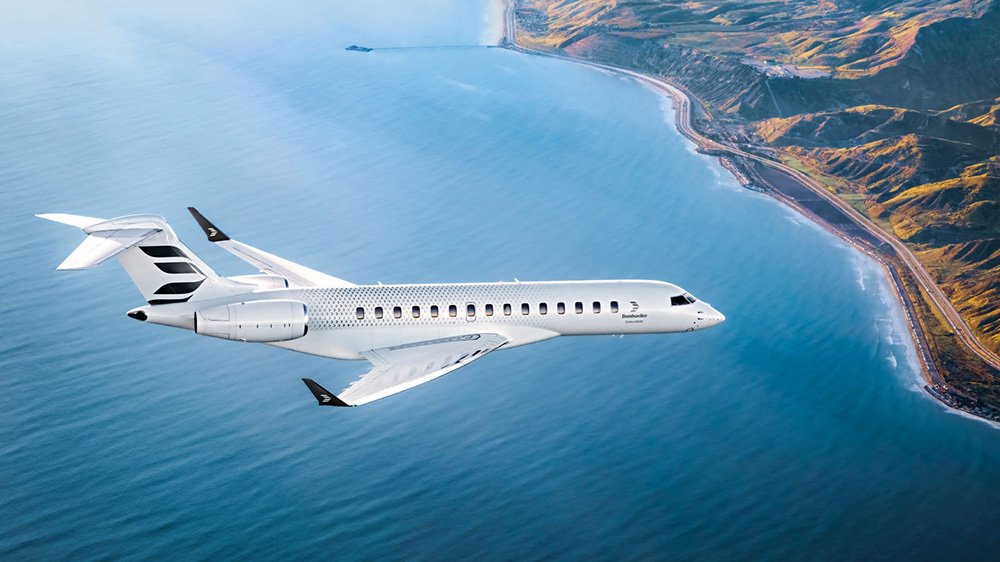
The future of ultra-long-range business aviation has arrived with the Bombardier Global 8000, an aircraft that is redefining private air travel through a combination of record-breaking speed, exceptional range and next-generation passenger comfort.
Certified by Transport Canada, the Federal Aviation Administration (FAA) and the European Union Aviation Safety Agency (EASA), the Global 8000 entered commercial service in December 2025, becoming the world’s fastest civil aircraft currently in operation. With a maximum operating speed of Mach 0.95, it comes closer to the speed of sound than any other business jet in service, reviving an era of high-speed civil aviation not seen since the retirement of Concorde in 2003.The aircraft has already demonstrated its capabilities by completing a flight between Montreal and Nice in just over six hours, highlighting its ability to significantly reduce travel times on long-haul international routes.
Redefining Performance in the Ultra-Long-Range Segment
While its impressive speed is a defining feature, the Global 8000 has been engineered to deliver equally remarkable versatility.The aircraft boasts a class-leading range of 8,000 nautical miles, enabling non-stop connections between many of the world’s most important business and leisure destinations. Combined with an advanced wing design incorporating innovative leading-edge slats, the aircraft is capable of operating from shorter runways, providing access to approximately 30 per cent more airports than its nearest competitor.The enhanced airport accessibility allows travellers greater flexibility, enabling direct access to regional airports closer to final destinations while avoiding congestion at major international hubs.
A Cabin Designed for Long-Haul Comfort
Inside, the Global 8000 has been designed to transform the long-haul flying experience.The aircraft features four distinct living spaces alongside a dedicated crew rest area, creating an environment that supports productivity, relaxation and privacy during extended journeys. The spacious cabin offers one of the longest seated lengths in its category, allowing passengers to comfortably work, dine, hold meetings or rest throughout the flight.A defining innovation is its exceptionally low cabin altitude of just 2,691 feet while cruising at 41,000 feet, the lowest available on any production business jet.Maintaining a lower cabin altitude helps minimise the physical effects commonly associated with high-altitude travel, including fatigue, dehydration and reduced alertness. As a result, passengers are more likely to arrive refreshed and ready for business engagements or leisure activities immediately after landing.
Expanding Non-Stop Global Connectivity
For international business travellers, particularly those based in fast-growing markets such as India, the aircraft’s extended range offers new levels of flexibility.Cities including Mumbai and Delhi can be connected non-stop with major global destinations such as New York, London, Singapore and Sydney, eliminating the need for fuel stops or lengthy layovers that often accompany ultra-long-distance travel.The combination of speed, endurance and operational flexibility provides corporate executives, entrepreneurs and private travellers with greater control over their schedules while reducing overall journey times.
Setting a New Benchmark
As global demand for private aviation continues to evolve, the Bombardier Global 8000 represents a significant advancement in aircraft design and passenger experience.Its combination of near-supersonic cruising speeds, industry-leading range, enhanced airport accessibility and wellness-focused cabin technology establishes a new benchmark for the ultra-long-range business jet market.In an era where time has become one of travel’s most valuable commodities, the Global 8000 demonstrates how advances in aviation technology are reshaping long-distance journeys—bringing continents closer while making travel faster, more efficient and considerably more comfortable.The Bombardier Global 8000 entered service in December 2025. Performance figures and operating range may vary depending on operational and environmental conditions.