

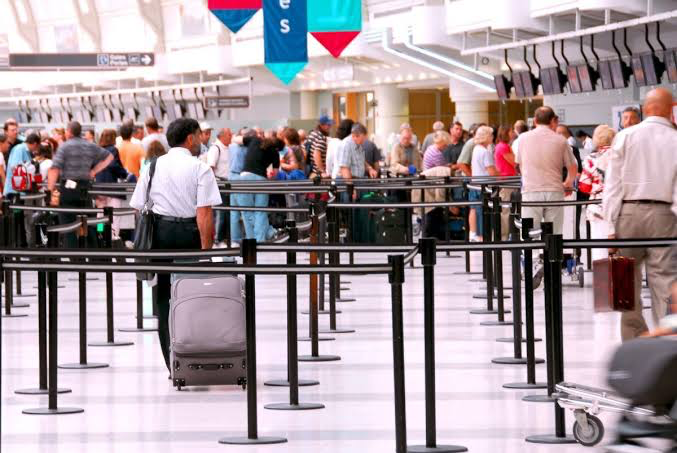
Heathrow remains Europe’s busiest airport, while leisure demand and low-cost expansion continue to reshape the continent’s aviation landscape
Europe’s aviation sector returned to a growth trajectory in May 2026, with passenger traffic across the region’s airports rising 3.2 per cent year-on-year, signalling renewed momentum after a slight decline in April. The rebound was driven primarily by strong performances across European Union airports, sustained leisure travel demand and the continued expansion of ultra-low-cost carriers, according to the latest Airports Council International (ACI) Europetraffic report.
The figures underscore the resilience of Europe’s travel market despite a challenging operating environment marked by geopolitical tensions, airline capacity constraints, aviation taxes and evolving airline network strategies.
EU Airports Drive the Recovery
According to ACI Europe, airports across the EU+ market recorded a 3.4 per cent increase in passenger traffic during May, with airports within the European Union outperforming the broader region at 4.2 per cent growth. By comparison, airports in the non-EU+ market posted a more modest 2 per cent increase.
The recovery follows April’s 0.7 per cent decline, indicating that demand for European air travel remains fundamentally strong as the peak summer tourism season gathers pace.
However, ACI Europe noted that performance continues to vary considerably across individual markets. Passenger demand has been influenced by multiple factors, including the ongoing conflict in the Middle East, airline capacity adjustments, aviation taxation policies, operational constraints and the growing dominance of low-cost carriers across several markets.
Eastern and Southern Europe Continue to Outperform
Several smaller European markets delivered exceptional passenger growth during May.
Within the EU+, Slovakia recorded the strongest increase, with passenger traffic surging 112.8 per cent, followed by Malta (16.5 per cent), Estonia (13.1 per cent), Slovenia (11.2 per cent), Bulgaria (9.2 per cent), Poland (8.9 per cent) and both Lithuania and Denmark, each reporting 8.5 per cent growth.
Not every market experienced positive momentum.
Cyprus saw passenger numbers decline 4.1 per cent, reflecting continued travel disruptions linked to the Middle East conflict. Iceland reported a 6.2 per cent decline, while Austria fell 5 per cent and Latvia slipped 2.3 per cent, primarily due to reduced airline capacity.
Switzerland also experienced weaker performance, with passenger traffic falling 5.3 per cent. According to ACI Europe, the decline reflected reduced operations by SWISS International Air Lines because of crew shortages and temporarily grounded aircraft, together with runway refurbishment works at EuroAirport Basel Mulhouse Freiburg.
Italy and Spain Lead Europe’s Major Aviation Markets
Among Europe’s largest aviation markets, Italy posted the strongest performance with 5.1 per cent passenger growth, narrowly ahead of Spain, which recorded 5 per cent.
Meanwhile, France registered a more modest 1.7 per cent increase, while the United Kingdom recorded 0.9 per cent growth, both remaining below the overall European average.
Germany remained the only major aviation market to report negative growth, with passenger traffic declining 0.6 per cent. The decrease reflected ongoing capacity reductions linked to the restructuring and grounding of parts of Lufthansa CityLine’s operations.
Non-EU Markets Show Mixed Performance
Outside the EU+, growth remained uneven.
North Macedonia emerged as the fastest-growing market, recording a 27.4 per cent increase, followed closely by Albania (26 per cent), Montenegro (17.8 per cent), Uzbekistan (16.2 per cent) and Armenia (12.7 per cent).
Conversely, Israel experienced the sharpest decline, with passenger traffic falling 17.2 per cent amid ongoing regional instability. Azerbaijan declined 6.1 per cent, Georgia slipped 5.9 per cent, while Kosovo recorded a 4 per cent decrease.
Türkiye, the largest aviation market in the non-EU+ group, continued to expand, posting 1.8 per cent growth.
Heathrow Retains Europe’s Top Position
Despite experiencing a 1.2 per cent year-on-year decline, Heathrow Airport remained Europe’s busiest airport during May, handling 7.12 million passengers.
Competition at the top, however, has become increasingly intense.
Istanbul Airport ranked second after recording 2 per cent growth, finishing only 3,012 passengers behind Heathrow—one of the narrowest gaps recorded between Europe’s two busiest hubs.
Spanish airports delivered some of the strongest performances among Europe’s ten busiest airports.
Josep Tarradellas Barcelona–El Prat Airport recorded 6.5 per cent growth, while Palma de Mallorca Airportincreased 4.9 per cent and Adolfo Suárez Madrid–Barajas Airport grew 4.8 per cent.
Notably, Palma de Mallorca handled more passengers during May than both London Gatwick Airport and Munich Airport, highlighting the continuing strength of Mediterranean leisure travel.
Smaller Airports Deliver the Fastest Growth
ACI Europe’s data revealed that smaller regional airports continued to outperform larger hubs.
Airports handling fewer passengers recorded 7.2 per cent growth, making them the fastest-growing category across Europe.
Nevertheless, these smaller airports remain the furthest from full recovery, with passenger volumes still 25.5 per cent below May 2019 levels, demonstrating that the post-pandemic recovery remains uneven across the airport network.
Aircraft movements also increased, albeit more modestly, rising 0.8 per cent compared with May 2025. ACI Europe attributed the slower increase in flight numbers to tighter airline capacity management and the continuing effects of geopolitical instability in the Middle East.
Airport Categories Show Broad-Based Expansion
Growth was recorded across every airport size category during May.
Major airports handling more than 40 million passengers annually reported average growth of 1.3 per cent, while mega airports handling between 25 million and 40 million passengers increased 2.2 per cent.
Large airports handling between 10 million and 25 million passengers grew 4.6 per cent, medium-sized airports handling between one million and 10 million passengers recorded 4.4 per cent growth, while small airports once again led the market with 7.2 per cent.
Among Europe’s largest hubs, Barcelona delivered the strongest performance with 6.5 per cent growth, followed by Madrid (4.8 per cent), Amsterdam Schiphol (3.3 per cent), Istanbul Sabiha Gökçen (2.9 per cent) and Frankfurt(2.7 per cent).
Within the mega airport category, Zurich Airport recorded 9.1 per cent growth, ahead of Copenhagen (7.5 per cent), Málaga (6.4 per cent), Palma de Mallorca (4.9 per cent) and London Stansted (4.5 per cent).
Among large airports, Tirana led with 26 per cent growth, followed by Tashkent (20.9 per cent), Malta (16.5 per cent), Kraków (16 per cent) and Izmir (13.3 per cent).
In the medium airport segment, Bratislava posted an exceptional 131.1 per cent increase, ahead of A Coruña (74.7 per cent), Skopje (28.6 per cent) and Trapani (24.9 per cent).
Among small airports, Stockholm Bromma recorded the most dramatic growth at 927.9 per cent, followed by Kastoria (750.4 per cent), Bucharest Băneasa (204.6 per cent), Hatay (190.8 per cent) and Syros Island Airport(157 per cent).
Tourism Demand Remains the Primary Growth Driver
The latest ACI Europe figures reinforce the continuing strength of Europe’s tourism industry, with leisure destinations across Southern and Eastern Europe benefiting from robust international demand.
At the same time, the report highlights the challenges facing the continent’s aviation sector, including geopolitical uncertainty, capacity shortages, infrastructure constraints and changing airline business models.
As Europe enters the busiest months of the summer travel season, airport operators remain cautiously optimistic that resilient leisure demand and expanding route networks will continue to support passenger growth, even as airlines carefully manage capacity in an increasingly complex operating environment.