
Global Tourism Leaders Examine Accessibility, Communication, and the Impact of Fake News
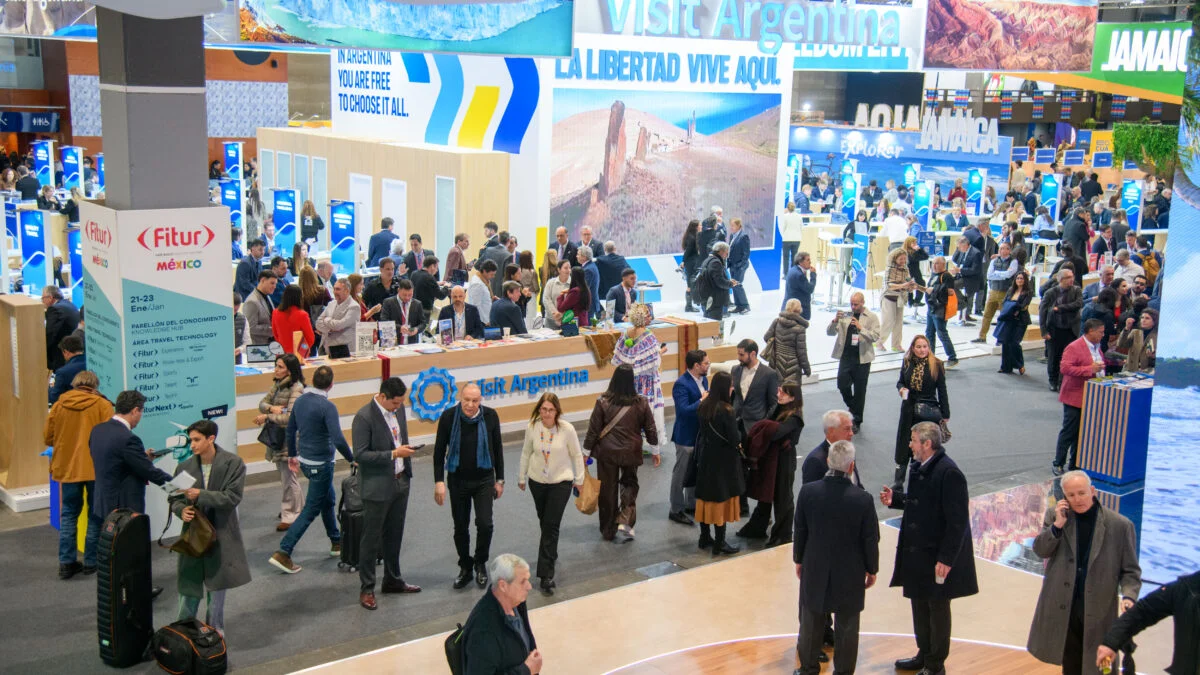
The 46th edition of Fitur 2026, one of the world’s premier tourism trade fairs, continued on its third day with in-depth discussions addressing two pressing issues for the global travel sector: accessibility in tourism and the growing challenge of misinformation. The dual focus reflected an emerging consensus among industry leaders that inclusion and credible communication are critical for sustaining tourism growth in a rapidly changing world.
The first International Summit on Communication and Tourism, organised jointly by Fitur and Spanish media giant Agencia EFE, opened with a call for professional knowledge-sharing in tourism communication. José Vicente de los Mozos, President of the Executive Committee of IFEMA Madrid, emphasised the forum’s ambition to become a global hub for communication and tourism expertise.
Miguel Ángel Oliver, President of Agencia EFE, highlighted the strategic importance of placing tourism at the centre of economic policy, particularly amid geopolitical uncertainty. He stressed that progress in gender equality, labour inclusion, sustainability, innovation, and investment must remain priorities for tourism stakeholders worldwide.
In parallel, Fitur 4all, Fitur’s dedicated platform for accessible and inclusive tourism, showcased how inclusion is transitioning from rhetoric to measurable outcomes. Francisco Sardón, President of Impulsa Igualdad, reported that Spain saw a 10 percent increase in tourists with reduced mobility in 2025. He noted that accessible tourism not only supports social equity but also delivers measurable economic returns. “We are committed to ensuring that Spain remains the global reference for tourism for all,” Sardón said.
Communication emerged as a central theme across both forums. During the panel on tourism communication in times of uncertainty, José Luis Sá Nogueira, Minister of Tourism of Cabo Verde, highlighted professional training as essential for building credibility and trust. Cabo Verde is investing in strengthening its communication workforce ahead of the 2026 FIFA World Cup, for which the country has qualified for the first time.
Fernando Valmaseda, CEO of RV Edipress and director of Miradas Viajeras, warned that weak or untrained communication can undermine destinations. “Communication should be treated as an investment, not a cost,” he stressed, noting that professional expertise is critical for instilling confidence in travellers and stakeholders alike.
The summit also addressed the growing threat of misinformation and fake news in tourism. Jonathan Gómez, Director General of Tourism, City Council of Málaga, cited an incident in which viral images of supposed shark sightings off Marbella—later identified as herbivorous fish—damaged Andalusia’s tourism image. Jorge Ocaña, journalist with EFE Verifica, presented additional cases, including manipulated images, fabricated destinations, and travel scams, illustrating how quickly false content can harm destinations financially and reputationally.
For accessible travel, the stakes are particularly high. Travelers with reduced mobility or specific access requirements depend on accurate information to plan safe and enjoyable trips. Nuria Cabrero, Editorial Director at Lonely Planet Spain, underscored that rigorous verification is the only effective response to misinformation, with all content cross-checked against trusted sources.
Fitur 4all discussions reinforced that transparency and precise communication are fundamental for policy development and market engagement. Igor Stefanovic, Head of Culture, Ethics, and Social Responsibility at UN Tourism, described accessible tourism as both a human right and a viable business opportunity, noting that one-third of the global population has specific access needs due to age, disability, or health conditions.
Market-specific insights also featured prominently. Miguel Carrasco, Director of Tourism at Impulsa Igualdad, highlighted differences in traveller preferences: French visitors tend toward active tourism and shorter stays, while North American tourists often favour longer journeys focused on heritage and gastronomy. Meeting these diverse expectations, he explained, requires clear, accurate, and tailored communication.
The Spanish government presented its new international tourism brand, “Think You Know Spain? Think Again”, positioning the country as a diverse, accessible, and inclusive destination. Bárbara Couto, Deputy Director General for Marketing at Turespaña, explained that the initiative targets markets including the United States and the United Kingdom, emphasizing equality of opportunity as a core message.
Discussions also stressed the importance of professional training and infrastructure. John Sage, CEO of Accessible Travel Solutions, described education as the foundation of accessible tourism, while Glenn Mandziuk, CEO of the World Sustainable Hospitality Alliance, highlighted the need for accommodations to create an inclusive environment that welcomes all travellers.
The day concluded with a call to re-centre tourism’s narrative around human values. Natalia Bayona, Executive Director at UN Tourism, emphasized that the sector must inspire hope and remain grounded in reality. “While tourism is experiencing strong growth in investment and arrivals, credibility depends on returning to values and storytelling rooted in truth,” she said.
Fitur 2026’s third day underscored the intertwined importance of accessibility and accurate communication for building a resilient, inclusive, and trustworthy global tourism industry—key priorities as the sector prepares for continued recovery and expansion in the years ahead.