
OAG data shows scheduled capacity at 25.4 million seats, with domestic and international markets contracting. IndiGo maintains a 51% share, while Akasa Air records the strongest growth among major carriers.
India’s scheduled airline seat capacity declined 1.7% year on year to 25.4 million seats in October 2026, reflecting reductions across both domestic and international services, according to aviation analytics company OAG.
Domestic capacity fell 2.3%, while international capacity decreased 0.4%. Domestic services accounted for 68% of the total market, with international flights representing the remaining 32%. Low-cost carriers continued to dominate, holding 71% of total capacity, equivalent to 18.1 million seats.
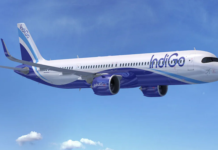
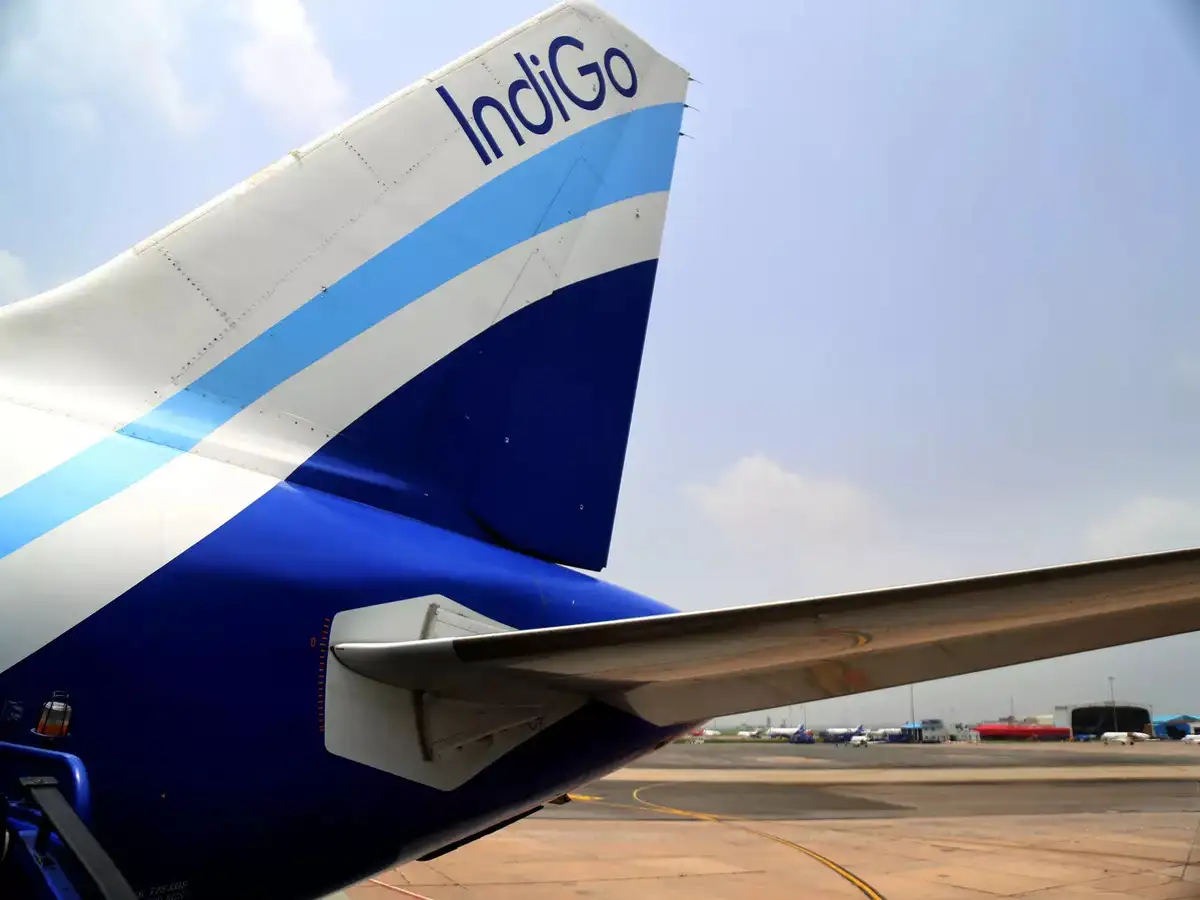
IndiGo retained its position as India’s largest airline, accounting for 51% of scheduled capacity with 13.07 million seats, despite a marginal 0.2% year-on-year decline.
Air India ranked second with 3.32 million seats, down 12.6%, while Air India Express placed third with 2.67 million seats, a reduction of 0.3%. Together, the Air India group accounted for 23% of the market.
Akasa Air recorded the strongest capacity growth among the leading carriers, increasing scheduled seats by 35.6% to approximately 1.19 million. Emirates also registered a modest increase of 0.7%. SpiceJet experienced the steepest contraction among the airlines listed by OAG, with capacity falling 38.8% to 380,126 seats.
Delhi leads airport capacity
Delhi remained India’s largest airport by scheduled seat capacity, recording 2.96 million seats in October, up 2.5% year on year. Mumbai ranked second with 1.87 million seats, down 2.5%, followed by Bengaluru with 1.81 million, a decline of 3.8%.
Pune was among the few major airports to record growth, with capacity rising 5.5% to 560,000 seats. Hyderabad and Ahmedabad saw sharper reductions of 15.3% and 12.3%, respectively.
Among domestic routes, Mumbai–Delhi remained the busiest, with 681,800 seats, up 7.4% from October 2025. Bengaluru–Delhi ranked second with 475,100 seats, down 1.2%, while Bengaluru–Mumbai recorded 380,400 seats, an increase of 5.1%.
Kolkata–Delhi posted the strongest growth among the 10 busiest domestic routes, with capacity rising 13.5% to 325,000 seats. Delhi–Chennai recorded the largest decline in that group, falling 13.7% to 215,800 seats.
Regional capacity trends diverge
Delhi accounted for 4.12 million seats, or 23.9% of India’s total scheduled capacity, while Maharashtra recorded 3.92 million seats, representing 22.8%. Maharashtra added 324,108 seats year on year, an increase of 9%, while Delhi added 151,152 seats, up 3.8%.
Kerala experienced the sharpest reduction among the regions highlighted by OAG, with capacity falling 27%, equivalent to 289,193 fewer seats than a year earlier. Telangana declined 12.3%, Goa 10.5% and Tamil Nadu 9.4%.
International markets show mixed performance
The United Arab Emirates remained India’s largest international market, accounting for 13% of international seat capacity. However, scheduled capacity fell 4% to approximately 1.1 million seats, amid continuing disruption in the Middle East.
Saudi Arabia moved in the opposite direction, with capacity increasing 23% to 352,000 seats. Capacity to Thailand fell 16% to 288,000 seats, while Malaysia and Nepal recorded declines of 11% and 10%, respectively.
The United Kingdom saw capacity rise 12% to 202,000 seats, making it India’s sixth-largest international market. Italy recorded one of the sharpest percentage increases, with scheduled seats climbing 187% year on year to 47,000.
The October figures point to a market in which capacity trends vary significantly by airline, airport and destination. While IndiGo continues to hold a commanding domestic position and low-cost carriers retain the majority share, reductions among several major airlines and international markets are weighing on overall scheduled capacity.