
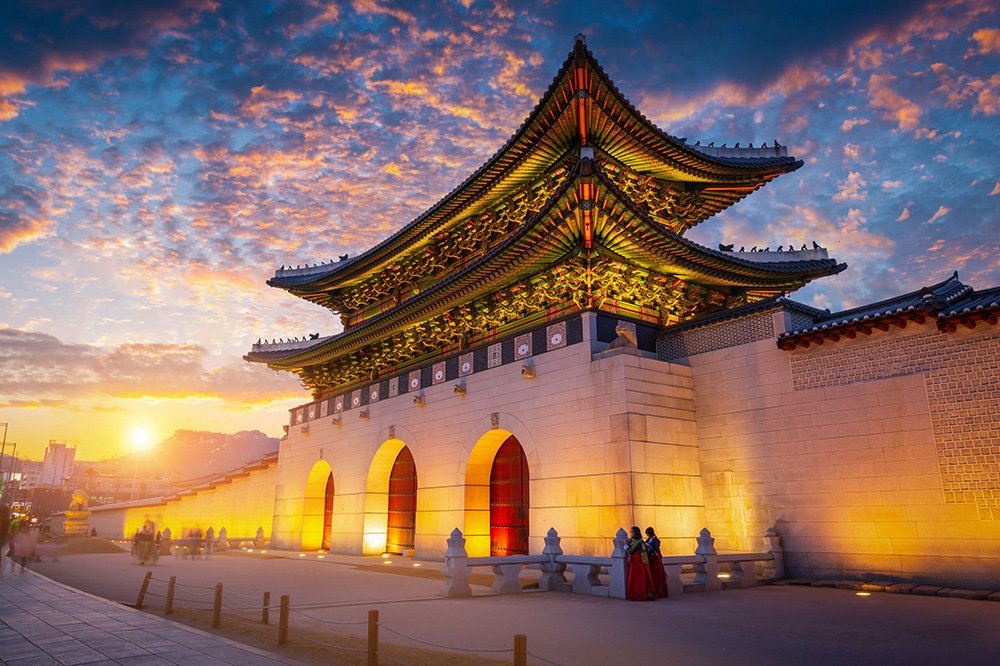
South Korea welcomed more than 15 million international visitors between January and August 2026, with inbound tourism continuing to expand amid eased entry procedures, targeted overseas marketing and growing access through regional airports and seaports.
According to the country’s Ministry of Culture, Sports and Tourism (MCST), 15.05 million international visitorsarrived during the first eight months of 2026, representing a 21.6% increase from the 12.38 million recorded during the same period in 2025.
August alone accounted for 2.25 million arrivals, up 23.3% year on year. Both the August monthly figure and the January-August cumulative total were the highest recorded in the past 30 years, according to the ministry.
Tourism spending reaches record level
The increase in arrivals has been accompanied by a substantial rise in tourism-related spending.
International visitors spent KRW 14.018 trillion through tourism-related card transactions during the first eight months of 2026, an increase of 48.5% from KRW 9.4396 trillion during the same period last year. The MCST said this was the highest figure since records began.
The distribution of inbound travel has also broadened. Visitors entering South Korea through regional airports and seaports accounted for 27.8% of total international arrivals from January through August, the highest share recorded during 2026 to that point. The ministry said the figure points to increasing visitor flows beyond the capital region.
China, Taiwan and Japan drive major-market growth
Greater China remained a significant source of inbound demand. Arrivals from the region reached 7.01 million, up 28.9% year on year.
Mainland China accounted for 4.82 million visitors, an increase of 29%, while Taiwan recorded 1.66 million arrivals, up 32.2%. Hong Kong contributed 496,000 visitors, an 18.1% increase, while Macau recorded 37,000 arrivals, up 28.3%.
Japan also recorded strong growth, with 2.70 million Japanese visitors travelling to South Korea during the January-August period, up 17.5% from a year earlier.
Southeast Asian markets continued to expand as well. The Philippines recorded 454,007 arrivals, up 16.1%, followed by Vietnam with 406,816 visitors, up 10.5%. Indonesia recorded 295,279 arrivals, an increase of 22.5%.
Singapore contributed 243,078 visitors, up 11.9%, while Thailand recorded 229,746 arrivals, up 14.9%, and Malaysia 206,838, up 12.6%.
Eased entry measures target Southeast Asian demand
The South Korean government has introduced a series of measures aimed at reducing entry barriers for selected Southeast Asian markets.
Working with the Ministry of Justice, the MCST eased requirements for multiple-entry visas for nationals of 11 Southeast Asian countries, including the Philippines, Vietnam and Indonesia, from 30 March 2026.
A separate temporary visa-free pilot for Indonesian group tourists began on 28 May 2026. The programme applies to groups of at least three tourists recruited through designated Indonesian travel agencies and is scheduled to run through 31 December 2026. Eligible visitors can travel throughout South Korea for up to 15 days under the programme.
The Ministry of Justice has also extended until 31 December 2026 a waiver of the US$15 visa issuance fee for group tourists from China, Vietnam, the Philippines, Indonesia, India and Cambodia.
K-Culture and localised marketing support tourism growth
The Korea Tourism Organization has promoted the revised entry measures through overseas events and social media campaigns, while also supporting efforts to streamline visa processing.
The MCST said its overseas promotion strategy has increasingly used local content creators and social media to connect K-Culture with travel demand. A Korea Travel Fair held in Singapore attracted 120,000 visitors over three days, while promotional events were also held in Vietnam, the Philippines and Malaysia.
The ministry and Korea Tourism Organization have also worked with airlines and online travel agencies on airfare promotions amid higher oil prices and fuel surcharges.
In Indonesia, for example, one-way flight operations to South Korea increased from 3,651 during January-August 2025 to 3,974 during the same period in 2026, an 8.8% increase.
Regional arrivals continue to expand
The increase in arrivals through regional airports and seaports is another feature of South Korea’s inbound tourism recovery. The 27.8% share recorded during the first eight months of 2026 was the highest level recorded during the year to date, according to the MCST.
The ministry has linked the broader distribution of arrivals with efforts to encourage visitors to explore destinations beyond the Seoul metropolitan area.
Kang Jung-won, Deputy Minister for Tourism Policy at the MCST, said the government would continue managing visa and immigration procedures while strengthening marketing connected to K-Culture during the fourth quarter.
The latest figures also place South Korea among the faster-growing major destinations in the region during the period. Between January and August 2026, international arrivals increased 21.6% in South Korea, compared with a 14.4% increase in Vietnam, while Japan and Thailand recorded declines of 2.7% and 3.1%, respectively. These comparisons are based on each country’s official tourism statistics cited by the MCST.