

Arrivals rise 2.6% year on year as European demand strengthens and Tunisia steps up efforts to diversify its international source markets
Tunisia welcomed 5.828 million international visitors between January and July 2026, representing a 2.6% increase compared with the same period last year, according to figures released by the country’s Ministry of Tourism.
The latest performance points to continued momentum in Tunisia’s tourism recovery, despite an increasingly competitive international market and uncertainty affecting travel destinations worldwide.
The increase follows a strong performance in 2025, when Tunisia crossed the 11 million international visitor mark for the first time. The latest figures indicate that the destination has maintained its upward trajectory into 2026.
European markets maintain momentum
Europe remains Tunisia’s leading international source region, with arrivals from European markets increasing by approximately 3% during the first seven months of 2026.
The performance reflects continued demand for Tunisia’s Mediterranean beach resorts, historic cities and cultural attractions, which together form the backbone of the country’s tourism offering.
Beyond its traditional European markets, Tunisia is also seeing stronger performance from several emerging and recovering source markets.
Arrivals from Canada increased by 10.2%, while the Russian market recorded growth of around 20%. The improvement from Russia coincided with an expansion in direct air services, with the number of weekly flights increasing from six to 13. Tunisia has also seen the return of the Belarusian market through a direct air connection.
Focus shifts towards market diversification
Tunisia is increasingly seeking to broaden its tourism base beyond its established European and neighbouring markets.
The Ministry of Tourism has identified China as a priority market, with promotional campaigns and efforts to strengthen air connectivity between China and Tunisia forming part of the strategy.
The focus on diversification is intended to improve the resilience of the tourism sector while opening new opportunities for hotels, tour operators, airlines and other businesses dependent on international visitor spending.
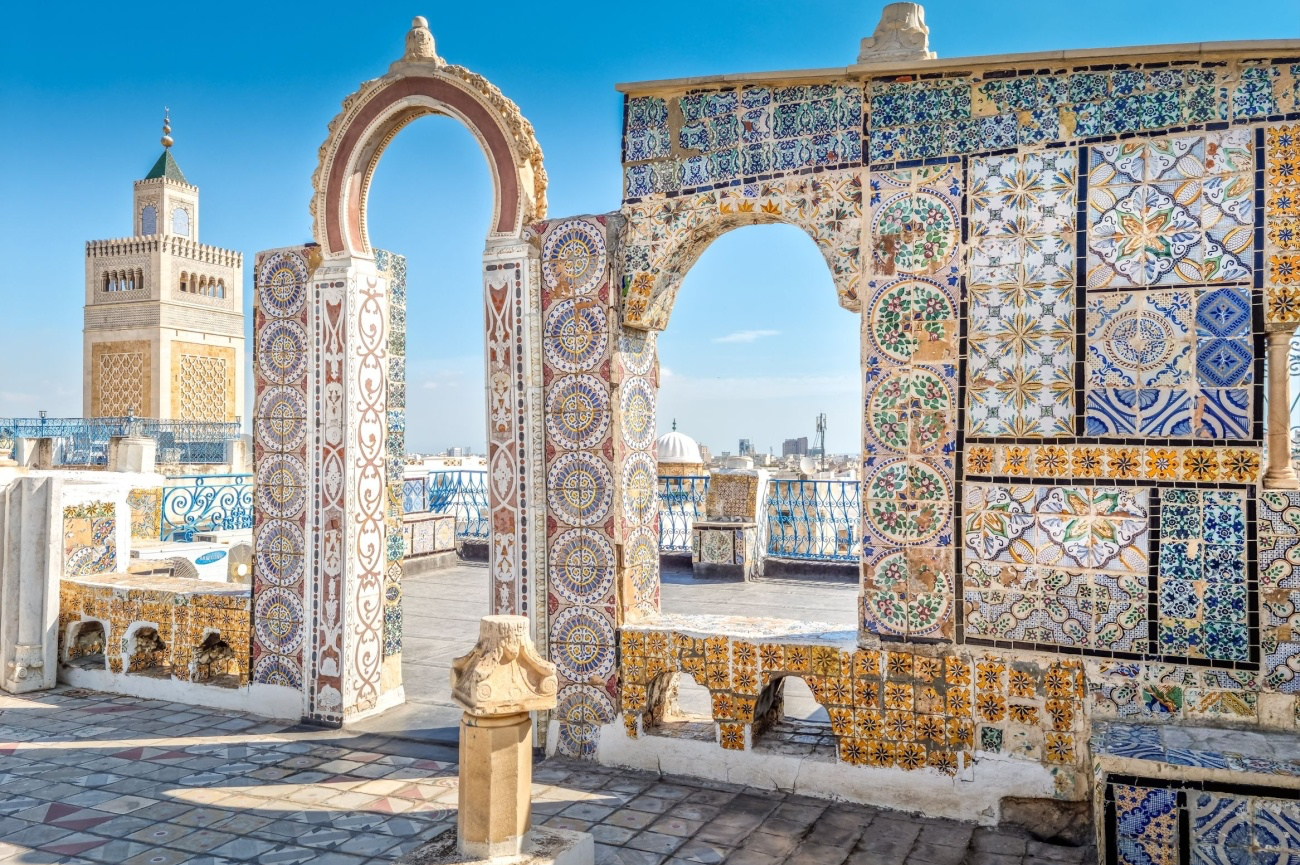
The strategy also reflects Tunisia’s efforts to strengthen its position in cultural and higher-value tourism. The country combines a long Mediterranean coastline with ancient archaeological sites, historic towns, traditional architecture and a diverse cultural heritage.
Tourism remains an important economic pillar
Tourism continues to play a major role in Tunisia’s economy, generating foreign-exchange earnings and supporting employment across hospitality, transport, restaurants, tour operations and related services.
Tourism revenues also showed positive momentum during the period. Data reported by Tunisian public broadcaster RTCI, citing the Central Bank and Ministry of Tourism, put tourism receipts at approximately 4.4 billion Tunisian dinars by the end of July, an increase of 4.5% from the corresponding period last year.
The growth in visitor numbers and tourism receipts comes as Tunisia seeks to encourage new investment in the sector. Recent government statements have highlighted efforts to improve the quality of tourism facilities, strengthen destination management and support investment in new tourism products.
Mediterranean appeal remains central
Tunisia’s established appeal continues to rest heavily on its Mediterranean coastline, with destinations such as Hammamet, Sousse, Monastir, Djerba and Mahdia attracting large numbers of leisure travellers.
At the same time, the country is seeking to expand beyond traditional sun-and-beach tourism by promoting cultural heritage, luxury experiences, golf, wellness, cruise and other specialised tourism products.
The government has also been working to improve the visitor experience through greater attention to cleanliness, environmental management and inspections of tourism establishments. These measures were highlighted during a recent review of tourism activity as part of efforts to strengthen Tunisia’s competitiveness.
Stronger outlook for 2026
With 5.83 million visitors recorded by the end of July, Tunisia is entering the second half of 2026 with international arrivals ahead of last year’s level.
The continued expansion of European demand, improving performance from selected long-haul markets and renewed efforts to develop Chinese tourism could provide further momentum during the remainder of the year.
For Tunisia, the challenge will be to convert the current growth into sustainable expansion while diversifying source markets, strengthening air connectivity and broadening the range of experiences available beyond the country’s traditional Mediterranean beach offering.