The Saudi Tourism Authority’s consumer brand, Saudi, Welcome to Arabia, has unveiled a refined preview of The Saudi Table, an immersive culinary residency curated by Chef Kunal Kapur at One8 Commune, Golf Course Road. Designed as a cultural and gastronomic introduction to Saudi Arabia’s contemporary food identity, the invitation-only preview brought together senior editors, food journalists, cultural commentators, creators and hospitality leaders from across Delhi-NCR, ahead of the residency’s public opening.
Among those in attendance were prominent culinary and lifestyle voices, including Shivesh Bhatia, Niki Mehra Madan, Ashna Sharma, Chef Afshan and several leading figures from the region’s food and culture ecosystem. The afternoon positioned Saudi cuisine not as an exotic curiosity, but as a confident, living tradition—rooted in heritage, shaped by trade, and increasingly visible on the global culinary map.
Reflecting on the collaboration, Chef Kunal Kapur described Saudi Arabia as a land of layered stories. “From the coral reefs of the Saudi Red Sea to the snow-dusted peaks of Tabuk, every region has its own narrative—of adventure, heritage and, above all, food that has been passed down quietly like an heirloom,” he said. Drawing parallels between the two cultures, Kapur highlighted the resonance between India’s Atithi Devo Bhavah and the Saudi concept of Hafawa—a philosophy of generosity, warmth and gracious hosting. “The Saudi Table celebrates this shared spirit. The flavours are familiar, yet truly spectacular.”
Anchored in ingredient integrity and informed by centuries of Indo–Arab exchange, the preview unfolded through an unhurried, communal dining format. Rather than theatrical reinvention, the experience foregrounded context: the influence of ancient trade routes on flavour, the continuity of home-style cooking, and the quiet assurance of a cuisine that balances antiquity with contemporary relevance.
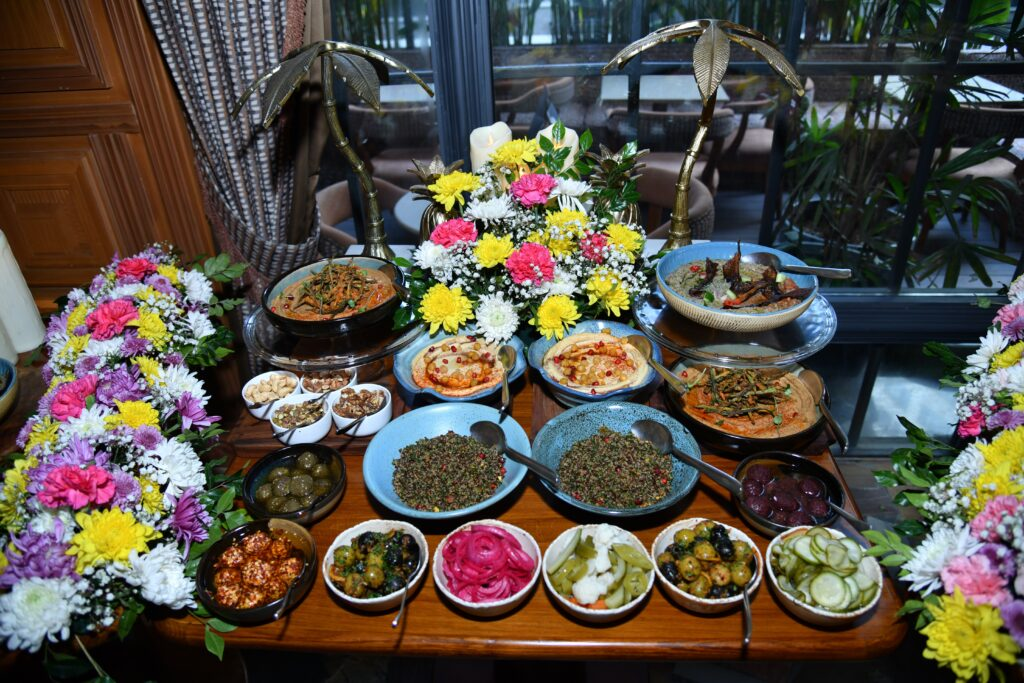
The experience opened with a generous grazing table that reflected the foundational grammar of Saudi dining—dips, grains, greens and breads arranged for sharing and conversation. Dishes such as Kareef salad with pomegranate molasses, Hijazi-style tabbouleh, wild za’atar labneh, baba ganoush, roasted carrot and date salad, and date-led creations including Madinah date and almond bites and date-cardamom cake offered an elegant introduction to the region’s agricultural and pantry traditions.
A progression of small plates followed, showcasing everyday Saudi cooking with clarity and restraint: aubergine-wrapped halloumi, cheese sambusas, blistered za’atar manakish, cottage cheese and chicken shawarma, lamb kawarma meatballs, stuffed chicken wings with dried fruit and wild rice, and Gulf-style shrimp brushed with harissa. The larger plates carried the ceremonial weight of Saudi hospitality—kabsa, mansaf lamb, saffron rice with seafood, seafood pilaf, and mushroom sheesh taouk with mujaddara—emphasising abundance, aroma and technique. Desserts closed the meal with characteristic restraint: warm kunafa, rose-and-pistachio panna cotta and crisp baklava.
Chef Kapur’s curation was widely noted for its discipline and fidelity to source. Rather than adapting Saudi dishes to suit a cosmopolitan palate, the menu respected the cuisine’s internal logic—its reliance on spice over heat, its balance of acidity and sweetness, its preference for texture over ornamentation, and its deeply embedded culture of shared, community-driven eating.
The preview also served as the platform to introduce Saudi’s new culinary-focused travel packages for the Indian market. Starting at ₹74,000, these itineraries are designed for travellers who seek to understand destinations through food—how people cook, shop, gather and celebrate. The packages are available through Saudi’s authorised travel partners, including EaseMyTrip, MakeMyTrip, Yatra, Akbar Travels, Riya Holidays and Atlas.
Each itinerary reflects a distinct regional rhythm. Jeddah’s programme follows the pulse of a historic coastal trading city, with dawn fish markets, Al-Balad’s heritage bakeries, time-honoured seafood institutions, Corniche evenings and optional Hijazi home-cooking sessions. Riyadh’s route explores Najdi hospitality and the capital’s contemporary energy, moving through Diriyah’s restored heritage quarters, traditional souks, coffee rituals and a growing landscape of chef-driven restaurants, complemented by desert dinners beneath the Tuwaiq cliffs. AlUla, defined by its oasis farms and monumental sandstone formations, offers farm-to-table dining, Old Town trails, date markets, heritage cafés, stargazing feasts and chef-led experiences set within one of the region’s most dramatic natural settings.
Together, these journeys extend the core philosophy of The Saudi Table: that cuisine is among the most revealing cultural texts—carrying memory, migration, landscape and identity in ways no single landmark can.
The Saudi Table will be open to the public until December 18, 2025, at One8 Commune, Golf Course Road, offering diners across Delhi-NCR a rare opportunity to experience the depth and diversity of Saudi Arabia’s culinary traditions firsthand.