

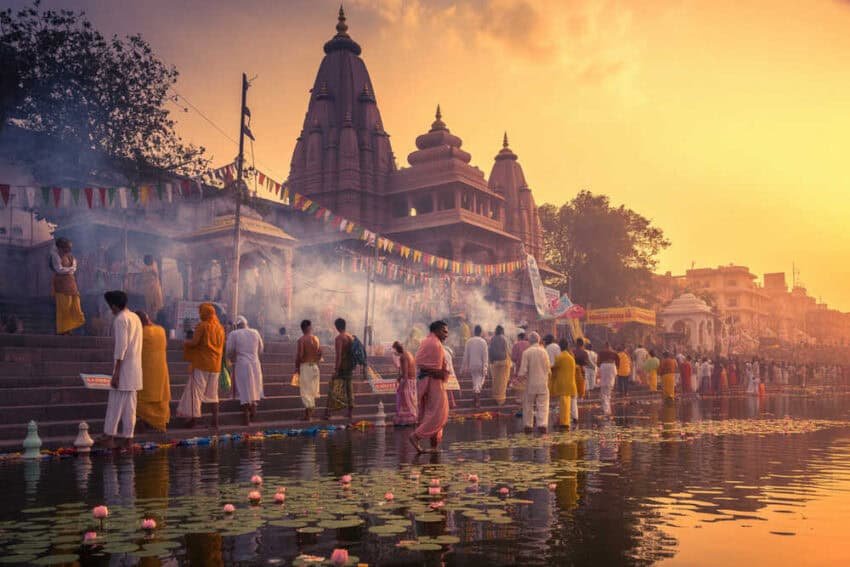
India is set to lead Asia in spiritually motivated travel in 2026, with new data from Agoda underscoring the enduring influence of faith, tradition, and cultural heritage on travel behaviour across the region.
According to the platform’s latest Travel Outlook Report, 19% of Indian travellers are planning journeys with a spiritual purpose this year—the highest proportion among surveyed Asian markets. India ranks ahead of Indonesia and Malaysia, with Japan and Thailand completing the top five. The findings highlight the growing prominence of faith-driven travel as a key segment within Asia’s broader tourism landscape.
Festivals and Pilgrimage as Demand Catalysts
Spiritual travel demand in India continues to be closely aligned with the country’s extensive calendar of religious festivals and pilgrimage gatherings.
One of the most significant examples is the Maha Kumbh Mela, widely regarded as one of the largest religious gatherings in the world. During its most recent edition in 2025, the city of Prayagraj recorded a 233% surge in accommodation searches on Agoda, reflecting the scale of both domestic and international interest.
Seasonal festivals are also proving to be powerful drivers of travel activity. During Holi, destinations known for traditional celebrations and temple rituals experienced substantial increases in demand. Pushkar saw a 195% rise in accommodation searches, followed by Vrindavan at 126% and Mathura at 109%.
These spikes illustrate how deeply embedded religious and cultural events are in shaping travel patterns across India, reinforcing the country’s position as a global hub for spiritual tourism.
Evolution Beyond Traditional Pilgrimage
While pilgrimage remains central, the nature of spiritual travel in India is undergoing a notable transformation.
Travellers are increasingly combining religious observance with broader experiential elements—blending temple visits and rituals with cultural exploration, local cuisine, and leisure activities. This shift reflects a more holistic approach to travel, where spirituality is integrated into a wider journey rather than serving as its sole purpose.
According to Gaurav Malik, Country Director for the Indian Subcontinent and Indian Ocean Islands at Agoda, the findings demonstrate how “faith continues to influence travel decisions,” while also highlighting a growing preference for journeys that combine tradition with exploration.
This convergence of spirituality and experience aligns with wider global travel trends, where authenticity, cultural immersion, and personal meaning are increasingly valued by travellers.
Digital Enablement and Destination Readiness
The report also points to significant opportunities for destinations to strengthen their appeal through digital integration and improved visitor infrastructure.
Providing real-time information—such as temple opening hours, ticketing systems, and visitor guidelines—can enhance the travel experience, particularly for first-time and international visitors navigating complex pilgrimage circuits.
At the same time, the continued growth of digital booking platforms is improving accessibility and visibility for spiritual destinations, enabling them to reach a wider audience and integrate more seamlessly into mainstream travel itineraries.
This digital shift is expected to play a critical role in sustaining growth, particularly as demand becomes more diverse and globally distributed.
A Strategic Growth Segment for Indian Tourism
As demand for spiritually motivated travel continues to expand, the segment is emerging as a key pillar of India’s tourism strategy—both domestically and internationally.
For domestic travellers, spiritual journeys remain deeply rooted in cultural identity and tradition. For international visitors, they offer access to authentic, immersive experiences that are increasingly sought after in a competitive global tourism market.
With its vast network of pilgrimage sites, year-round festival calendar, and evolving travel infrastructure, India is uniquely positioned to capitalise on this demand.
In 2026 and beyond, spiritual tourism is not only expected to sustain momentum but to redefine how travellers engage with destinations—where meaning, culture, and experience converge.