

Foreign airlines retain the largest share of the market, while IndiGo consolidates its position as India’s leading international carrier
India’s international aviation sector continued its robust growth trajectory during the first quarter of the year, with more than 19.1 million passengers travelling to and from the country between January 1 and March 31, underlining the country’s expanding role as one of the world’s fastest-growing outbound and inbound travel markets.
According to the latest passenger traffic statistics released by the Directorate General of Civil Aviation (DGCA), a total of 19.10 million international passengers travelled through Indian airports during the three-month period. The figures comprised 9.33 million arriving passengers and 9.77 million departing passengers, reflecting sustained demand across leisure, business, education and visiting friends and relatives (VFR) segments.
The latest data also highlights the continued dominance of foreign carriers in India’s international aviation market, even as Indian airlines steadily expand their overseas networks and increase capacity on key global routes.
Foreign Airlines Continue to Command the Largest Market Share
The DGCA figures show that foreign airlines carried nearly 11 million international passengers during the quarter, significantly ahead of Indian carriers.
Foreign operators transported 5.34 million passengers into India and 5.66 million passengers out of the country, giving them a combined traffic volume of approximately 11 million passengers.
Indian airlines, meanwhile, carried more than 8.09 million passengers across international routes. Domestic carriers transported 3.99 million inbound passengers and 4.10 million outbound passengers, accounting for around 42 per cent of the total international traffic during the quarter.
The numbers illustrate the increasingly competitive nature of India’s international aviation landscape, where both domestic and overseas airlines continue to add frequencies and launch new routes to meet rapidly growing demand.
IndiGo Strengthens Leadership Among Indian Carriers
Among Indian airlines, IndiGo maintained its position as the country’s largest international carrier.
The airline carried 1.89 million passengers into India and 1.94 million outbound passengers, bringing its total international traffic to nearly 3.83 million passengers during the first quarter.
Its continued expansion reflects an aggressive international growth strategy supported by fleet additions, new overseas destinations and increased frequencies on existing routes.
National carrier Air India ranked second among Indian airlines, transporting 1.24 million inbound passengers and 1.27 million outbound passengers, for a combined total exceeding 2.5 million international travellers.
Budget airline Air India Express also maintained strong momentum, carrying 620,182 passengers arriving in Indiaand 635,794 departing passengers, reinforcing its growing presence across the Gulf, Southeast Asia and neighbouring regional markets.
New entrant Akasa Air transported 112,310 inbound and 115,971 outbound passengers, while SpiceJet handled 132,762 arriving passengers and 139,203 departing passengers during the period.
Emirates Continues to Lead Foreign Airlines
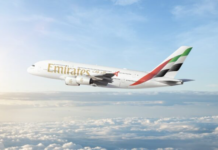
Among international carriers, Emirates retained its position as the largest foreign airline serving India.
The Dubai-based carrier transported 676,691 passengers into India and 662,783 passengers departing the country, maintaining its long-standing leadership in one of its most important international markets.
Abu Dhabi’s Etihad Airways followed with 387,001 inbound passengers and 390,284 outbound passengers, while Singapore Airlines carried 290,147 passengers into India and 337,564 outbound travellers.
The strong performance of Gulf and Southeast Asian airlines reflects India’s growing connectivity through major international hub airports that link travellers to Europe, North America, Africa and Asia-Pacific destinations.
Gulf Carriers Continue to Dominate Regional Connectivity
The DGCA data also highlights the continued importance of Gulf airlines in India’s international aviation ecosystem.
Qatar Airways transported 214,557 arriving passengers and 207,523 departing passengers, while Air Arabiacarried 214,256 inbound and 214,810 outbound passengers.
Saudi Arabia’s Saudia handled 200,093 inbound passengers and 200,890 outbound travellers, reflecting the continued strength of religious tourism, business travel and labour mobility between India and the Gulf region.
Among European carriers, Lufthansa transported 183,752 passengers into India and 211,229 passengers outbound, maintaining strong demand across its European network.
Other major overseas operators included Malaysia Airlines, British Airways, Cathay Pacific and Oman Air, all recording substantial passenger volumes on India routes.
Regional Asian Connectivity Continues to Expand
Traffic data also points to sustained growth in regional travel across South and Southeast Asia.
SriLankan Airlines carried 148,159 inbound passengers and 151,283 outbound passengers, while Thai Airways International transported 140,085 arriving passengers and 160,716 departing travellers.
Vietnam’s growing popularity as a leisure destination was reflected in traffic carried by both Vietnam Airlines and VietJet Air, which together handled more than 269,000 passengers during the quarter.
The figures illustrate India’s strengthening connectivity across Asia, driven by expanding tourism, business exchanges and increasing demand for affordable regional travel.
Outbound Travel Continues to Outpace Arrivals
One of the key trends emerging from the DGCA data is the continued strength of outbound international travel.
During the quarter, 9.77 million passengers departed India, compared with 9.33 million arrivals, indicating sustained demand among Indian travellers for overseas holidays, higher education, corporate travel and visits to family members abroad.
Industry observers attribute the trend to rising disposable incomes, improved international air connectivity, expanding visa access to several destinations and growing consumer confidence in overseas travel.
India Emerges as a Global Aviation Growth Engine
The latest international passenger statistics reinforce India’s status as one of the world’s fastest-growing aviation markets.
Supported by rapid economic expansion, a growing middle class, increasing international tourism and continued investment in airport infrastructure, the country’s aviation sector is expected to witness further growth throughout 2026.
Indian carriers continue to strengthen their global footprint through fleet expansion and new international routes, while leading foreign airlines remain committed to increasing capacity into the Indian market, recognising the country’s strategic importance as a major source of both outbound and inbound travel.
With international connectivity expanding across Europe, the Middle East, Southeast Asia and North America, India’s aviation market is poised to remain one of the key drivers of global passenger growth in the years ahead.