
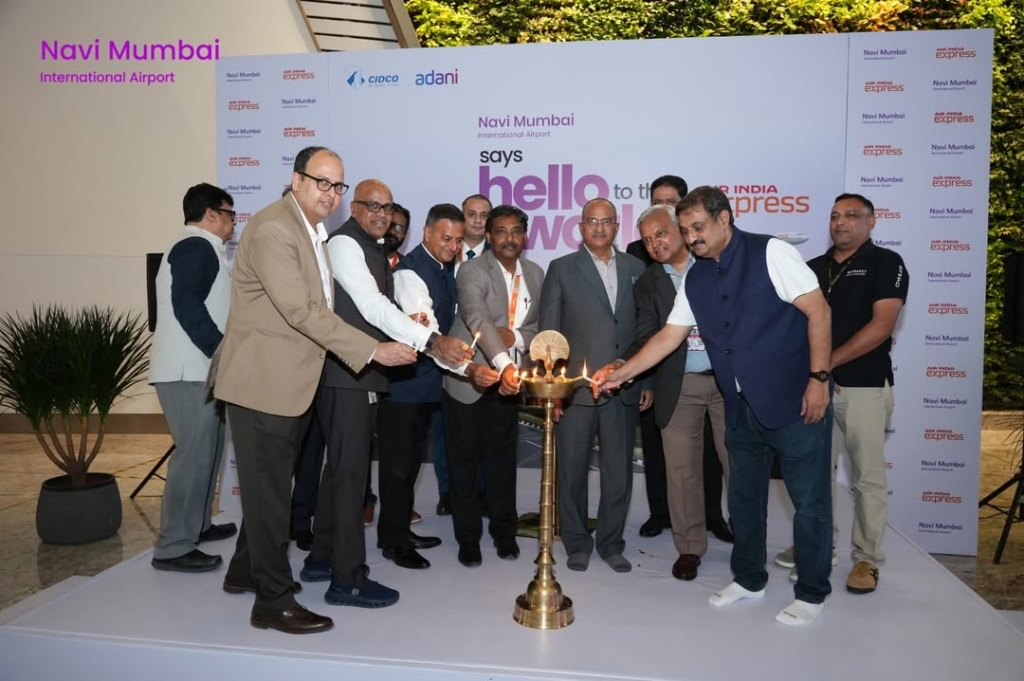
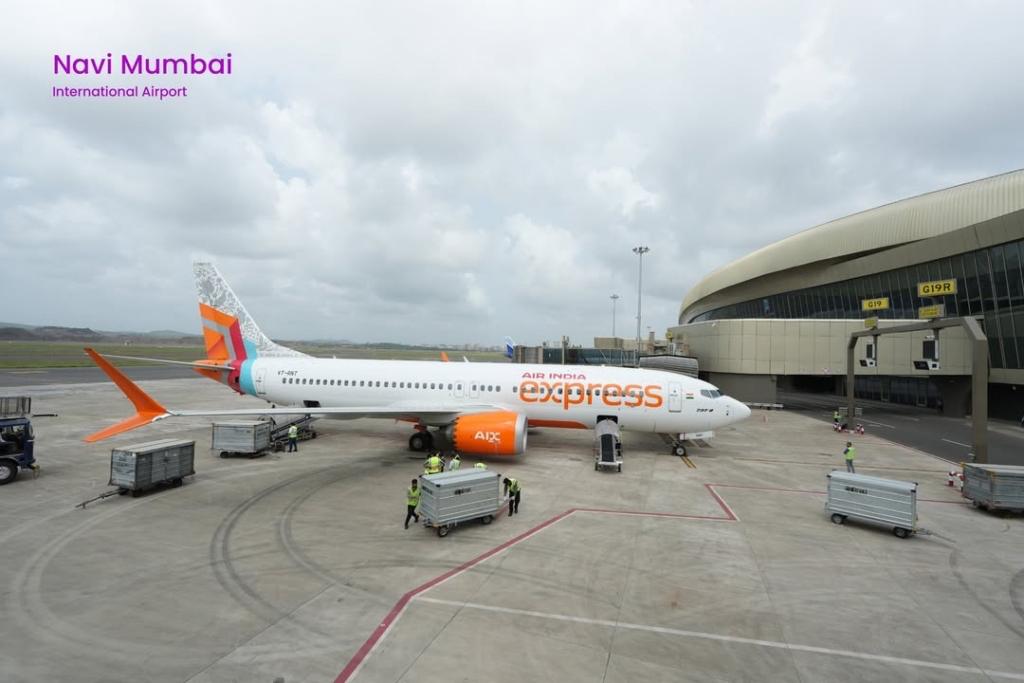

Navi Mumbai International Airport (NMIA) has marked a significant milestone in its development with the launch of its first scheduled international passenger service, as Air India Express commenced direct flights to Abu Dhabi on 15 July 2026. The inaugural operation establishes the airport as India’s newest international gateway and marks the beginning of overseas passenger and cargo services from the greenfield airport.
The development, confirmed by Adani Airport Holdings Limited (AAHL) and Air India Express, comes less than seven months after NMIA began domestic operations on 25 December 2025. The new service also represents a key step in Mumbai’s long-term dual-airport strategy, aimed at easing congestion at Chhatrapati Shivaji Maharaj International Airport (CSMIA) while supporting future passenger and freight growth across the Mumbai Metropolitan Region.
First international connection
Air India Express is the first airline to operate scheduled international flights from Navi Mumbai Airport, launching a thrice-weekly service to Abu Dhabi, one of the Gulf region’s busiest travel and business destinations.
The inaugural international arrival received a ceremonial water cannon salute, while the outbound flight also carried the airport’s first international export cargo shipment, comprising perishable goods destined for overseas markets. The launch of cargo services alongside passenger operations is expected to provide exporters with an additional gateway for time-sensitive shipments from western India.
Strengthening Mumbai’s dual-airport strategy
The Abu Dhabi service forms part of Air India Express’ broader strategy to develop operations across both of Mumbai’s airports, creating a complementary network rather than relying solely on the city’s existing aviation hub.
“Navi Mumbai is a key pillar of our dual-airport strategy, complementing our network from Chhatrapati Shivaji Maharaj International Airport,” said Nipun Aggarwal, Chairman of Air India Express.
The airline plans to progressively expand its presence at NMIA, targeting approximately 55 daily departures, including international services, before increasing operations to around 60 daily flights under the Winter 2026 schedule.
The strategy reflects a broader shift among airlines, which increasingly view Navi Mumbai not simply as an overflow airport but as an integral component of a multi-airport system capable of supporting long-term traffic growth while improving regional connectivity.
Rapid operational growth
Since opening to domestic services in December 2025, Navi Mumbai International Airport has expanded rapidly.
According to AAHL, the airport now serves 46 domestic destinations, has handled more than 2.3 million passengers, and records approximately 150 aircraft movements daily.
“The launch of our first scheduled international flight marks the beginning of a new phase in Navi Mumbai International Airport’s journey,” said Arun Bansal, Chief Executive Officer of Adani Airport Holdings Limited.
“As we expand our network with more airline partners and destinations, our focus remains on delivering seamless operations and a world-class travel experience while strengthening Navi Mumbai’s position as a preferred gateway for international travel.”
Supporting passenger and cargo growth
Beyond enhancing passenger connectivity, the commencement of international cargo operations is expected to strengthen export opportunities for businesses across Maharashtra and western India.
The airport’s first outbound international cargo shipment consisted of perishable exports, underscoring NMIA’s ambition to become an important logistics gateway alongside its passenger operations.
Cargo infrastructure has been incorporated from the outset, allowing exporters of perishables, pharmaceuticals and other time-sensitive products to benefit from additional international air freight capacity.
Designed for long-term expansion
Developed as a joint venture between Adani Airport Holdings Limited and the City and Industrial Development Corporation of Maharashtra (CIDCO), Navi Mumbai International Airport has been planned as a long-term solution to capacity constraints at Mumbai’s existing airport.
During its first phase, the airport is designed to handle 20 million passengers annually and process 500,000 metric tonnes of cargo.
Upon completion of all development phases, annual capacity is expected to reach 90 million passengers and 3.2 million metric tonnes of cargo, making NMIA one of India’s largest aviation hubs.
The airport features a fully integrated terminal serving both domestic and international passengers, incorporating biometric-enabled passenger processing, self-service check-in and baggage systems, digital wayfinding technology, premium lounges and dedicated cargo facilities.
Located in Ulwe, Navi Mumbai, the airport also benefits from expanding road connectivity and is expected to be integrated with future multimodal transport infrastructure across the Mumbai Metropolitan Region.
Expanding India’s aviation capacity
The launch of international services also means every airport operated by Adani Airport Holdings Limited now offers scheduled international connectivity.
For India’s aviation sector, NMIA represents a critical addition at a time of sustained passenger growth, airline fleet expansion and rising demand for airport infrastructure. With Mumbai remaining one of the country’s busiest yet capacity-constrained aviation markets, Navi Mumbai is expected to play a central role in accommodating future growth in both passenger and cargo traffic.
As airlines continue to add new international destinations, the Abu Dhabi service is widely expected to be the first of several overseas routes that will strengthen Navi Mumbai’s position as India’s newest international aviation gateway.