
Visitor growth, new hotels, regional airports and a major Almaty mountain project reshape the country’s tourism landscape
Kazakhstan is entering a new phase of tourism development, with rapidly rising visitor numbers being matched by major investment in hotels, transport infrastructure and destination development.
The Central Asian nation recorded 15.7 million foreign visitors in 2025, including 11.1 million classified as tourists, according to Kazakhstan’s government. Foreign visitors spent around $2.9 billion in the country, while domestic travel also expanded, with 8.7 million Kazakhstan residents recorded as domestic tourists.
At the same time, tourism investment accelerated sharply. Capital investment during 2024 and 2025 exceeded $4.8 billion, while 328 tourism projects worth about 1.3 trillion tenge are currently being implemented nationwide.
The scale of the investment points to an increasingly deliberate effort to position tourism as a pillar of Kazakhstan’s economic diversification.
Tourism investment gathers pace
Government figures show that tourism investment rose from 947.5 billion tenge in 2024 to about 1.25 trillion tenge in 2025, an increase of 32.6 per cent in one year. Together, investment in the two years exceeded 2.2 trillion tenge.
The current pipeline comprises 328 projects, with 25 new international-standard hotel complexes among the developments. The projects are expected to create approximately 10,000 permanent jobs once completed.
International hospitality names are also expanding their presence in the market, including brands such as Mandarin Oriental, Hilton, Marriott, Rixos and Radisson Blu, according to current reporting on the government’s investment programme.
The growth is already visible in accommodation revenues. Hotels and other registered accommodation facilities generated approximately 350.6 billion tenge in 2025, equivalent to roughly $770 million.
15.7 million foreign visitors
Kazakhstan’s visitor statistics underline the scale of the country’s growing international reach.
In 2025, 15.7 million foreign citizens entered Kazakhstan, of whom 11.1 million were classified as tourists. The distinction is important: the 15.7 million figure represents a broad foreign-visitor measure and should not be interpreted as 15.7 million individual leisure travellers.
China is emerging as an increasingly important long-haul source market. More than 960,000 Chinese visitors travelled to Kazakhstan in 2025, representing growth of 46.8 per cent.
Neighbouring Central Asian countries remain particularly significant, reflecting Kazakhstan’s strong regional connectivity. In the first half of 2026, the country recorded approximately 7 million foreign arrivals, led by Uzbekistan, Kyrgyzstan and Russia.
Domestic tourism is also providing a substantial foundation for the sector. The number of Kazakhstan residents travelling within the country reached about 8.7 million in 2025, according to government figures.
Events add momentum to the tourism economy
Kazakhstan is also increasingly using major international events and entertainment to generate visitor demand beyond traditional holiday periods.
Concert tourism has become a notable contributor. A Jennifer Lopez performance in Almaty attracted approximately 7,000 international visitors from 35 countries, with direct tourism spending estimated at more than 5 billion tenge, according to recent reporting.
The country’s experience hosting major international sporting and cultural events, including the World Nomad Games, has similarly helped raise its international profile.
For destinations such as Almaty and Astana, the events strategy provides another way to stimulate demand for hotels, restaurants, transport and other visitor services throughout the year.
New airports aim to open up emerging destinations
Infrastructure development is another central component of Kazakhstan’s tourism strategy.
The government is progressing plans for new airports serving the resort areas of Katon-Karagai, Zaysan and Kendirli, alongside improvements to road and rail connections. Kazakhstan’s aviation authorities have previously identified these locations as priorities for tourism-oriented airport development.
The objective is to make destinations beyond Kazakhstan’s major cities easier to reach, particularly national parks, mountain areas and emerging resort regions.
Improved air access could prove particularly important in a country where long distances have traditionally been one of the practical challenges for visitors attempting to combine several regions in a single itinerary.
Almaty’s mountains prepare for a major expansion
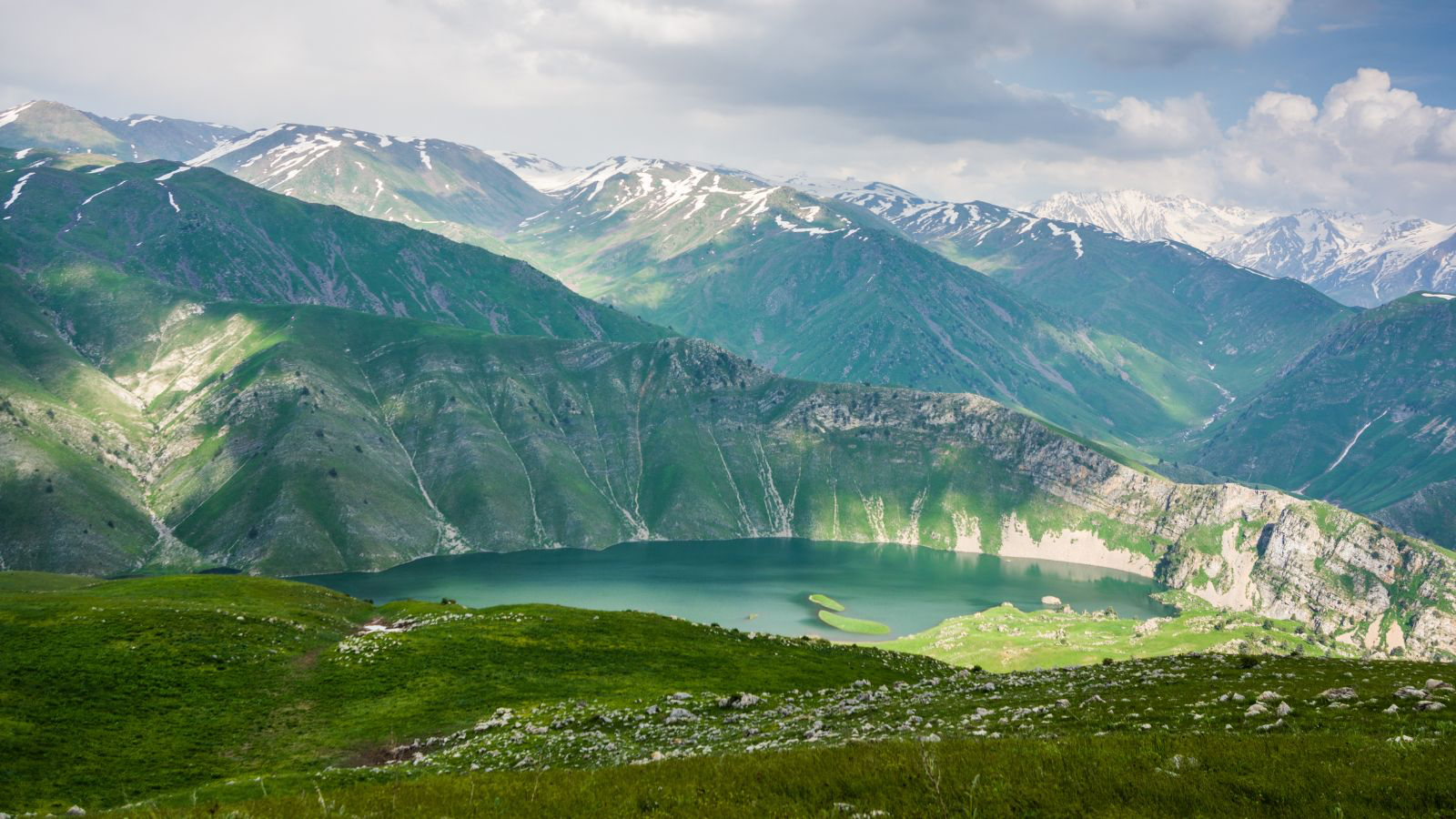
One of the most ambitious projects is taking shape around Almaty, where authorities are developing an integrated mountain tourism cluster.
Plans call for the integration and expansion of existing ski areas, with 30 cable cars and 161 kilometres of trailsenvisaged as part of the development. The long-term objective is to create a mountain destination capable of attracting up to five million visitors annually.
The project forms part of a wider government strategy to develop Kazakhstan’s resort areas between 2026 and 2029 and to make tourism less dependent on traditional summer travel.
For Almaty, the mountain cluster could strengthen the city’s position as a year-round destination, combining skiing and winter sports with hiking, nature tourism and other outdoor activities during the warmer months.
Tourism becomes a larger economic force
The expansion is already having an impact beyond visitor numbers.
Kazakhstan’s tourism sector contributed approximately 5 trillion tenge, or $9.26 billion, to the national economy in 2025, while employment in the wider tourism industry exceeded 600,000 people, according to current government-linked reporting.
The figures reflect a sector increasingly connected to accommodation, transport, food and beverage, entertainment and regional infrastructure rather than simply traditional sightseeing.
With international hotel brands entering the market, new airports planned for resort areas and a major mountain tourism programme taking shape near Almaty, Kazakhstan is attempting to broaden both its geographic and seasonal tourism offer.
The challenge now will be converting rising visitor flows into longer stays and higher-value tourism while ensuring that infrastructure and services keep pace with demand.
For a country historically better known internationally for its vast landscapes, nomadic heritage and strategic position between Europe and Asia, the latest investment cycle suggests that Kazakhstan is increasingly positioning itself as a year-round destination in its own right.