
Historic Augustinian monastery to be reimagined as a luxury hotel featuring 101 rooms, bespoke suites, destination-led dining and cultural experiences
Kempinski is preparing to introduce the Kempinski Augustine Hotel, Prague, in early 2027, following an extensive transformation of the historic property in the Czech capital’s Malá Strana district. Set within the 13th-century Augustinian Monastery of St. Thomas, the hotel spans seven historic buildings with more than 800 years of heritage.
Kempinski acquired the property in April 2026 and is repositioning it to bring the monastery’s architectural character and cultural legacy together with contemporary luxury hospitality. The redesign centres on what the group describes as “lived duality” — a balance between history and modernity, contemplation and social interaction, and the property’s monastic identity and its role within the wider city.
Rasha Lababidi, Chief Product, Experience and Communications Officer at Kempinski Group, said the hotel would reflect the group’s evolving approach to experiential travel, combining individual character, local connections and heritage-led guest experiences.
Historic architecture meets contemporary design
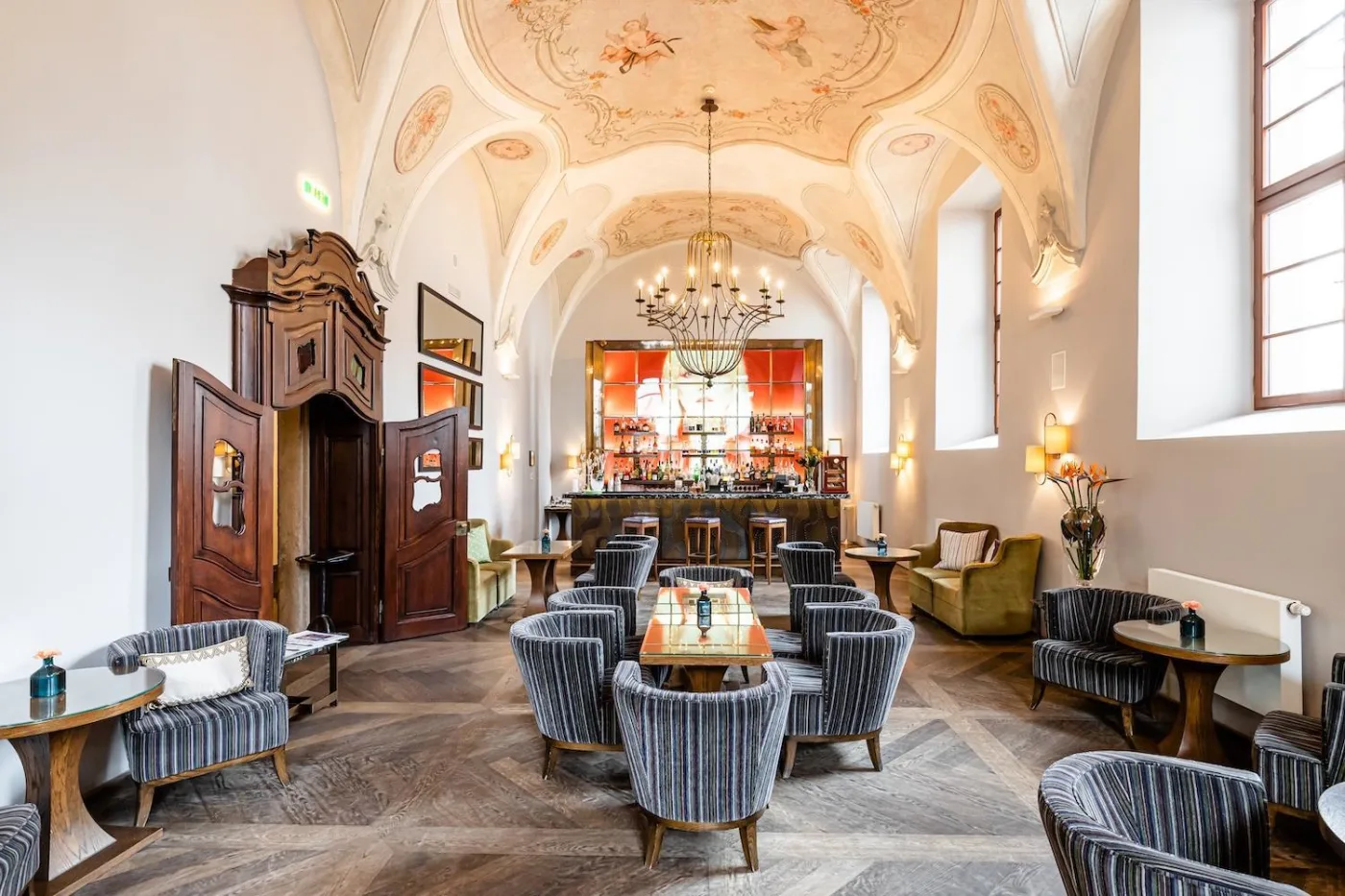
LDS Design Studio is leading the transformation, drawing inspiration from St. Augustine and Prague’s Gothic, Baroque and Bohemian influences. Original architectural details, including vaulted ceilings and exposed wooden beams, will remain central to the interiors, preserving links to the building’s former monastic life.
The hotel will feature 101 guest rooms, including 20 suites. Planned design elements include bespoke canopy beds, historical tapestries, sculptural lighting and residential-style bathrooms, with colours and materials inspired by Prague’s architecture, rooftops and gardens.
Several signature suites will tell stories connected to the city’s cultural and intellectual history. The Presidential Suite will take inspiration from former Czech president Václav Havel, while the Monastery Suite, Philosopher’s Stone Suite, Charles Suite and Fresco Suite will each have their own design identity.
A three-level Tower Suite inspired by astronomer Johannes Kepler is planned for a subsequent phase of development, with its introduction scheduled separately from the initial hotel opening.
Massimo Severo Barbera, Creative Director at LDS Design Studio, said the design approach sought to retain the property’s contrasts, creating spaces that support both quiet reflection and social connection.
A social hub for guests and Prague residents
The hotel’s public areas will be developed around Kempinski’s “living room of the city” concept, positioning the property as a gathering place for both visitors and the local community.
Planned features include a residential-style bar, informal seating and gathering areas, and a Collector’s Table showcasing the work of Czech artisans and craftspeople. A feature known as the “Living City Ceiling”, developed in collaboration with a local artist, will add another destination-inspired element to the interiors.
The approach aims to connect the hotel more closely with its neighbourhood, encouraging guests to engage with local creative talent and the cultural life of Prague rather than experiencing the property solely as a place to stay.
Dining shaped by local character and history
Food and beverage concepts are being developed in collaboration with Gorgeous Group and Russell Sage Studio.
The plans include a neighbourhood-style dining room offering all-day service across a brasserie, relaxed dining areas, semi-private spaces and a courtyard. The menu is expected to combine familiar dishes with local influences, supported by tableside service and a changing wine selection.
The historic Refectory will be transformed into a bar drawing on the symbolism of alchemy and the work of George Ripley. Its planned cocktail programme will feature 12 themed stages, incorporating seasonal botanicals and infusions alongside local craft absinthes and St. Thomas dark lager.
A daily “Transformation Hour” at sunset is also planned, marking the transition from daytime service to the evening bar programme.
Robbie Bargh, Founder and Partner at Gorgeous Group, said the aim was to respect the property’s history while creating new reasons for guests and local residents to gather and return.
Connecting visitors with Prague’s creative community
The hotel will also introduce Kempinski’s E.R.A.s — Experience Real Access — programme, designed to connect guests with local communities through experiences curated by destination specialists.
At Augustine, the programme is expected to draw on the property’s location within a living Augustinian monastery and its links with Prague’s artists, craftspeople and cultural community.
The initiative forms part of Kempinski’s wider focus on creating destination-specific experiences that extend beyond traditional hotel services. By combining historic surroundings with local encounters, the property aims to appeal to travellers seeking a deeper connection with the places they visit.
The planned opening in early 2027 will mark the next stage in the hotel’s development under Kempinski. The transformation is intended to preserve the architectural integrity of the monastery buildings while introducing redesigned accommodation, dining concepts and cultural experiences in one of Prague’s most historic neighbourhoods.