
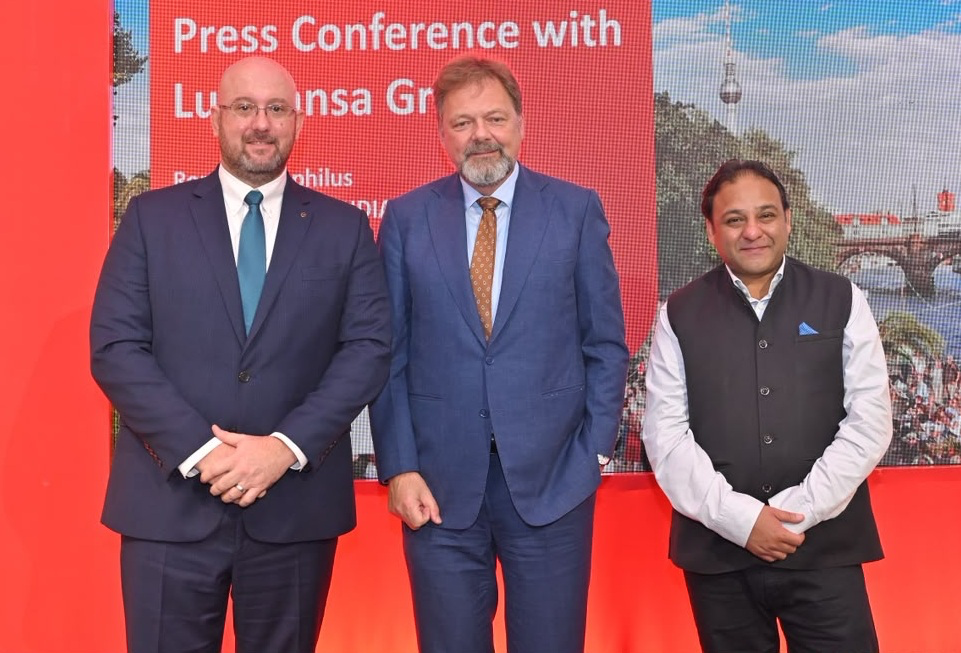
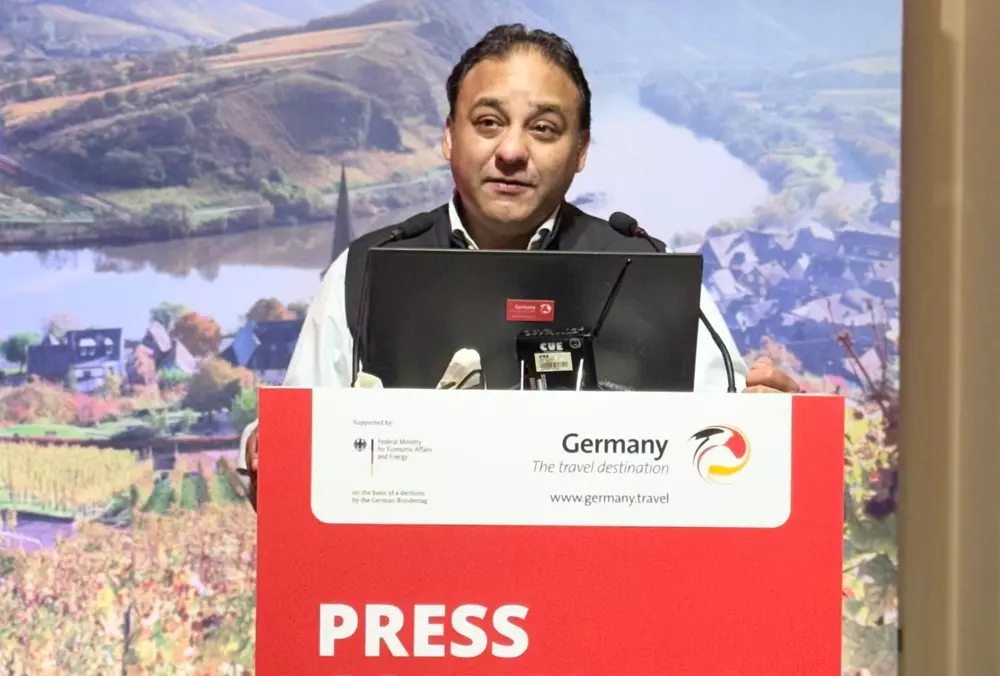
Romit Theophilus, Director, German National Tourist Office, India
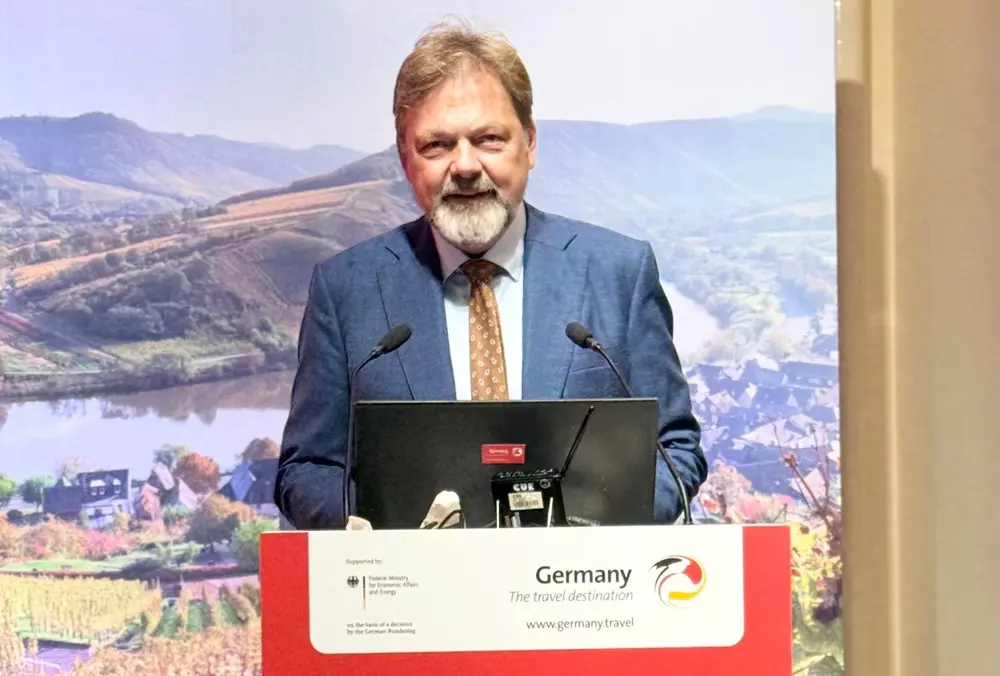
Dr Philipp Ackermann, German Ambassador to India
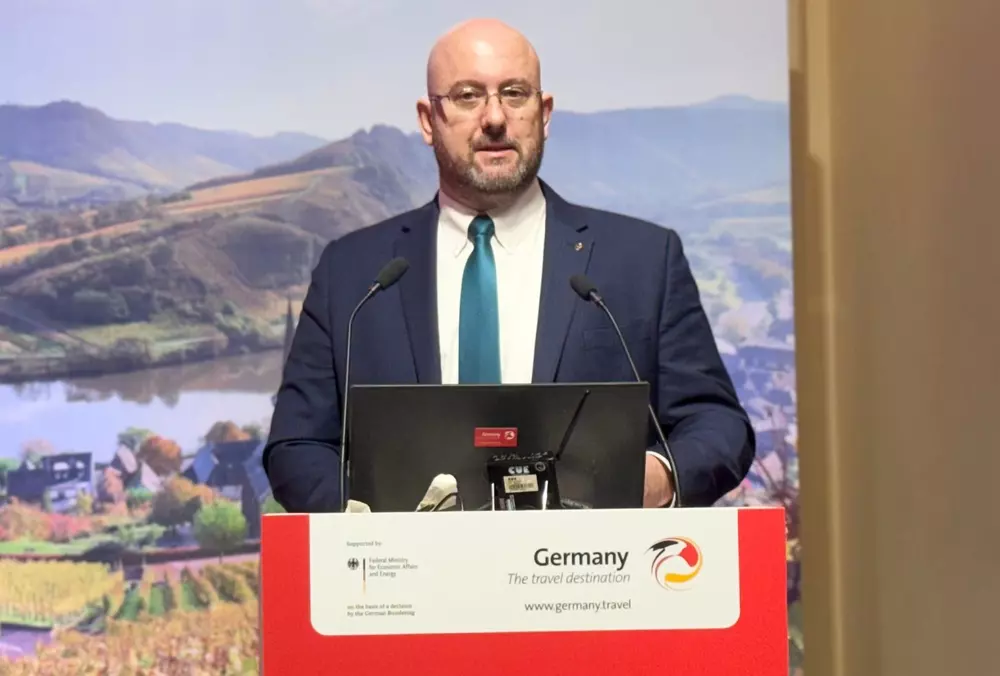
Kevin Markette, Senior Director Sales, South Asia, Lufthansa Group
GNTO unveils 2026 India strategy centred on culture, city life, culinary tourism and destination weddings
Germany is intensifying its focus on the Indian outbound travel market after recording 350,488 overnight stays by Indian travellers between January and May 2026, maintaining steady growth despite global geopolitical uncertainties.
The German National Tourist Office (GNTO) has now set an ambitious target of crossing one million overnight stays by Indian visitors in the coming years, supported by targeted campaigns promoting cultural experiences, gastronomy, city breaks and destination weddings.
The announcement was made during a tourism briefing in New Delhi, where German tourism officials highlighted India’s growing importance as one of the country’s fastest-expanding source markets.
Indian Market Shows Resilience
According to GNTO, overnight stays by Indian travellers increased marginally by 0.1% year-on-year to 350,488during the first five months of 2026, despite travel disruptions linked to geopolitical tensions in several parts of the world.
May alone accounted for 86,870 overnight stays, reflecting sustained demand from Indian travellers.
Overall, Germany recorded 174.9 million overnight stays between January and May 2026, representing a 1.3% increase over the same period last year. International visitors contributed 28.7 million overnight stays during the period.
Beyond Iconic Attractions
Speaking at the event, Philipp Ackermann, Germany’s Ambassador to India, said the country continues to diversify its tourism appeal beyond its best-known landmarks.
He highlighted Germany’s extensive tourism assets, including more than 25,000 castles, palaces and historic mansions, 7,200 museums, over 9,000 annual festivals, and 16 national parks, offering visitors a broad mix of heritage, culture and outdoor experiences.
Ackermann also underlined Germany’s commitment to sustainable tourism, pointing to its extensive rail network, climate-friendly cities and more than 12,000 kilometres of long-distance cycling routes, which encourage slower, experience-driven travel.
Connectivity between the two countries has also strengthened significantly, with 77 direct flights every week linking major Indian cities with Germany, making the destination increasingly accessible for both leisure and business travellers.
India Emerges as a Strategic Growth Market
Romit Theophilus, Director – Marketing & Sales, GNTO India, said India continues to demonstrate strong long-term growth potential and has become one of Germany’s most important tourism source markets in Asia.
Germany welcomed over 330,000 Indian visitors in 2025, generating nearly 928,000 overnight stays, representing a 3.4% increase over the previous year and reaching almost 95% of pre-pandemic levels. India is now Germany’s fourth-largest source market in Asia.
Indian travellers spend an average of nine nights in Germany, reflecting a growing preference for longer, immersive holidays rather than short city breaks.
Theophilus said GNTO’s objective is to surpass one million overnight stays by Indian travellers within the next two years, supported by focused campaigns around culinary tourism, urban experiences, and the fast-growing weddings and honeymoon segment.
He also noted that Indian visitors contribute significantly to Germany’s tourism economy, with average trip expenditure estimated at €3,182 per journey and daily spending averaging around €315.
To support this objective, GNTO India has identified four strategic pillars for 2026: culture, city experiences, gastronomy, and family, friends and nature.
Experience-Led Travel Driving Demand
GNTO believes Indian travel preferences are evolving, with visitors increasingly seeking authentic local experiences instead of conventional sightseeing itineraries.
According to Theophilus, a majority of Indian tourists rely on Germany’s public transport network while exploring destinations on foot, highlighting the country’s appeal as a sustainable tourism destination.
The tourism board is also witnessing a shift towards year-round travel, with Indian demand extending beyond the traditional summer season to include festive travel during Diwali and Germany’s internationally renowned Christmas markets.
2026 Campaign Focus
For 2026, GNTO will promote Germany through four key themes:
- The 150th anniversary of the Bayreuth Wagner Festival
- Urban experiences and city life
- Culinary tourism
- Family, friends and nature-based travel
The campaign will showcase destinations including Berlin, Munich, Hamburg and Frankfurt, while also highlighting Germany’s wine regions, local cuisine, cycling trails and outdoor experiences designed for multigenerational travellers and wellness-focused holidays.
Lufthansa Expands Focus on India
Also speaking at the event, Kevin Markette, Senior Director Sales, South Asia, Lufthansa Group, described India as one of the airline group’s most important international markets.
“As Lufthansa celebrates 100 years of connecting people and cultures, India remains one of our most strategic markets. With around 11 daily flights from India, the introduction of our latest Allegris cabin product, and continued investments in sustainability and customer experience, we are committed to strengthening connectivity between India and Germany.”
He said Lufthansa Group currently operates approximately 11 daily flights from India to its hubs in Germany, Switzerland and Italy, making it the largest European airline group serving the Indian market.
The airline group is also introducing its latest aircraft and upgraded cabin products on Indian routes, underlining the strategic importance of India within its global network expansion plans.
As outbound travel from India continues to grow, Germany is positioning itself as a destination that combines rich cultural heritage, sustainable mobility, premium connectivity and immersive experiences, with Indian travellers expected to play an increasingly significant role in the country’s international tourism growth.
Germany’s tourism calendar for the year ahead promises a rich mix of cultural, culinary and experiential attractions designed to appeal to international travellers. Among the highlights is the reopening of the Hohenzollern Crypt at Berlin Cathedral, one of Europe’s most significant dynastic burial sites, while Frankfurt Airport is set to enhance passenger capacity with the opening of its new Terminal 3.
Visitors can also look forward to new experiences at Europa-Park, which will introduce a Monaco-themed attraction, while teamLab Borderless will debut its immersive digital art installations at the UBS Digital Art Museum in Hamburg’s HafenCity district. In central Germany, Thuringia will celebrate its unique saffron-growing heritage through culinary experiences showcasing the region’s distinctive produce.
The cultural calendar will be equally vibrant, with the internationally renowned Bayreuth Festival commemorating the 150th anniversary of Richard Wagner’s legacy, while Bad Dürkheim will once again host the Wurstmarkt—widely recognised as the world’s largest wine festival despite its misleading name.
By combining new attractions, landmark cultural celebrations and targeted tourism campaigns, Germany is strengthening its appeal as a year-round destination while reinforcing its long-term growth ambitions in the Indian outbound travel market.