

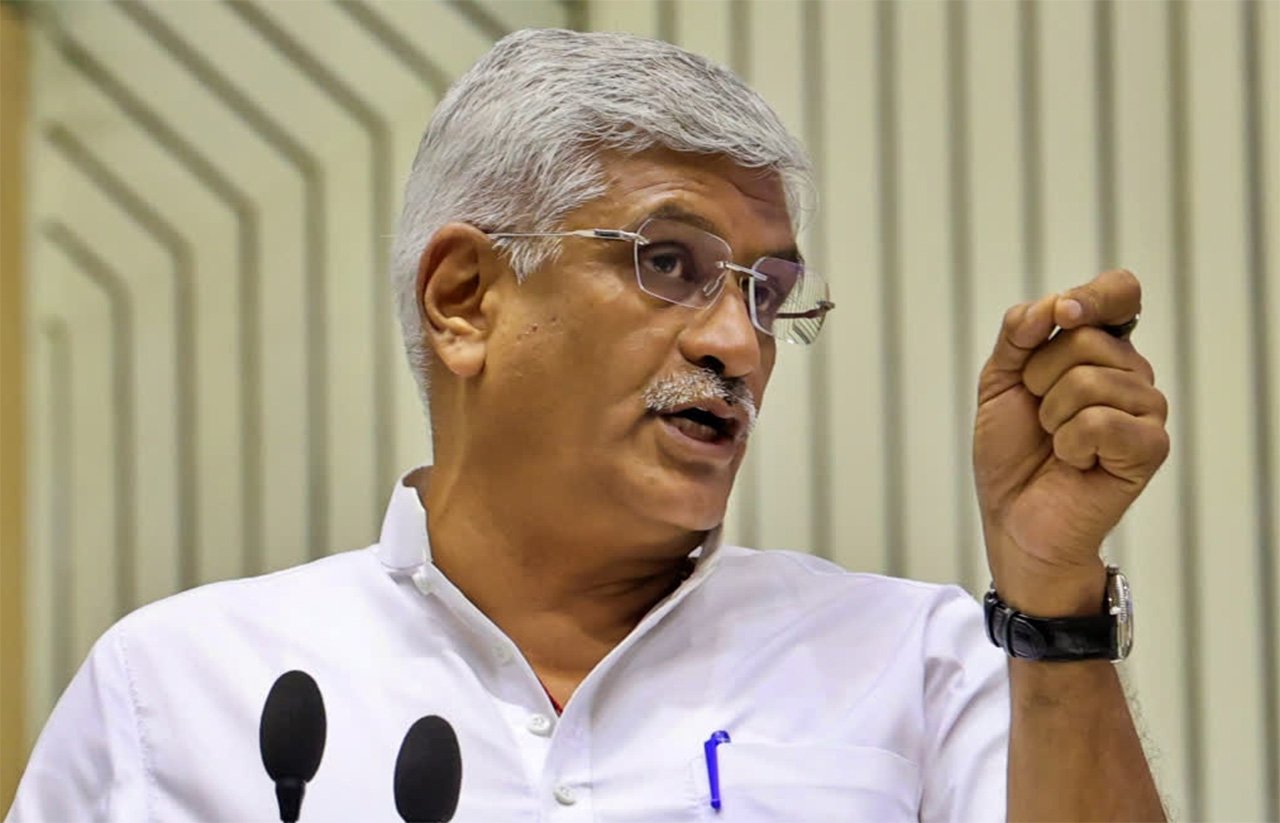
Union Tourism Minister Gajendra Singh Shekhawat outlines ambitious roadmap to raise tourism’s GDP contribution to global benchmarks and position India among the world’s leading travel destinations
India is setting an ambitious course to transform its tourism sector into one of the country’s most powerful economic and employment drivers by 2047. Union Tourism and Culture Minister Gajendra Singh Shekhawat has reaffirmed the government’s vision of increasing foreign tourist arrivals tenfold—from the current 10 million to 100 million—while raising tourism’s contribution to the national economy from under 6% to the global average of 10%. Backed by massive infrastructure investments, improved connectivity, and a rapidly evolving global perception of India, the tourism sector is expected to play a pivotal role in the country’s long-term development strategy.
India Targets 100 Million Foreign Tourist Arrivals by 2047 as Tourism Sector Sets Sights on Global Leadership
India’s tourism sector is poised for a transformative growth trajectory as the government aims to increase foreign tourist arrivals (FTAs) from approximately 10 million today to an ambitious 100 million by 2047, according to Union Tourism and Culture Minister Gajendra Singh Shekhawat.
Speaking in an interview with national news agency PTI, Shekhawat outlined a long-term vision that positions tourism as one of India’s most significant contributors to economic growth, foreign exchange earnings, and employment generation under the country’s broader Viksit Bharat 2047 agenda.
The minister expressed confidence that India’s rapidly expanding infrastructure, growing international profile, and diversified tourism offerings will enable the country to emerge as one of the world’s most sought-after travel destinations over the next two decades.
Tourism to Become a Major Economic Pillar
Tourism currently contributes slightly less than 6% to India’s Gross Domestic Product (GDP), significantly below the global average of approximately 10%. The government has set a target of increasing tourism’s GDP contribution to more than 7% by 2030 before eventually reaching the global benchmark by 2047.
According to Shekhawat, achieving this milestone would fundamentally reshape the country’s employment landscape.
“The day tourism contributes 10% to the economy, it will become the second-largest employment-generating sector after agriculture,” the minister noted.
The economic impact of tourism is already substantial. In 2024, the sector generated nearly USD 35 billion in foreign exchange earnings, accounting for roughly 1% of India’s GDP. Furthermore, tourism supported direct and indirect employment for approximately 84 million people during 2023-24, highlighting its significance as a catalyst for inclusive economic growth.
Growing Global Recognition Fuelling Tourism Potential
A key factor underpinning the government’s optimism is India’s enhanced international standing and growing global visibility.
Shekhawat highlighted how perceptions of India have evolved dramatically over the past decade. According to the minister, India now enjoys significantly stronger global recognition, creating a favourable environment for attracting larger volumes of international travellers.
He observed that India’s image abroad has expanded beyond its historical associations and now reflects its growing economic influence, technological advancement, cultural richness, and strategic importance on the world stage.
This changing perception, combined with the country’s diverse tourism offerings, forms the foundation for the government’s confidence in achieving its long-term visitor targets.
Infrastructure Development Driving Future Growth
The government’s tourism strategy is closely linked to large-scale investments in transportation and tourism infrastructure.
India has witnessed unprecedented expansion in highways, airports, regional air connectivity, rail networks, hospitality infrastructure, and urban development projects over the past decade. These investments are expected to improve accessibility to both established and emerging destinations across the country.
The minister stressed that the continued development of world-class infrastructure will be instrumental in unlocking tourism growth, particularly in lesser-explored regions.
Enhanced connectivity is also expected to support the decentralisation of tourism, encouraging visitors to explore destinations beyond traditional tourism circuits and helping distribute economic benefits more evenly across states and regions.
Domestic Tourism Provides a Strong Foundation
While foreign tourist arrivals remain a key focus area, India continues to benefit from one of the world’s largest domestic tourism markets.
The country recorded nearly 300 crore domestic tourist visits in 2025, excluding the extraordinary visitor numbers generated by the Maha Kumbh. This immense domestic travel ecosystem provides a stable foundation for tourism development and supports investments in infrastructure, accommodation, transportation, and destination management.
The minister argued that comparisons with global tourism leaders such as Thailand, Singapore, and France often overlook the scale and significance of India’s domestic tourism economy, which plays a crucial role in sustaining the sector year-round.
Addressing Challenges to Unlock Full Potential
Despite the sector’s positive outlook, Shekhawat acknowledged several challenges that must be addressed to achieve the country’s ambitious tourism goals.
These include infrastructure gaps in certain regions, cleanliness standards, hotel room shortages, accommodation affordability, safety perceptions, and environmental concerns such as pollution.
The government believes ongoing investments and policy reforms will help overcome these obstacles while improving the overall visitor experience.
Industry stakeholders have long advocated for enhanced destination management, greater private sector participation, streamlined visa processes, sustainable tourism practices, and increased marketing efforts to strengthen India’s competitiveness in the global tourism marketplace.
Tourism at the Centre of India’s 2047 Vision
As India advances towards its centenary of independence in 2047, tourism is increasingly being viewed as a strategic sector capable of generating widespread economic and social benefits.
With its unparalleled cultural diversity, heritage assets, spiritual tourism circuits, wildlife reserves, culinary experiences, and rapidly improving infrastructure, India is positioning itself to capture a significantly larger share of global travel demand.
The government’s target of attracting 100 million foreign visitors by 2047 represents one of the most ambitious tourism growth plans globally and underscores the sector’s importance in India’s future economic narrative.
As Shekhawat concluded, among all sectors benefiting from India’s ongoing economic expansion and infrastructure transformation, tourism stands to gain the most—emerging as a major driver of growth, employment, investment, and international engagement in the decades ahead.
Industry Implications
The government’s long-term tourism strategy signals substantial opportunities for airlines, airports, hospitality companies, destination management organisations, travel technology providers, tour operators, cruise operators, and investors. As India pursues its goal of becoming a leading global tourism destination, demand for tourism infrastructure, accommodation capacity, aviation connectivity, digital services, and destination development is expected to accelerate significantly.