Princess Cruises has announced a significant long-term fleet expansion with the order of three new Voyager Class ships, marking one of the most ambitious additions to its global cruise portfolio in recent years. The agreement, confirmed on 16 April 2026 in Singapore, was signed with Italian shipbuilder Fincantieri for vessels scheduled for delivery in the late 2030s, specifically in 2035, 2038, and 2039.
Part of Carnival Corporation & plc, Princess Cruises continues to invest heavily in next-generation ship design, positioning the Voyager Class as a new benchmark in guest experience, sustainability, and onboard innovation. The new vessels will be constructed at Fincantieri’s Monfalcone shipyard in Italy, reinforcing the long-standing partnership between the cruise operator and the shipbuilder.
New platform design with enhanced guest spaces
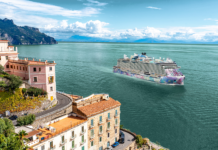
The Voyager Class will be developed on an entirely new platform that builds upon elements of the existing Sphere Class architecture while introducing significant enhancements across public spaces, accommodation, and exterior design. According to the company, the ships will feature redesigned outer decks, upgraded staterooms, and reimagined Piazza-style social hubs, which are a signature element of the Princess Cruises onboard experience.
The design philosophy aims to balance continuity with innovation, retaining familiar guest favourites while integrating modernised layouts and next-generation marine and guest-facing technologies.
Among the largest ships in the fleet
Each of the three new vessels will have an approximate capacity of 4,700 guests and a gross tonnage of around 183,000, making them the largest ships in the Princess Cruises fleet by passenger capacity.
A key focus of the design is efficiency and environmental performance. The ships will be powered by dual-fuel propulsion systems, with Liquefied Natural Gas (LNG) serving as the primary fuel. This is expected to significantly reduce greenhouse gas emissions compared with traditional marine fuel systems, aligning with broader decarbonisation goals within the cruise industry.
Focus on evolving guest experience
Princess Cruises has positioned the Voyager Class as a response to evolving traveller expectations, combining established onboard experiences with new design concepts aimed at attracting both loyal guests and a younger demographic.
Gus Antorcha, President of Princess Cruises, highlighted that the development of the Voyager Class has been informed by extensive customer and travel agent research. He noted that the aim is to carefully evolve the brand’s most successful features while introducing new concepts tailored to changing guest preferences.
He added that the ships will feature refreshed dining experiences, expanded pool and leisure areas, and enhanced entertainment offerings, with a comprehensive redesign of onboard spaces intended to elevate the overall cruise experience.
Strengthening a long-term industrial partnership
From a shipbuilding perspective, Fincantieri has described the agreement as a continuation of its long-standing collaboration with Princess Cruises and its parent company. Pierroberto Folgiero, CEO and Managing Director of Fincantieri, stated that the new orders reinforce the strength of the partnership and ensure sustained activity for its Italian shipyards through 2039.
He also emphasised that the project supports the broader growth and profitability of Fincantieri’s cruise division, reflecting continued demand for large, technologically advanced cruise vessels.
Part of a wider fleet expansion strategy
The three Voyager Class ships form part of a broader fleet expansion programme for Carnival Corporation, representing the 19th, 20th, and 21st LNG-powered vessels in its global order book. The wider group currently has seven additional ships on order, scheduled for delivery between 2027 and 2033, further strengthening its position in the global cruise market.
Once delivered, the Voyager Class is expected to play a key role in supporting demand growth across major cruise regions while advancing the industry’s transition toward cleaner propulsion technologies and enhanced onboard guest experiences.