
The Emirates Group has reported its strongest financial performance to date for the 2025-26 fiscal year, posting record-breaking profits, revenues, and cash reserves despite significant geopolitical and operational disruptions during the final month of the reporting period.
The results further cement Emirates as the world’s most profitable airline for the reporting year, underlining the resilience of Dubai’s aviation ecosystem and the continued recovery of global travel demand.
Record-breaking financial performance across the Group
For the financial year ending 31 March 2026, the Emirates Group reported:
- Record profit before tax: AED 24.4 billion (US$ 6.6 billion), up 7% year-on-year
- Record revenue: AED 150.5 billion (US$ 41.0 billion), up 3%
- Cash assets: AED 59.6 billion (US$ 16.2 billion), up 12%
- EBITDA: AED 41.1 billion (US$ 11.2 billion)
After accounting for the UAE’s revised corporate tax structure under Pillar Two rules, the Group posted a profit after tax of AED 21 billion (US$ 5.7 billion), representing a 3% increase over the previous year.
The Group also declared a AED 3.5 billion dividend to its owner, the Investment Corporation of Dubai (ICD).
Emirates remains the world’s most profitable airline
Within the broader Group results, Emirates airline delivered another historic performance:
- Profit before tax: AED 22.8 billion (US$ 6.2 billion)
- Revenue: AED 130.9 billion (US$ 35.7 billion)
- Cash reserves: AED 54.9 billion (US$ 15 billion)
- Net profit margin: 15%
The airline’s performance was driven by sustained global demand across premium and leisure travel segments, strong passenger yields, and strategic deployment of capacity across key international markets.
Emirates carried 53.2 million passengers during the year, while maintaining a healthy passenger seat factor of 78.4%.
Geopolitical disruption impacts final quarter operations
Despite the strong annual performance, the Group acknowledged significant operational challenges caused by military activity in the Gulf region during February 2026, which disrupted commercial aviation flows across the Middle East.
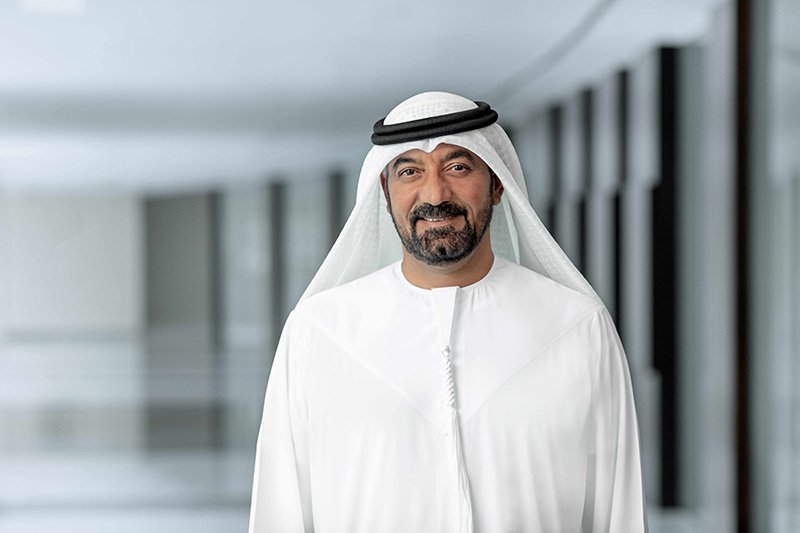
Commenting on the results, His Highness Sheikh Ahmed bin Saeed Al Maktoum, Chairman and Chief Executive of Emirates airline and Group, stated that the airline and its subsidiaries responded rapidly to support affected customers, maintain operational continuity, and protect assets during the disruption.
He noted that Dubai’s advanced aviation infrastructure and coordinated government response enabled safe commercial flight corridors to be restored efficiently.
Massive investments in fleet and infrastructure
During 2025-26, the Emirates Group invested AED 17.9 billion (US$ 4.9 billion) in aircraft, facilities, equipment, and technology to support long-term growth plans.
At the 2025 Dubai Airshow, Emirates announced additional fleet commitments worth US$ 41.4 billion, including orders for:
- 65 Boeing 777-9 aircraft
- 8 additional Airbus A350-900 aircraft
By the end of March 2026, Emirates’ aircraft order book stood at 367 aircraft, with deliveries scheduled through 2038.
The airline also received 15 Airbus A350 aircraft during the year, supporting the expansion of its Premium Economy product and next-generation onboard technology offerings.
Network expansion strengthens global connectivity
Emirates expanded its global footprint in 2025-26 by launching services to:
- Da Nang
- Hangzhou
- Siem Reap
- Shenzhen
By year-end, the airline’s network covered 152 destinations across 80 countries, supported by 32 codeshare and 117 interline partnerships connecting travellers to over 1,700 cities worldwide.
Starlink Wi-Fi and premium customer experience upgrades
The airline accelerated deployment of Starlink high-speed onboard Wi-Fi during the year, with 21 aircraft already equipped by March 2026.
Emirates also continued its US$ 5 billion cabin retrofit programme, with 91 aircraft receiving upgraded interiors, including refreshed cabins and expanded Premium Economy seating.
On the ground, the airline launched new premium check-in facilities in Dubai and expanded chauffeur-drive services in Japan.
Emirates SkyCargo records strong year
Emirates SkyCargo delivered another robust performance, transporting 2.4 million tonnes of cargo, up 3% year-on-year.
The cargo division generated AED 16.2 billion (US$ 4.4 billion) in revenue and expanded its freighter network to 44 destinations.
Growth was supported by the addition of five Boeing 777 freighters and the launch of specialised logistics services, including Emirates Courier Express and aerospace-focused cargo solutions.
dnata posts solid global growth
Aviation services provider dnata also delivered record revenues:
- Revenue: AED 23.6 billion (US$ 6.4 billion), up 12%
- Profit before tax: AED 1.6 billion (US$ 437 million)
- Cash assets: AED 4.7 billion (US$ 1.3 billion)
dnata handled nearly 889,000 aircraft turns globally and processed 3.2 million tonnes of cargo during the year.
The company continued expanding internationally through investments in catering facilities, cargo infrastructure, and airport operations across Europe, Australia, and the Middle East.
Sustainability and future growth strategy
The Emirates Group continued to advance sustainability initiatives, including investments in Sustainable Aviation Fuel (SAF), electric ground equipment, waste reduction programmes, and circular economy projects.
The Group also strengthened workforce development, with total employee numbers rising 8% to 130,919 staff worldwide.
Looking ahead, Sheikh Ahmed said the Group remains financially strong despite ongoing geopolitical uncertainty and remains focused on long-term investment rather than short-term cost-cutting measures.
He emphasised that Dubai’s strategic position in global commerce and aviation remains unchanged, with Emirates and dnata continuing to focus on operational excellence, innovation, and customer experience leadership.
Outlook for 2026-27
As the aviation sector continues navigating geopolitical risks and fluctuating market conditions, Emirates enters the new fiscal year with strong liquidity, an expanding fleet pipeline, and sustained global demand across passenger and cargo markets.
The Group’s continued investment in connectivity, premium experiences, digital innovation, and sustainable operations is expected to reinforce Dubai’s position as one of the world’s leading international aviation hubs.