
Industry leaders, policymakers and global tourism experts call for stronger collaboration, infrastructure investment and policy reforms to position tourism as a cornerstone of India’s economic growth strategy.
India’s travel and tourism industry has set out an ambitious long-term vision to transform the sector into one of the country’s most powerful economic engines, with government leaders and private stakeholders calling for greater investment, improved connectivity and stronger policy support to unlock the nation’s enormous tourism potential.
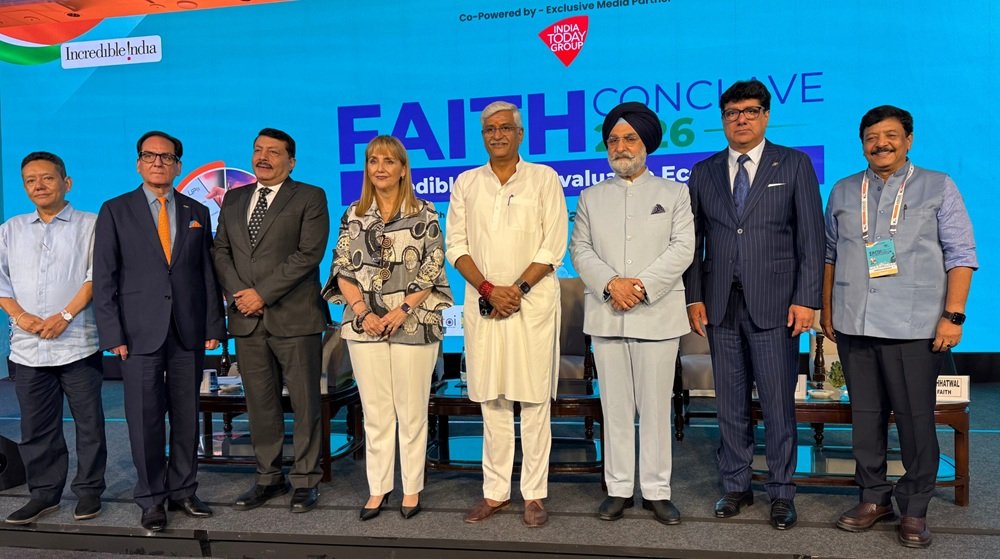
Those priorities dominated discussions at the opening of FAITH Conclave 2026, held in New Delhi under the theme “Incredible India: Invaluable Economics.” Organised by the Federation of Associations in Indian Tourism & Hospitality (FAITH), the two-day conclave brought together senior ministers, international tourism organisations, state governments and industry leaders to examine how tourism can generate employment, attract investment and contribute more significantly to India’s long-term economic development. The event details and key announcements were confirmed through the organisers’ official communications.
Tourism positioned as a strategic economic sector
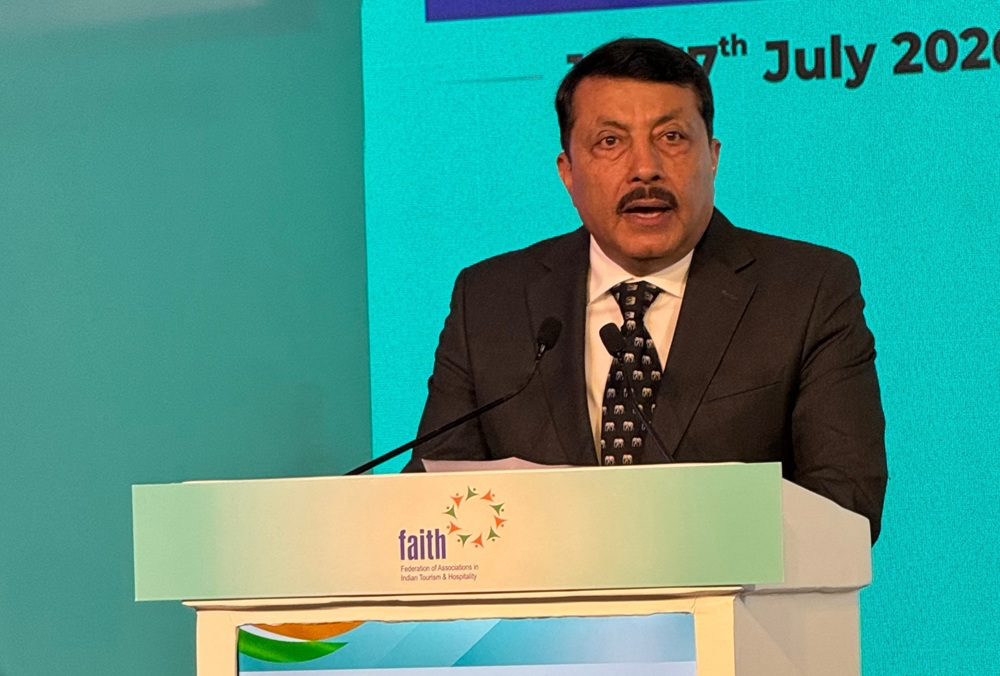
Ajeet Bajaj, Vice Chairman, FAITH
Opening the conclave, Ajeet Bajaj, Vice Chairman of FAITH, urged policymakers and industry stakeholders to view tourism not simply as a leisure industry but as a strategic pillar capable of transforming the national economy.
He said tourism supports millions of livelihoods, stimulates entrepreneurship, preserves India’s cultural heritage and creates opportunities across both urban and rural communities. Drawing parallels with mountaineering—an area in which he has extensive experience—Bajaj emphasised that achieving ambitious national tourism goals would require collective effort, coordination and a shared vision among all stakeholders.
FAITH has outlined an ambitious roadmap extending to 2047, envisioning tourism as a US$3 trillion industry capable of welcoming 100 million international visitors annually while creating employment opportunities for nearly 200 million people, directly and indirectly.
Achieving those targets, Bajaj noted, will depend on consistent government policies, significant infrastructure investment, simplified regulations, enhanced ease of doing business and sustained cooperation between public and private sectors.
International tourism remains India’s largest growth opportunity
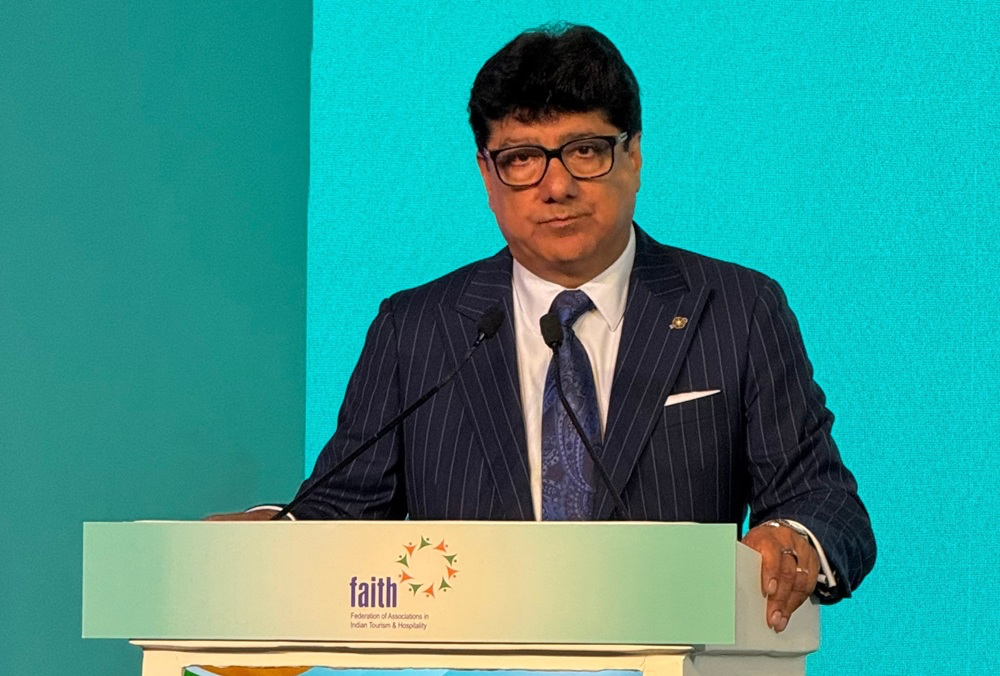
Puneet Chhatwal, Chairman, FAITH
Delivering the keynote industry address, Puneet Chhatwal, Chairman of FAITH, reflected on the remarkable resilience demonstrated by India’s tourism sector over recent years.
The industry has weathered unprecedented disruption—from the COVID-19 pandemic to geopolitical tensions, aviation challenges and extreme weather events—yet has continued to recover and attract investment.
Chhatwal observed that hospitality has emerged as one of India’s strongest sectors for private capital expenditure, while several states are experiencing tourism-led economic growth at double-digit rates.
Despite the strong recovery in domestic tourism, he argued that India’s greatest untapped opportunity lies in attracting significantly larger numbers of international visitors.
Increasing foreign tourist arrivals from current levels to 20–30 million annually, alongside India’s thriving domestic tourism market, could dramatically enhance the sector’s contribution to GDP while strengthening the country’s international brand.
Beyond its direct economic impact, Chhatwal stressed tourism’s growing importance as an instrument of soft power, shaping international perceptions of India and supporting wider national development objectives.
WTTC projects tourism growth to outpace India’s economy

Gloria Guevara, CEO, WTTC
Providing an international perspective, Gloria Guevara, President and Chief Executive Officer of the World Travel & Tourism Council (WTTC), described India as one of the world’s most promising tourism markets.
Presenting WTTC’s latest Economic Impact Research, she noted that global travel and tourism contributed US$11.6 trillion to the world economy during 2025 while supporting approximately 366 million jobs worldwide.
India continues to play an increasingly important role within that global landscape.
According to WTTC estimates, India’s travel and tourism sector contributed US$263 billion to the national economy in 2025 while supporting approximately 46 million jobs.
Looking ahead, WTTC forecasts India’s tourism economy to expand by 8.5% during 2026, comfortably exceeding the country’s projected GDP growth of 6.4%.
Guevara noted that India possesses many natural competitive advantages—including its cultural diversity, heritage, hospitality traditions and domestic tourism market—but emphasised that stronger international marketing, improved air connectivity and more seamless travel processes would be essential for converting that potential into sustained international visitor growth.
Government places tourism at the heart of nation-building
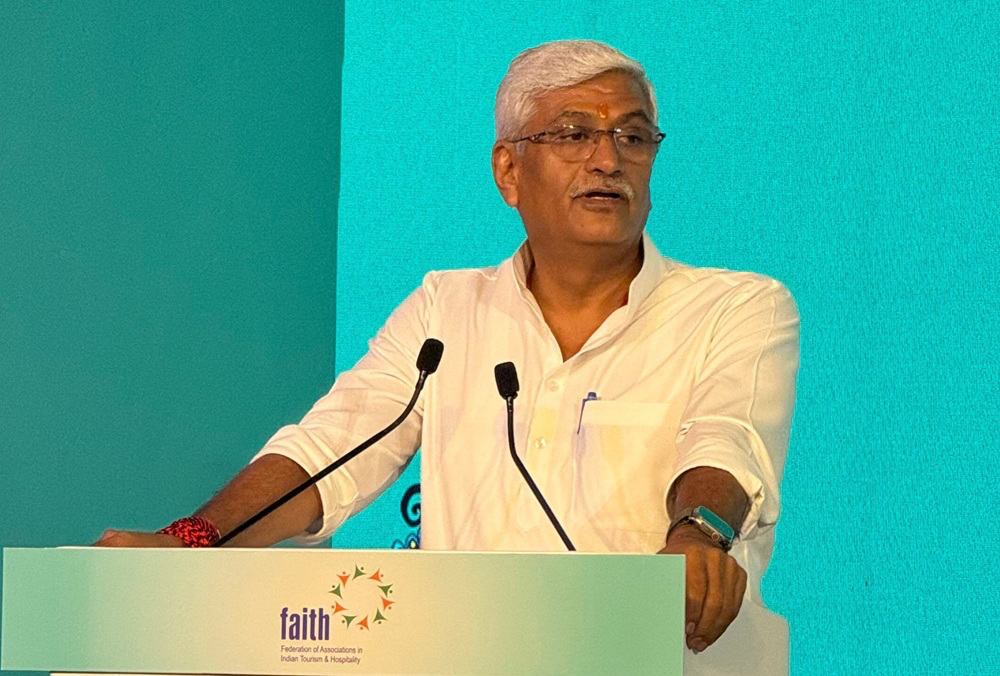
Gajendra Singh Shekhawat, Union Minister of Tourism
Delivering the keynote address, Union Tourism Minister Gajendra Singh Shekhawat positioned tourism as a national development priority rather than simply another economic sector.
He argued that tourism contributes to employment generation, rural development, women’s empowerment, entrepreneurship, handicrafts, local cuisine and cultural preservation while distributing economic benefits across regions that may otherwise remain outside mainstream development.
Referencing India’s long-standing philosophy of “Atithi Devo Bhava” (The Guest is God), the minister said hospitality forms part of India’s civilisational identity and provides a strong foundation for future tourism growth.
However, he suggested that India should move beyond measuring success purely through visitor arrivals.
Instead, future policy should focus increasingly on visitor experience, average length of stay, tourism value and overall quality.
Shekhawat pointed out that international visitors currently spend an average of 18.1 days in India—substantially longer than many competing destinations—demonstrating the country’s ability to generate greater visitor value rather than simply higher tourist volumes.
He also highlighted several government initiatives currently underway, including the planned development of 50 iconic greenfield tourism destinations, Destination Development Authorities, wider application of artificial intelligence and data analytics, and expanded promotion of specialised tourism segments such as wellness, Ayurveda, medical tourism, spiritual tourism, cruise tourism, adventure travel, rural tourism, culinary experiences, weddings and film tourism.
According to the minister, these initiatives form part of the Government of India’s broader vision of Viksit Bharat 2047, positioning tourism as a central driver of economic and social development.
States showcase diverse tourism strategies
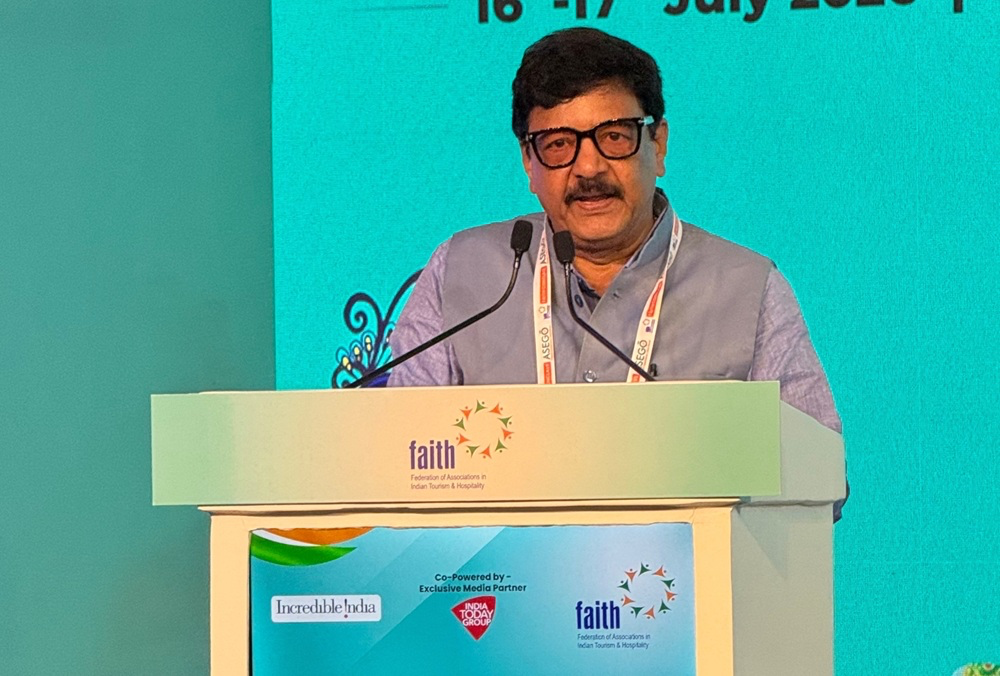
Kandula Durgesh, Minister for Tourism, Culture & Cinematography, Andhra Pradesh
The conclave also highlighted how state governments are developing tourism models tailored to their unique geographic and cultural strengths.
Andhra Pradesh Tourism Minister Kandula Durgesh presented the state’s Swarna Andhra Tourism Vision 2047, which seeks to position Andhra Pradesh as a leading destination for religious, coastal, wellness, eco and cultural tourism.
The strategy includes expanding tourism infrastructure, encouraging private investment, developing 10,000 homestaysand creating approximately 300,000 tourism-related jobs while ensuring local communities directly benefit from sector growth.
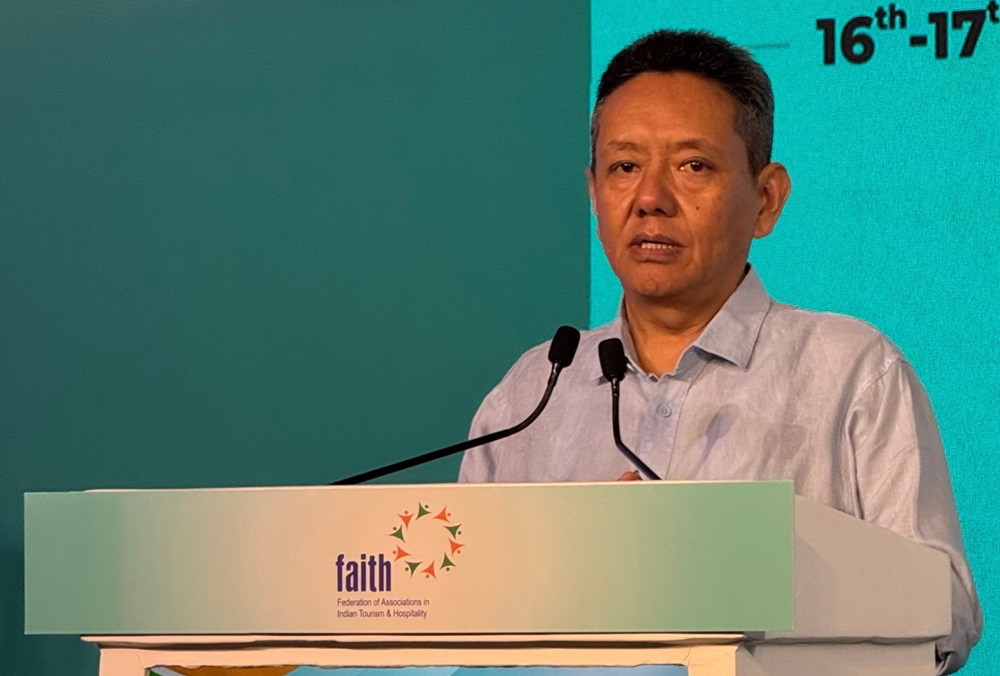
Pasang Dorjee Sona, Minister for Tourism, Government of Arunachal Pradesh
Meanwhile, Arunachal Pradesh Tourism Minister Pasang Dorjee Sona outlined the state’s community-led approach to sustainable tourism.
Highlighting Arunachal Pradesh’s exceptional biodiversity and indigenous cultural heritage, he described how local communities are actively involved in wildlife conservation while simultaneously developing tourism experiences that protect natural ecosystems.
The state also reaffirmed its ambition to establish Mechuka as India’s premier destination for adventure tourism through environmentally responsible development.
Collaboration remains central to India’s tourism ambitions
A consistent message throughout the inaugural sessions was that India’s tourism aspirations cannot be achieved by government policy alone.
Industry leaders repeatedly emphasised the importance of deeper partnerships between central and state governments, private investors, tourism associations, airlines, hospitality companies and destination management organisations.
Speakers agreed that India already possesses many of the ingredients needed to become one of the world’s leading tourism destinations.
The challenge now lies in translating those advantages into sustained international competitiveness through coordinated policy reforms, enhanced air connectivity, modern infrastructure, digital innovation, destination marketing and long-term investment.
As discussions continue throughout the conclave, the industry’s message is becoming increasingly clear: tourism is no longer viewed simply as a leisure sector but as a strategic contributor to India’s economic transformation, employment generation and global influence.