

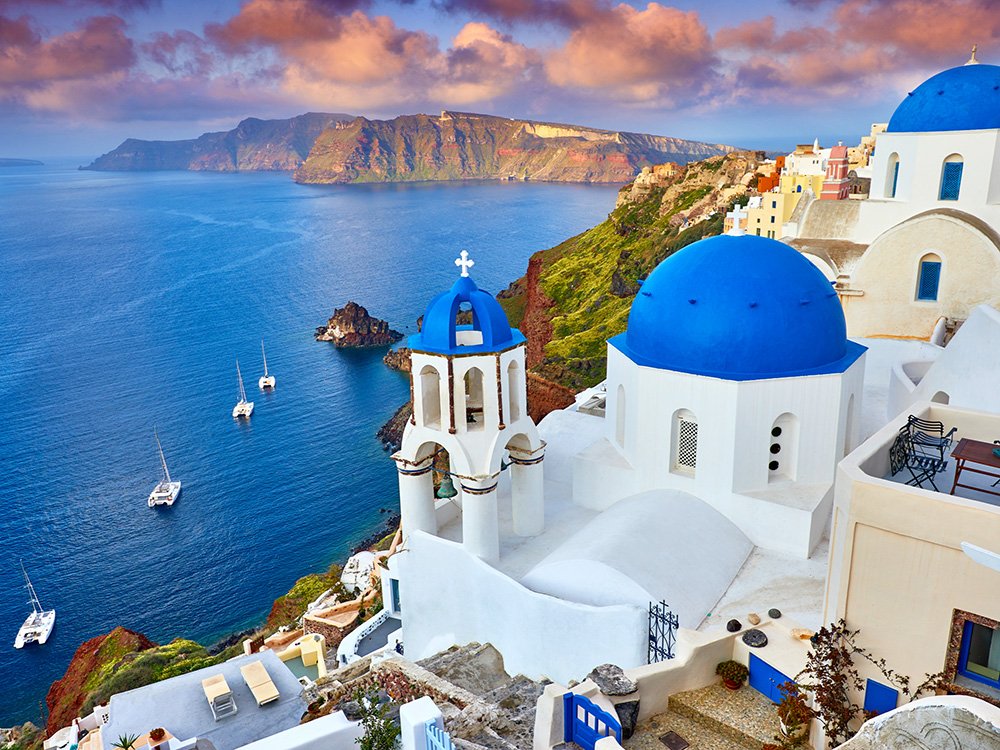
Greece’s tourism sector has opened the year with striking momentum, signalling not only a robust recovery but also a strategic pivot toward long-haul markets such as India. Fresh data released by the Bank of Greece confirms a sharp rise in both visitor arrivals and tourism receipts, underscoring the country’s growing global appeal beyond its traditional European base.
Strong Start to the Year
According to the central bank’s latest report, tourism receipts surged by 83.2 percent in February, reaching €533.4 million compared to the same period last year. This growth was largely driven by a 44.5 percent increase in non-resident arrivals. For the first two months of the year, total arrivals climbed by 38.5 percent, while revenues rose by 70.7 percent year-on-year.
The strong early-year performance builds on an already impressive 2025, when Greece recorded 43.31 million international arrivals—the highest figure in its history. This milestone surpassed the pre-pandemic benchmark of 34 million visitors in 2019, reaffirming Greece’s status as one of the Mediterranean’s most resilient and attractive destinations.
Europe Remains the Backbone
European markets continue to anchor Greece’s tourism success. Visitor numbers from across Europe reached 22.41 million in 2025, reflecting steady growth over recent years. Germany retained its position as the leading source market, contributing 5.95 million visitors—a 25 percent increase since 2023.
Italy and France followed as key contributors, with Italy maintaining consistent growth and France stabilising at nearly two million arrivals. Among mid-sized markets, Romania remained steady, while Austria recorded continued gains. The Netherlands held firm at just over one million visitors, and Spain showed gradual increases. Belgium experienced a slight dip after a strong previous year, while Cyprus registered a marginal decline.
Mixed Trends Beyond the EU
Beyond the European Union, Greece welcomed 15.57 million visitors in 2025, up significantly from 13.09 million in 2023. The United Kingdom remained the second-largest individual source market, contributing 4.89 million visitors despite its post-Brexit status.
The United States continued to provide a stable flow of travellers, with arrivals holding steady at around 1.55 million following a post-pandemic surge. In contrast, arrivals from Russia dropped sharply to under 22,000, reflecting ongoing geopolitical restrictions following the 2022 invasion of Ukraine.
India: A Rising Star in Long-Haul Travel
A parallel study by the Institute of the Association of Greek Tourism Enterprises highlights a significant shift in Greece’s long-haul strategy, with India emerging as one of the fastest-growing markets.
The report notes a sharp increase in brand recognition and travel intent among Indian travellers, driven largely by improved air connectivity and targeted promotion. Greece climbed nine positions in destination preference rankings in India compared to the previous year—one of the most notable gains among all surveyed markets.
While Greece currently ranks 27th among Indian travellers’ preferred international destinations, the gap between it and higher-ranked competitors remains narrow, indicating strong potential for rapid upward movement.
Competing in a Crowded Mediterranean Market
The INSETE analysis also positions Greece competitively among Mediterranean destinations such as Italy, France, Spain, Portugal, Croatia and Türkiye. Greece ranks fourth in preference across key long-haul markets including India, China, the United States and Canada, and third in Australia.
This positioning reflects a growing trend among long-haul travellers seeking multi-destination European itineraries, where Greece often features alongside other Mediterranean countries.
Strategic Outlook: Sustainability and Growth
Industry leaders emphasise that sustaining this growth will require careful planning and investment. Elias Kikilias, Director General of INSETE, notes that increasing per capita spending is closely tied to Greece’s expansion into long-haul markets.
He highlights that while established markets such as the United States, Canada and Australia remain stable, emerging markets like India and China are driving new growth dynamics. However, intensifying competition from both European and non-European destinations calls for a coordinated strategy focused on infrastructure, governance and sustainability.
Kikilias stresses that long-term success will depend on stronger collaboration between public and private stakeholders, alongside a commitment to preserving the cultural identity of destinations while enhancing resilience and visitor experience.
A Market in Transition
As Greece enters a new phase of tourism development, the shift toward diversified, high-value markets is becoming increasingly evident. With India positioned as a key growth engine and early-year indicators pointing to continued expansion, Greece’s tourism story in 2026 is not just about recovery—it is about reinvention.