
Tourism ministry signs MoU with OTOAI to strengthen destination promotion, trade training and familiarisation programmes
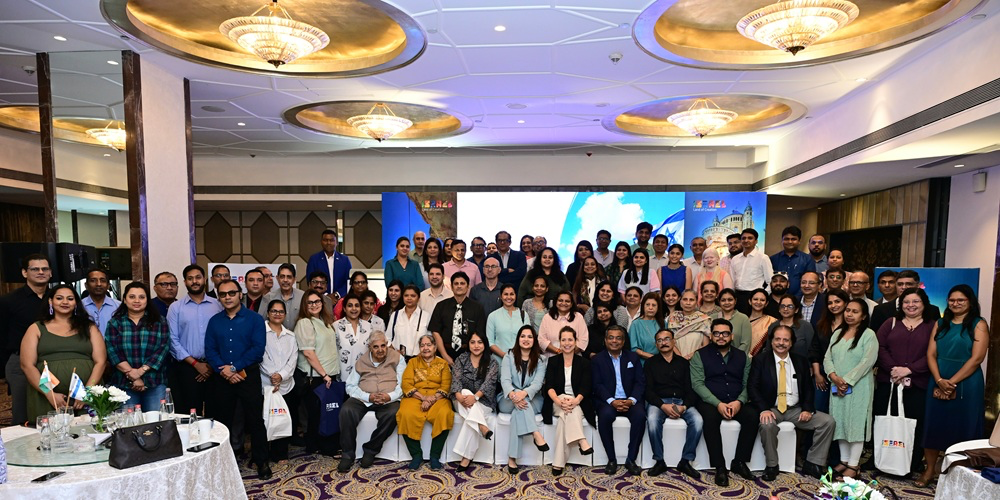
The Israel Ministry of Tourism (IMOT) has concluded a three-city roadshow across New Delhi, Bengaluru and Mumbai, renewing its engagement with India’s outbound travel industry and setting a target of attracting up to 100,000 Indian visitors. The programme, held from 12 to 16 October 2026, brought together approximately 300 travel trade professionals and culminated in a memorandum of understanding (MoU) with the Outbound Tour Operators Association of India (OTOAI).
The roadshow marked the ministry’s return to large-scale, in-person engagement with Indian travel professionals after several years. Through destination presentations, industry discussions and business networking, IMOT sought to rebuild awareness of Israel’s tourism offering and encourage Indian travel companies to develop a broader range of itineraries.
Speaking at the New Delhi event, Galit Hoffman, Consul for Tourism Affairs at IMOT in India, said the ministry wanted to reconnect directly with travel agents and media, provide updated destination information and encourage more Indian travellers to visit Israel.
Hoffman said the immediate objective was to restore Indian arrivals to approximately 70,000, the pre-pandemic level cited by the ministry, while keeping a longer-term target of 100,000 visitors in view.
IMOT and OTOAI establish tourism cooperation framework
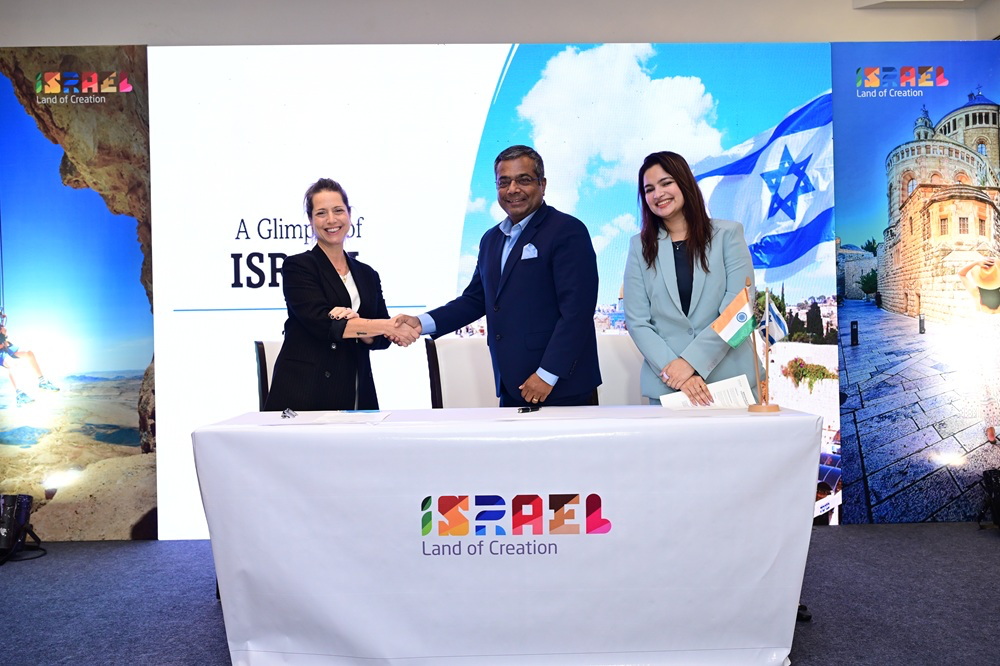
A key development came during the Mumbai roadshow on 16 October, when IMOT and OTOAI signed an MoU aimed at strengthening tourism cooperation between Israel and India.
The agreement was signed by Himanshu Kesari Patil, President of OTOAI, and Galit Hoffman. It establishes a framework for collaboration covering joint destination promotion, professional training, familiarisation (FAM) trips, marketing initiatives and activities designed to create business opportunities for Indian travel companies.
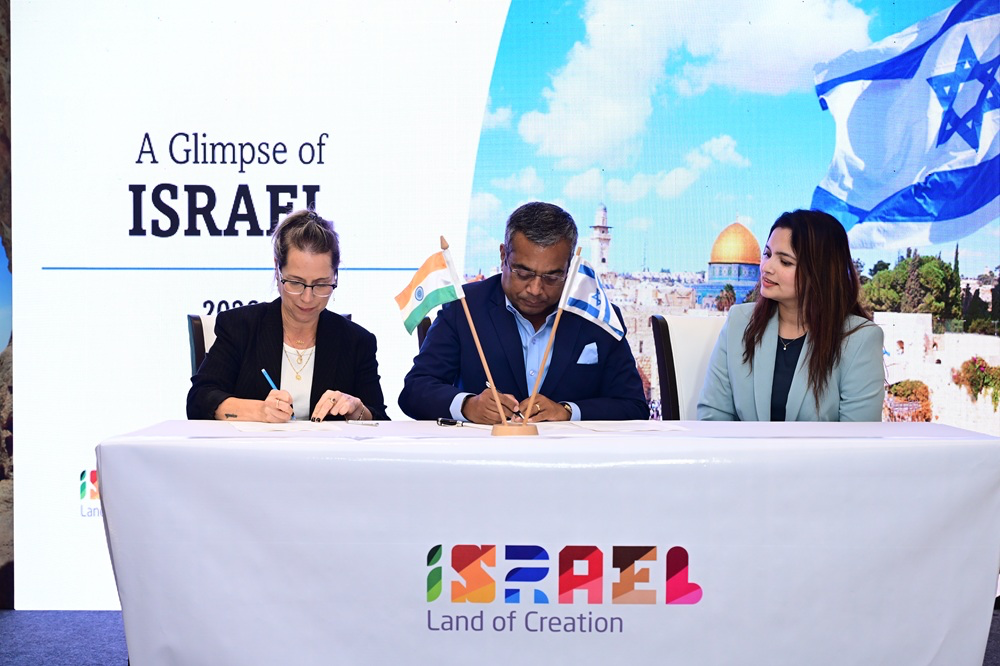
Hoffman described the agreement as a long-term commitment to building tourism ties and expanding awareness of Israel’s varied visitor experiences. She also reaffirmed India’s importance as a strategic source market for the destination.
The roadshows featured participation from destination management companies, including Satguru Travel and Amaris Tours and Events. The events provided a platform for Israeli tourism suppliers to connect with Indian travel agents and tour operators, discuss itinerary development and explore opportunities across leisure, luxury, family, cultural, adventure and meetings, incentives, conferences and exhibitions (MICE) travel.
Religious tourism also featured in the discussions. Amaris Tours and Events highlighted opportunities among faith-based travellers, particularly in Kerala, which it identified as an important market for this segment.
Training and familiarisation trips planned
IMOT plans to continue its engagement with the Indian travel trade through a programme of training sessions, webinars, FAM trips and joint marketing activities.
According to the announcement, two familiarisation trips for Indian travel agents were planned for November 2026, followed by a webinar in December. At least five additional FAM trips were also planned for 2027.
The initiatives are intended to give travel professionals first-hand knowledge of Israel’s accommodation, attractions and visitor experiences, helping them develop products tailored to different Indian traveller segments.
Broadening Israel’s hospitality appeal
Alongside the business meetings, a presentation by Tal Horesh of the Israel Hotel Association highlighted the range of accommodation available across the country, from international luxury brands and boutique hotels to family-oriented resorts, heritage properties and desert retreats.
The presentation included established names such as Kempinski, InterContinental and Six Senses, as well as Isrotel Royal Beach on Tel Aviv’s beachfront promenade. A Mandarin Oriental property in Tel Aviv was also mentioned as being under development.
Horesh highlighted distinctive hotel concepts, including Cinema Hotel in Tel Aviv, which incorporates cinema-inspired design, and the Yacht Hotel in Herzliya, designed around a nautical theme near the marina.
For family holidays, the presentation referenced Club Hotel in Eilat, alongside nature-based accommodation, desert retreats and glamping experiences. Heritage-focused options included King David Hotel and Mamilla Hotel in Jerusalem, as well as Magdala Hotel beside the Sea of Galilee and an archaeological site associated with the region’s ancient history.
Botanica Hotel in Haifa, near the Bahá’í Gardens, was also presented as an option for travellers interested in exploring destinations beyond the busiest tourist areas.
Slow travel, wellness and workcations
The presentation also examined travel preferences that are influencing accommodation and itinerary planning, including wellness breaks, slower-paced holidays and workcations.
Horesh highlighted Six Senses Shaharut, a luxury wellness resort in the Arava Valley of the Negev Desert, as an example of a property offering spa facilities and a retreat-style experience. The Sea of Galilee and the Negev Desert were also cited as destinations where visitors could spend more time relaxing rather than following tightly scheduled sightseeing itineraries.
The concept of moving from FOMO, or the fear of missing out, to JOMO, the joy of missing out, was used to describe growing interest in less structured holidays. The approach encourages visitors to spend longer in one place, enjoy their surroundings and allow more time for rest.
Workcations were another focus, with hotels in cities such as Tel Aviv, Herzliya and Jerusalem offering facilities that can support travellers combining professional commitments with leisure.
Culture, cuisine and local connections
The roadshow also highlighted opportunities for Indian visitors to engage with Israel’s cultural diversity, local communities and food traditions. Representatives emphasised that experiences beyond major attractions can help travellers develop a deeper understanding of the destination.
Horesh pointed to the variety of culinary influences available in Israel, including Israeli, Arab, Indian and Thai food, vegetarian options and fine dining. Accommodation in Jerusalem, Tel Aviv, Jaffa and Haifa was presented as a way for visitors to explore different aspects of local life and regional culture.
Hoffman also spoke about cultural connections between India and Israel, drawing parallels between hospitality traditions and the role of food in welcoming guests. She cited interest in Bollywood films and Indian television programming in Israel as another example of the cultural links between the two countries.
A renewed focus on the Indian outbound market
The roadshow and OTOAI agreement form part of IMOT’s effort to rebuild engagement with India’s travel trade and broaden the range of Israeli experiences promoted to Indian travellers.
The ministry’s stated ambition is to restore arrivals to pre-pandemic levels and potentially increase annual Indian visitation to 100,000. Achieving that target will depend on market demand, travel conditions and the effectiveness of continued trade engagement.
With further training, webinars and familiarisation trips planned, IMOT is seeking to maintain momentum beyond the October roadshows and strengthen cooperation with Indian travel businesses over the coming year.