
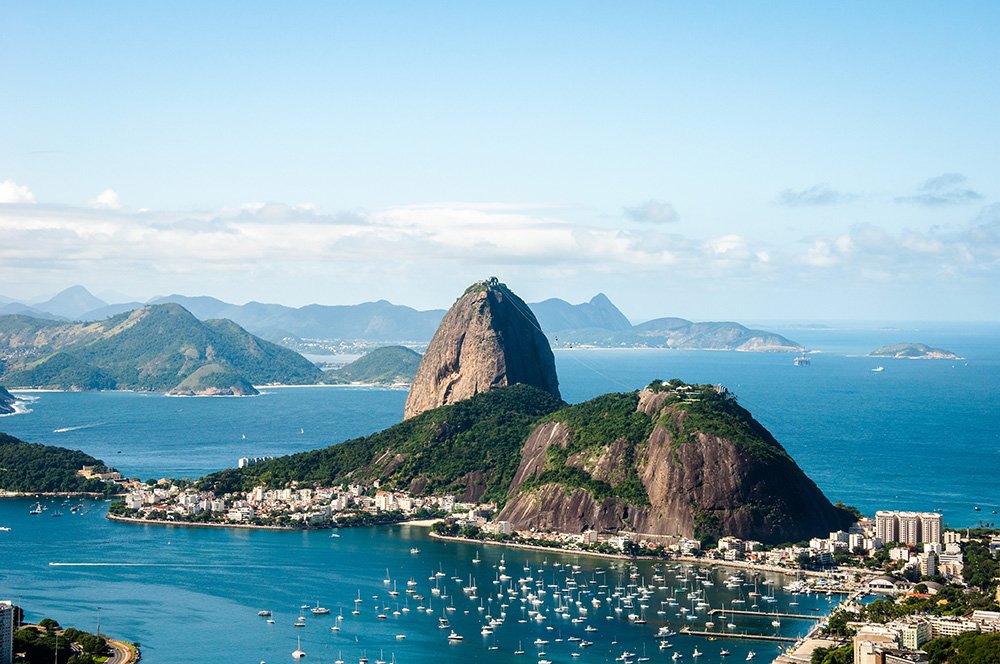
The global aviation industry has turned its attention to Rio de Janeiro as more than 1,500 airline executives, government representatives, aviation stakeholders and media delegates gather for the 82nd Annual General Meeting (AGM) of the International Air Transport Association (IATA) and the accompanying World Air Transport Summit (WATS), taking place from June 6-8, 2026. Hosted by LATAM Airlines Group, the event marks the return of IATA’s flagship gathering to South America for the first time in 27 years.
The summit arrives at a pivotal moment for the aviation sector. Airlines worldwide are balancing robust passenger demand with mounting challenges that include decarbonisation targets, airspace disruptions linked to geopolitical conflicts, aircraft delivery delays, regulatory pressures and the rapid integration of artificial intelligence into airline operations.
The last IATA AGM held in South America took place in Rio de Janeiro in 1999, a landmark event that formally introduced the World Air Transport Summit format, which has since evolved into one of the industry’s most influential forums for high-level debate and policy discussions.
Speaking ahead of the gathering, Willie Walsh, Director General of IATA, highlighted the growing strategic importance of aviation across the region.
“Over the past decades the entire region has made significant investments in aviation infrastructure, positioning the continent to benefit economically and socially from air connectivity,” Walsh said. He noted that Brazil’s modernising aviation sector already contributes significantly to national economic development while offering substantial opportunities through tourism, exports and sustainable aviation fuel (SAF) production.
Brazil Emerges as a Regional Aviation Powerhouse
The choice of Brazil as host nation reflects the country’s growing stature in global aviation. According to IATA data, Brazil welcomed approximately nine million international visitors in 2025 and continues to strengthen its position as South America’s largest aviation market. The country’s aviation sector directly supports nearly 247,000 jobs and contributes more than USD 10 billion in economic output. When tourism, supply chains and related economic activity are included, aviation supports around 1.9 million jobs and contributes USD 46.4 billion, representing 2.1 per cent of national GDP.
Passenger traffic growth has remained particularly strong. Total demand in Brazil increased by 11.5 per cent in 2025, with domestic passenger numbers surpassing the 100-million mark for the first time. International traffic expanded by 17 per cent compared with the previous year and exceeded pre-pandemic levels by more than 20 percentage points.
According to Roberto Alvo, Chief Executive Officer of LATAM Airlines Group, the event offers an opportunity to showcase how aviation is helping drive economic and social progress across Brazil and South America.
Alvo said the region’s aviation industry has become an increasingly important catalyst for economic growth, connectivity and development, while emphasizing the need for continued collaboration to unlock even greater potential.
Sustainability, AI and Air Cargo Take Centre Stage
The World Air Transport Summit will focus on several strategic priorities shaping the future of global aviation. Among the most closely watched discussions will be the industry’s efforts to accelerate the production and adoption of Sustainable Aviation Fuel (SAF), which remains central to aviation’s long-term decarbonisation strategy. Industry leaders are expected to examine how countries such as Brazil can leverage their significant biofuel resources to become major SAF producers.
Other key agenda items include strengthening airspace capacity amid increasing geopolitical tensions, addressing passenger rights and regulatory frameworks, enhancing resilience in airline operations, and exploring how artificial intelligence can improve efficiency, customer experience and decision-making across the aviation ecosystem.
Air cargo is also expected to feature prominently in discussions as airlines navigate shifting global trade patterns, tariffs and supply chain disruptions. Industry leaders will assess cargo’s evolving role in supporting international commerce and economic growth.
Industry Faces Complex Operating Environment
While global travel demand remains strong, airline executives arrive in Rio amid growing concerns over rising fuel costs, aircraft delivery bottlenecks and airspace restrictions caused by geopolitical conflicts. These factors are increasing operational costs and creating uncertainty for carriers worldwide.
Against this backdrop, the 82nd IATA AGM is expected to provide a critical platform for collaboration and strategic planning as the industry seeks to balance growth ambitions with sustainability commitments and evolving passenger expectations.
As aviation enters a new phase of expansion, the conversations in Rio are likely to shape policy decisions, investment priorities and operational strategies across the global air transport sector for years to come.